Interactive retail store displays have quickly become one of the most impactful tools for transforming in-store shopping experiences. As customers increasingly expect modern, seamless, and engaging interactions, traditional static signage often fails to keep up. Interactive screens—whether used for product browsing, virtual try-ons, comparison tools, or digital concierge services—give shoppers more control and make the entire experience more enjoyable. For retailers, these displays do far more than look impressive; they help reduce staff workload, answer common questions instantly, and guide customers toward informed purchase decisions. With benefits ranging from higher engagement to stronger sales performance, many store owners are now asking the same question: Are interactive retail displays really worth the investment?
The Rising Demand for Interactive Retail Experiences
The demand for interactive retail experiences has grown dramatically as customers increasingly expect shopping to be more engaging, personalized, and digitally enhanced. In today’s world, consumers are no longer satisfied with static posters or traditional displays. Instead, they look for touch-enabled screens, immersive content, and interactive product exploration that make the shopping journey intuitive and enjoyable. This shift is largely driven by younger generations who grew up with smartphones, tablets, and gaming interfaces—digital interaction feels natural to them, even in physical stores.
One major trend shaping this demand is personalization. Shoppers want information tailored to their interests: product suggestions, comparison tools, or virtual try-ons that help them make confident decisions. Interactive displays allow customers to browse expanded catalogs, view product demos, and discover items that may not be physically available on the shelf. This gives them the freedom to control their own shopping pace—known as customer-led exploration—which increases satisfaction and builds trust with the brand.
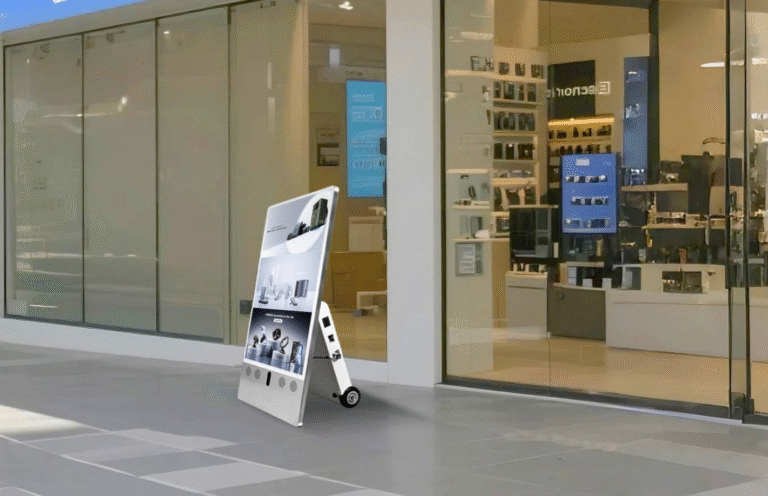
Real-world examples highlight how widespread this trend has become. In Akihabara, Tokyo, many electronics shops have adopted interactive shelf displays that let customers tap to view product specs, compare gadgets, or watch demonstration videos directly at the shelf. Meanwhile, some stores place digital A Boards at their entrances to display rotating anime graphics or promotional content, creating an eye-catching experience that attracts passersby and reflects the energetic culture of the area.
Ultimately, interactive retail displays transform stores into dynamic environments that blend entertainment with information. As consumers continue to expect richer digital experiences, interactive retail solutions will only become more essential for brands wanting to stay relevant and competitive.
Benefits: Higher Engagement, Better Product Understanding, and Increased Sales
Interactive retail displays offer a powerful advantage by transforming passive shoppers into active participants. When customers can compare products, watch demonstrations, explore digital catalogs, or search for detailed specifications through touch-enabled interfaces, they gain a deeper understanding of what they are buying. This clarity helps eliminate hesitation and increases confidence, which is directly linked to higher conversion rates. Instead of relying solely on staff assistance, shoppers can independently navigate information at their own pace—making the in-store experience more efficient, enjoyable, and personalized.
Interactive screens also boost engagement by presenting content in a dynamic and visually compelling way. Whether it’s a video demo, a 360° product view, or a side-by-side comparison, these displays capture attention far more effectively than traditional signage. As customers spend more time engaging with the content, they develop stronger interest and emotional connection with the product, leading to more impulse purchases and increased basket size.
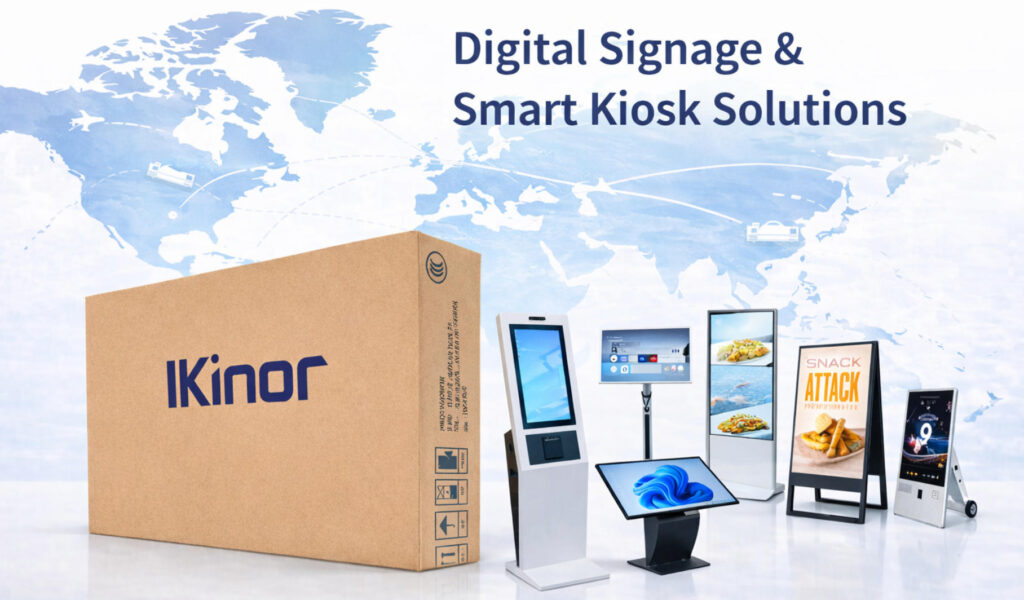
A real example comes from Ikinor’s customized solution for a café chain in France. We developed a series of interactive Digital A Boards that showcased menu items, rotating promotions, and seasonal campaigns. After installing the new digital A boards in early 2024, the café chain reported a 15% increase in foot traffic—driven by more eye-catching visuals and improved promotional exposure at store entrances.
Ultimately, interactive displays not only improve product understanding but also create a more memorable shopping experience, driving sales growth and long-term customer satisfaction.
Operational Advantages for Retailers
Digital signage and interactive kiosks offer significant operational advantages for retailers, making stores more efficient and reducing the burden on staff. One of the biggest benefits is the ability to minimize repetitive customer questions. Instead of answering the same inquiries about pricing, product details, or availability, staff can rely on screens and kiosks to provide accurate, real-time information. This frees employees to focus on higher-value tasks such as customer service, merchandising, or inventory support.
Digital displays also enable digital catalog browsing, allowing customers to explore extended product lines, color variations, or sizes that may not be physically available in-store. This reduces the need for staff to search for items or manually explain every option. For large-format stores or electronics retailers, this is especially helpful in guiding customers through complex product categories.
Automation plays a key role as well. With cloud-based systems, content across all screens can be updated instantly—whether it’s daily promotions, new arrivals, or time-limited discounts. This eliminates the need for staff to replace printed posters or maintain outdated materials, ensuring total brand consistency and operational accuracy across multiple locations.
In recent years, self-service kiosks have transformed many retail stores into staff-light or even staff-free shops. Convenience stores, small supermarkets, and quick-service food chains increasingly rely on kiosks for ordering, checkout, ticket printing, and payment. These automated stations shorten lines, reduce labor costs, and keep the store running smoothly even during peak hours.
Overall, digital signage and kiosks streamline operations, enhance store efficiency, and allow retailers to provide a fast, modern, and convenient shopping experience without increasing staffing demands.
Cost vs. ROI: Is the Investment Worth It?
When evaluating digital signage or interactive kiosks, retailers often ask whether the investment truly delivers measurable returns. In reality, the long-term value extends far beyond the initial hardware cost. One of the most immediate benefits is the ability to increase in-store traffic. Digital signage placed at storefronts—such as digital A boards or floor standing advertising displays—can significantly enhance visibility. In many retail case studies, eye-catching entrance displays have shown the potential to boost foot traffic by 10% to 25%, especially when promoting limited-time offers or seasonal campaigns. Increased foot traffic naturally leads to more product exposure and higher sales.
Another major advantage is labor cost reduction. Self-service kiosks allow customers to browse menus, check product details, place orders, and complete payments without staff assistance. For convenience stores, cafés, and lifestyle shops, kiosks have made it possible to run “staff-light” or even fully automated stores. This shift can reduce labor costs by 20% to 40%, especially during peak hours when staffing demands would normally increase.
Digital signage also eliminates the recurring expense of printed posters, menus, and promotional materials. Over time, removing printing and distribution costs results in meaningful savings and ensures that information is always up-to-date and brand consistent.
Additionally, digital displays can serve as advertising space, generating extra revenue by featuring brand partners, suppliers, or seasonal campaigns. Retailers can monetize screen real estate just like media platforms—turning displays into profit-generating assets.
Finally, integrated data insights from kiosks and CMS platforms help stores understand customer behavior, optimize store layout, and refine marketing decisions. With higher sales, reduced labor, lower printing costs, and added revenue opportunities, the ROI of digital signage is not just positive—it’s strategically transformative.