
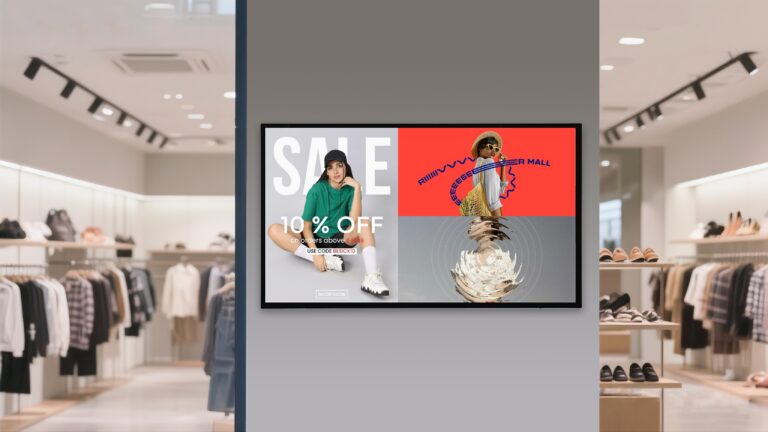
Digital signage has become one of the most effective ways to elevate the look and performance of modern retail stores. As retail spaces are among the most common commercial environments we interact with every day, customers expect visuals that are attractive, clear, and engaging. If you are a retail store owner, you’ve likely thought about using digital signage to make your store more beautiful, more modern, and more professional. Beyond aesthetics, the right digital signage placements can significantly increase customer attention, guide shopping behavior, and ultimately generate more sales volume. In this article, we’ll explore how to strategically place digital signage in your retail store to maximize impact, enhance the customer journey, and drive meaningful business results.
Why Digital Signage Placement Matters in Retail
Digital signage placement is one of the most important factors influencing how customers notice, engage with, and respond to content inside a retail environment. In busy retail settings—such as fashion chains, convenience stores, beauty retailers, electronics stores, and lifestyle boutiques—customers are constantly moving, making it essential to position screens where they naturally pause or look. Strategic placement directly affects visibility, engagement, and ultimately conversions. When digital displays appear in the right place at the right moment, they guide customer flow, highlight promotions, and influence purchase decisions more effectively than traditional printed signage.
Many well-known retail chains like Uniqlo, H&M, Sephora, and 7-Eleven use precisely positioned digital screens to draw attention to new arrivals, promote limited-time offers, or provide store navigation. These brands understand that placement is not accidental—it is designed to support storytelling, branding, and sales goals.
Different digital display types also serve different strategic purposes. Señalización digital de suelo is ideal for entrances, promotional hotspots, and product-focused zones where strong visual impact is needed. Their height and brightness make them effective in capturing attention from afar. Meanwhile, Digital A Boards play a unique role in storefronts, sidewalks, and checkout areas. They are easy to reposition, allowing retailers to highlight flash promotions, direct walk-in traffic, or display seasonal campaigns.
Ultimately, proper placement transforms digital signage from a simple display into a powerful sales and communication tool. By aligning screen location with customer behavior, retailers can significantly enhance the shopping experience and maximize sales results.
Understanding Retail Layout & Customer Traffic Flow
To maximize the impact of digital signage, retailers must first understand how customers move through a store. Every retail space—whether a fashion boutique, supermarket, beauty store, or electronics chain—has predictable customer traffic patterns. These movements create valuable opportunities for placing digital displays where they will be seen, remembered, and acted upon.
At the entrance, customers form their first impression. This is the ideal location for eye-catching visuals that introduce promotions, seasonal themes, or new arrivals. As customers move into the main aisles, their attention naturally shifts toward products displayed at eye level, making these zones perfect for signage that highlights featured items or cross-selling opportunities.
En waiting zones, such as fitting rooms, service counters, or pickup areas, customers have extra dwell time. Strategically placed screens can enhance engagement by showing styling tips, tutorials, or upsell suggestions. Finally, checkout areas offer a strong opportunity to promote last-minute add-ons or membership programs while customers wait in line.
This is where mobile solutions like the Mobile Smart Screen 32 become especially useful. Because it can be moved freely around the store, retailers can reposition it based on daily traffic patterns or special events. For example, it can be placed beside a discount rack to display promo videos, price drops, or bundle offers. It can even act as a digital announcer, playing audio messages to guide customers or highlight flash deals during peak hours.
By aligning digital signage with natural customer flow, retailers ensure every screen delivers maximum impact, improving engagement and boosting sales.
Key Placement Zones for Maximum Impact
Placing digital signage in the right locations is crucial for maximizing visibility, improving customer engagement, and increasing sales inside a retail environment. When screens align with natural customer movement, they deliver stronger impact and guide shoppers more effectively. Below are the key placement zones that help retailers achieve the best results.
| Placement Zone | Description |
|---|---|
| A. Storefront & Window Displays | The storefront is the most visible area of any retail space. A floor standing advertising display placed in the window promotes new arrivals, seasonal campaigns, and high-impact visuals to attract passersby and bring them into the store. |
| B. Entrance Areas | As customers step inside, entrance displays serve as the first communication point. A digital A board or sidewalk digital sign can show welcome messages, limited-time promotions, or daily specials, with portability for easy repositioning. |
| C. Product Display Zones | In browsing areas, wall-mounted screens or floor stand LCD touch displays highlight product features, show usage demos, or support cross-selling—helping influence purchase decisions at the point of interest. |
| D. Self-Service or Ordering Zones | Self-checkout or ordering sections benefit from self-order kiosks, payment kiosks, and queueing kiosks. These reduce wait times, streamline operations, and enhance the customer journey. |
| E. Navigation & Info Points | Large or multi-section retail stores use wayfinding kiosks or interactive kiosks to help customers locate departments, view promotions, and access store information quickly and easily. |
| F. Checkout & Waiting Areas | Checkout zones are ideal for promoting add-ons, membership benefits, or upcoming campaigns. Wall-mounted screens or mobile smart screens keep customers informed and engaged while waiting. |
Choosing the Right Type of Digital Signage for Retail
Selecting the right type of digital signage is essential for creating an effective in-store communication strategy. Each display serves a unique purpose, and choosing the correct one based on your retail layout, customer flow, and marketing goals will significantly improve engagement and sales.
Señalización digital de suelo is ideal for high-impact promotional zones. These large, eye-catching displays work extremely well near entrances, main aisles, and promotional islands. For example, a fashion chain could use a floor standing display to showcase new seasonal collections or flash sales, ensuring shoppers notice the message the moment they walk in.
Interactive Kiosks are perfect for customer service, product lookup, and store navigation. Large retailers, such as electronics or beauty stores, often place interactive kiosks in central areas where customers can check product availability, view comparisons, or locate specific aisles. This reduces staff workload and improves customer satisfaction.
Self-Service Kiosks support ordering, payment, and ticketing. Convenience stores or quick-service food chains can install these kiosks to speed up order processing and reduce waiting lines. For instance, a busy retail café can rely on self-order kiosks to handle peak-hour traffic efficiently.
Digital A Boards are excellent for entrances and sidewalk marketing. Their portable design makes them ideal for announcing limited-time promos, daily specials, or new arrivals. A cosmetics shop, for example, might place a digital A board outside to showcase a new product launch.
Mobile Smart Screens offer maximum flexibility. These movable displays can be pushed to different locations—discount zones, new product shelves, or waiting areas—depending on the day’s priorities. They’re perfect for pop-up promotions or highlighting clearance items.
By choosing the right digital signage type, retailers can strengthen communication, enhance customer experience, and greatly boost conversion rates.
Technical Considerations for Installation
When installing digital signage in a retail environment, technical details play a crucial role in ensuring visibility, safety, and long-term performance. One of the most important factors is brightness, especially for screens facing windows or bright storefront areas. Sunlight can easily wash out content, so high-brightness commercial panels are essential to maintain clarity and attract passerby attention throughout the day.
Viewing angle is another key consideration, particularly in aisles where customers approach displays from different directions. Ikinor’s wall-mounted digital signage supports a 178° wide viewing angle, ensuring that content remains vibrant and readable whether customers are directly in front of the screen or walking past from the side. This helps maximize exposure and message retention in high-traffic zones.
Height alignment also affects usability. Screens should be positioned at comfortable eye level to avoid strain and ensure easy interaction. For example, self-service kiosks must consider different user heights—some retailers use dual-height or adjustable kiosk designs so both adults and children can interact comfortably. A well-placed screen improves accessibility and enhances the overall customer experience.
Proper cabling and power access are equally important. Cables must be safely concealed to prevent tripping hazards and maintain a clean, professional appearance. Reliable power sources and stable mounting structures ensure long-term safety, especially for heavy commercial screens.
Finally, retailers operating multiple stores should ensure the solution is fully CMS compatible. A centralized content management system allows managers to update promotions, pricing, and visuals across all locations instantly. This ensures brand consistency and saves significant time compared to manual updates.
By addressing these technical considerations, retailers can achieve a more efficient, visually appealing, and safe digital signage deployment.
Common Placement Mistakes to Avoid
Even with the right digital signage hardware, poor placement or improper usage can reduce effectiveness and negatively impact the customer experience. One of the most common mistakes is mounting screens too high or too low. Displays placed above eye level or near the floor are harder to read, causing customers to overlook important messages. Ensuring proper height alignment—especially in busy retail environments—is essential for maximizing visibility and engagement.
Another frequent issue is showing irrelevant or outdated content. Retail moves fast, and old promotions or incorrect pricing can confuse customers and harm brand credibility. Using a modern MDM (Mobile Device Management) or DMS (Digital Management System) helps retailers keep content updated across all locations in real time. Ikinor supports cloud-based CMS solutions that allow instant scheduling and remote content control, ensuring accuracy and consistency.
Retailers should also avoid overusing flashing or overly aggressive visuals. While motion helps grab attention, too much flashing can feel distracting or even irritating, creating a poor shopping experience. Balanced, dynamic content works best.
Improper placement that blocks store traffic flow is another issue. Large floor-standing displays or kiosks positioned in narrow aisles can disrupt movement, causing congestion and frustration. Screens should always complement the natural traffic pattern, not obstruct it.
Finally, relying solely on static content reduces the potential of digital signage. Dynamic scheduling—such as rotating menus, time-based promotions, or seasonal visuals—keeps content fresh and relevant. This approach increases engagement and improves conversion rates.
By avoiding these common mistakes, retailers can ensure their digital signage is both impactful and customer-friendly, enhancing the overall shopping experience.
Content Strategy for Maximum ROI
A powerful digital signage deployment is only as effective as the content strategy behind it. To maximize ROI, brands must create dynamic, timely, and highly relevant visuals that speak directly to customer needs and seasonal behavior patterns. Seasonal campaigns are one of the strongest drivers of engagement. By aligning your content calendar with holidays, shopping festivals, weather changes, and cultural events, you can deliver messages that feel fresh, timely, and tailored—ultimately driving higher foot traffic and stronger sales conversions.
Limited-time promotions are equally critical for stimulating urgency. Countdown timers, flashing highlights, and animated price tags can trigger impulse purchases and help retailers sell through inventory faster. When combined with time-based scheduling, screens can automatically display breakfast menus in the morning, seasonal drinks in the afternoon, and clearance offers at night.
Eye-catching product showcases further elevate your brand presence. Using high-definition visuals, slow-motion shots, and 3D mockups helps customers visualize product benefits instantly. Rotating top-selling items or “new arrival” highlights can significantly boost on-site discovery.
QR code integration creates an immediate bridge between offline display and online conversion. Customers can scan for coupons, membership signup, product details, or mobile ordering—expanding your marketing funnel without additional staffing costs.
Finally, real-time pricing updates are essential for industries such as restaurants, retail, and fuel stations. Digital menu boards and product displays can update automatically based on inventory, availability, weather, or demand. This ensures accuracy, reduces manual labor, and enables dynamic pricing strategies that respond to market conditions instantly.
When all elements work together—seasonal relevance, urgency, visual storytelling, mobile engagement, and real-time updates—your digital signage content becomes a high-ROI engine driving measurable business growth.
Conclusion
Strategic digital signage placement is one of the most powerful yet overlooked drivers of customer engagement and retail sales. When screens are positioned at high-traffic zones—such as entrances, checkout lines, promotional aisles, or waiting areas—they naturally capture attention and influence purchasing decisions. Clear sightlines, optimized screen height, and context-relevant content ensure that customers receive the right message at the right moment, increasing dwell time and conversion rates. With the right placement, retailers can guide customer flow, promote limited-time offers, and highlight best-sellers more effectively than static displays ever could.
To fully unlock this potential, retailers need flexible, reliable, and visually striking digital signage solutions. Ikinor provides complete OEM/ODM customization, allowing businesses to tailor hardware designs, operating systems, and branding to match any retail environment. From slim, modern designs to heavy-duty commercial displays, our solutions help you elevate brand presence while maximizing ROI.
Now is the perfect time to upgrade your retail communication strategy. Explore Ikinor’s full range of professional digital signage products and find the ideal solution for your store:
- Señalización digital de suelo
- Interactive Kiosk
- Quiosco de autoservicio
- Tablero digital A
- Pantalla inteligente móvil
Enhance engagement, boost sales, and transform the customer experience with Ikinor’s trusted commercial display technology.