Interactive wayfinding screens have become essential tools for modern businesses that need to guide visitors, simplify navigation, and deliver real-time information. Whether used in shopping malls, hospitals, airports, universities, or large retail stores, these digital maps offer a faster, more intuitive experience than traditional printed directories. As customers increasingly expect touch-enabled, smart navigation, many organizations are now considering interactive wayfinding systems as a long-term investment. But the key questions remain: How much do they cost, and how do you choose the right one? From screen size and touch technology to software features, durability, and installation style, several factors influence both price and performance. This guide will help you understand what to expect and how to select the best solution for your environment.
What Are Interactive Wayfinding Screens and Why Businesses Use Them
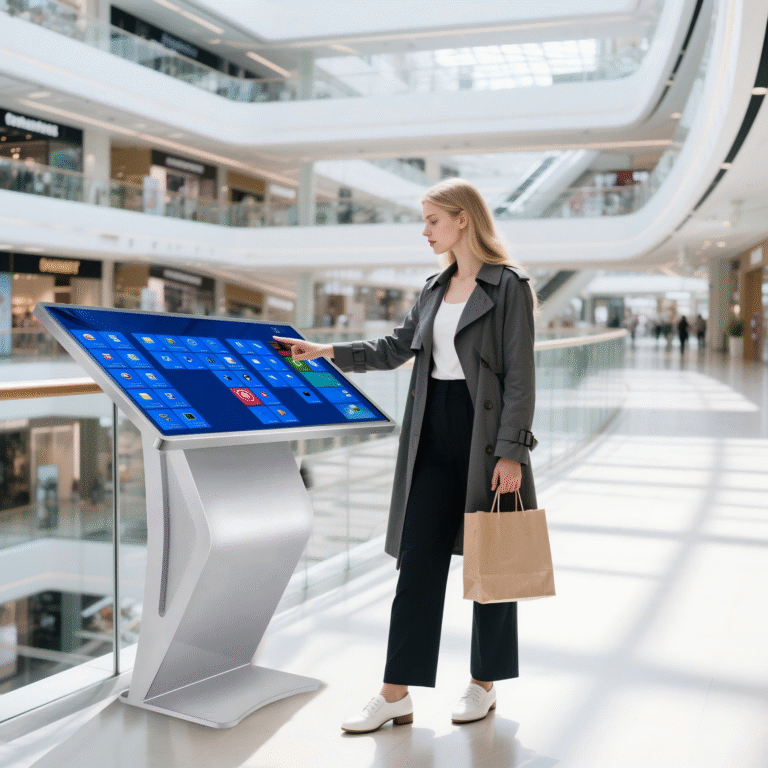
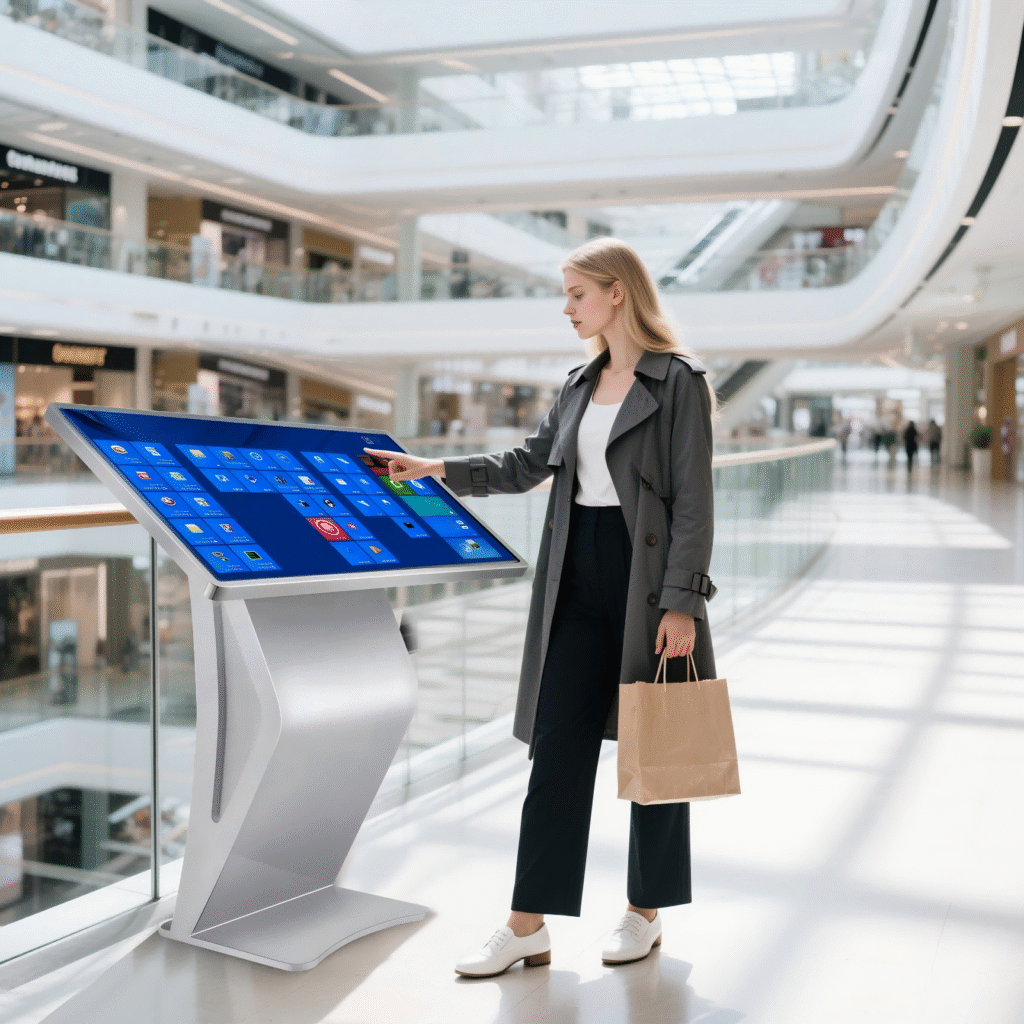
Interactive wayfinding screens are advanced digital signage systems designed to help visitors navigate large or complex environments. Unlike traditional static maps, these touch-enabled displays offer real-time navigation, store directories, search functions, interactive maps, and even promotional content. Users can tap to find specific stores, departments, restrooms, parking areas, or service counters, making navigation faster and more intuitive.
Businesses use interactive wayfinding screens because they significantly improve customer experience. In shopping malls, for example, visitors often need to locate fashion brands, restaurants, or entertainment zones quickly. Large commercial complexes in China—such as Wanda Plaza —widely deploy these screens to help customers navigate multi-level buildings while also promoting events and store campaigns. This combination of guidance and digital advertising makes wayfinding screens a multi-functional digital signage solution.
En hospitals, wayfinding screens reduce confusion and help patients find clinics or examination rooms efficiently, improving hospital workflow. On university campuses, they guide students and visitors to lecture halls, libraries, and administrative offices. In retail stores or supermarkets, interactive maps help shoppers locate product categories or departments, reducing reliance on staff.
Overall, interactive wayfinding screens streamline navigation, shorten search time, and enhance convenience—leading to higher visitor satisfaction. They also help businesses deliver a modern, organized, and technology-friendly environment, which strengthens brand image and operational efficiency.
How Much Do Interactive Wayfinding Screens Cost?
The cost of interactive wayfinding screens varies widely depending on size, touch technology, housing design, software capabilities, and installation style. In general, importing from a China commercial display manufacturer can significantly reduce costs, often by 20–40% compared to Western suppliers, while still offering strong OEM/ODM customization and reliable hardware.
For small wall-mounted Android wayfinding tablets (21–32 inches), prices typically range from $350–$369 per unit, ideal for compact spaces like retail shelves, small lobbies, or information counters. These screens usually use capacitive touch, which provides a smooth, smartphone-like interaction.
For mid-size indoor wayfinding kiosks (43–55 inches), which are common in malls, hospitals, and corporate buildings, prices can range from $199–$362, depending on whether they include Full HD or 4K panels, IR or capacitive touch, and premium features such as metal housings or anti-glare glass.
Large-format totem-style kiosks (43–65 inches) designed for mall navigation or transportation hubs generally fall between $388–$699, offering durable steel enclosures, multiple OS options (Android/Windows), and 24/7-rated commercial-grade displays. Higher-end units with 4K touch panels and premium styling can reach $500–$1,500 per unit.
For outdoor IP65-rated wayfinding kiosks, which require waterproof enclosures, cooling systems, and high-brightness screens, prices are higher—typically $500–$1,660, depending on brightness levels and durability requirements.
Other factors that influence pricing include:
- Touch technology: IR touch is more affordable; capacitive touch is more premium.
- CMS or cloud licensing: monthly or yearly fees may apply depending on software complexity.
- Kiosk vs. wall-mounted: kiosks cost more due to larger housings and internal components.
- Customization needs: branding, enclosure color, printer/scanner integration, etc.
Overall, choosing the right wayfinding screen depends on environment, durability needs, and interaction requirements—but sourcing directly from China provides the best value-to-performance ratio.
Key Features to Look For When Choosing a Wayfinding Display
Selecting the right wayfinding display requires paying attention to several core features that directly affect usability, accessibility, and long-term performance. Screen size is one of the most important considerations. For small retail stores or simple directories, a 21–32 inch screen may be enough, while large malls or airports usually need 43–55 inch displays to ensure visibility from a distance.
Multitouch capability—such as 10-point or 20-point touch—is essential for smooth map interaction, zooming, and on-screen navigation. Without responsive touch, users may struggle to operate the system, causing frustration.
Durability is crucial, especially for public environments. Commercial-grade metal housings, tempered glass, and 24/7-rated panels ensure the display can withstand heavy daily use. Features like a 178° wide viewing angle allow users to read content even when approaching from the side, which is important in crowded malls or hospital hallways.
Brillo also matters. Indoor displays typically need 350–500 nits, while bright lobbies or semi-outdoor areas may require 700 nits or more to stay readable under strong lighting.
ADA accessibility should not be overlooked—kiosks must be installed at a height that accommodates wheelchairs, and interface buttons should be easy to reach and interact with.
Finally, update-friendly software is key. A reliable CMS allows staff to update maps, store directories, and promotional content instantly without physically accessing the device. This ensures information stays accurate and reduces maintenance time.
Choosing a wayfinding display with these essential features guarantees a smoother, more inclusive, and future-ready navigation experience for all users.
Hardware Options: Kiosk vs. Wall-Mounted vs. Large-Format Displays
Choosing the right hardware type is essential for ensuring your wayfinding system functions effectively in different environments. Each display style—kiosk, wall-mounted, and large-format—offers unique advantages depending on the location and user behavior.
Kiosk-style wayfinding displays are ideal for high-traffic public spaces such as shopping malls, airports, and hospitals. Their free-standing structure and comfortable touch height make them easy for anyone to approach, including wheelchair users. For example, a mall with multiple floors benefits from kiosks placed near escalators, allowing visitors to search stores or get walking routes instantly. Hospitals also favor kiosks because patients and visitors often need quick guidance to specific departments.
Wall-mounted wayfinding screens work best in areas with limited space or where traffic flow must remain unobstructed. Universities often place wall-mounted interactive screens in hallways or building entrances, giving students fast access to campus maps without blocking walk paths. Retail stores can also use wall-mounted displays near customer service points to help shoppers locate product categories efficiently. These screens look sleek and save valuable floor space.
Large-format displays—usually 55 inches and above—are suited for grand lobbies, corporate campuses, transportation hubs, or exhibition centers. Their extra-large size allows them to serve as both navigation tools and digital billboards. Airports, for example, rely on large-format screens so travelers can easily read gate information, terminal maps, and alerts from a distance. Similarly, corporate campuses use them to show building directories and meeting room locations with high visual impact.
By selecting the right hardware type for each environment, businesses can ensure that navigation remains intuitive, accessible, and visually effective.
Choosing a Reliable Manufacturer (OEM/ODM) for Long-Term Value
Selecting the right OEM/ODM manufacturer is one of the most important steps in building a reliable, high-performing wayfinding system. A professional commercial display manufacturer not only provides hardware but also delivers integrated solutions that support long-term operation, scalability, and brand consistency. One of the biggest advantages is customization. Every environment—whether a shopping mall, hospital, airport, or university—has unique space requirements, design styles, and functional needs. A capable OEM/ODM partner can customize the kiosk height, screen size, enclosure color, logo branding, and even the hardware configuration to match your exact project specifications.
Another key benefit is software integration. Wayfinding screens rely heavily on CMS platforms, map systems, and API connectivity. Professional manufacturers offer end-to-end software support, ensuring the hardware works seamlessly with mapping software, cloud dashboards, mobile integration, and real-time content updates. This reduces compatibility issues and speeds up deployment across multiple locations.
Equally important is long-term maintenance and technical support. Commercial wayfinding displays operate in demanding environments and require 24/7 stability. A reliable manufacturer provides firmware updates, remote diagnostics, replacement parts, and after-sales service—ensuring the system stays operational for years. This is especially valuable for multi-site projects where consistency and uptime are critical.
Working with a proven OEM/ODM manufacturer also ensures higher durability and better quality control. From reinforced glass and industrial-grade panels to weatherproof outdoor enclosures, professional suppliers follow strict production standards to guarantee longevity.
Ultimately, choosing the right manufacturer is not just about buying a display; it is about securing a long-term technology partner who supports future upgrades, large-scale rollouts, and continuous optimization of your wayfinding system.