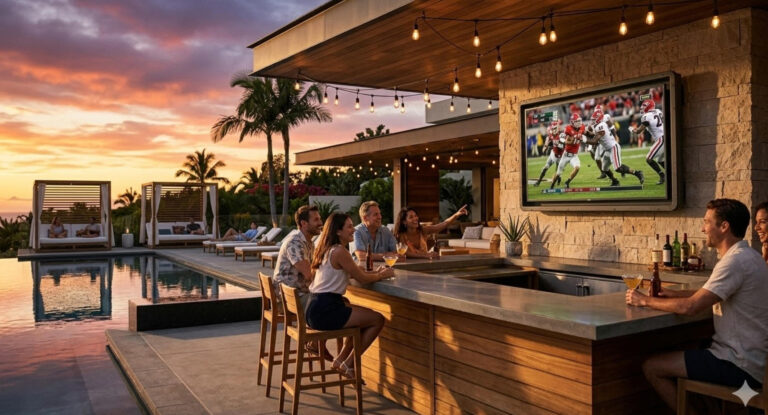
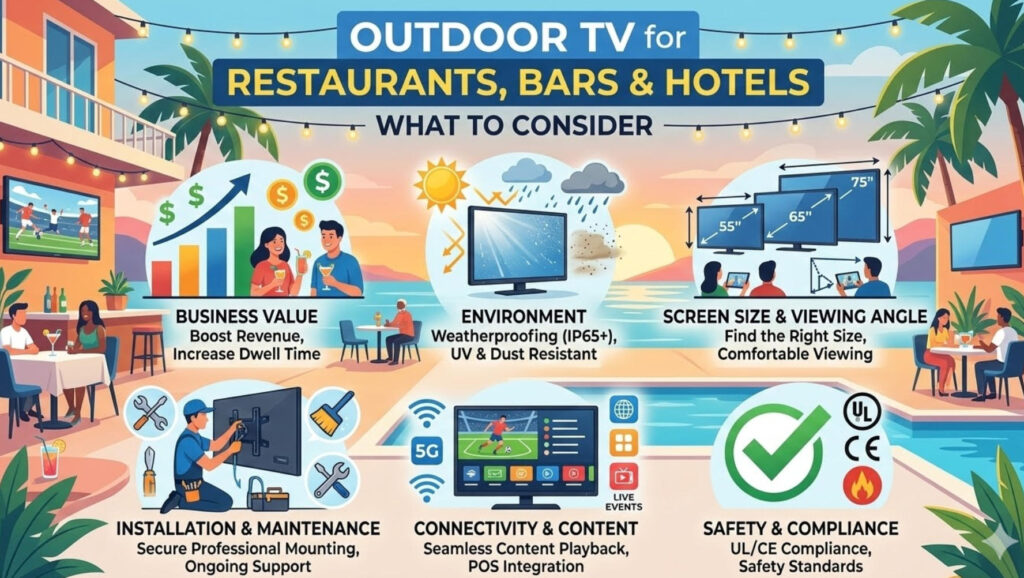
Today, more and more restaurants, bars, and hotels are installing Outdoor TVs in their open-air spaces—not merely to display content, but to create measurable commercial value. Across patios, poolside lounges, rooftop venues, and garden dining areas, a high-brightness, weatherproof display extends guest dwell time, enhances live sports and entertainment experiences, and strengthens brand presence. Unlike standard indoor screens, outdoor TVs are engineered for sun exposure, moisture resistance, dust protection, and temperature fluctuations, ensuring stable performance year-round. They can also support promotional campaigns, digital menus, event streaming, and branded content. For B2B buyers, investing in Outdoor TV solutions represents a strategic move to increase revenue per square meter and maximize the potential of outdoor spaces.
What Changes Can Restaurants, Bars & Hotels Expect After Installing Outdoor TVs?
After installing Outdoor TVs, Restaurants, Bars & Hotels experience noticeable changes across multiple areas, and below is a detailed analysis to help decision-makers understand the value and expected returns.
Before installation, outdoor spaces often suffered from inconsistent traffic, short dwell times, and limited secondary spending. According to industry data from Atmosphere TV, venues that stream entertainment and sports content see an average 16% increase in guest dwell time, which directly drives additional food and beverage orders and overall revenue growth.
A real-world example is Corner Tap, a sports bar in Houston. Before adding Outdoor TVs, peak outdoor traffic averaged around 85 guests, with an average dwell time of 46 minutes. After installing the screens and creating a lively game-day environment, peak traffic increased to approximately 160 guests, and average dwell time rose to 91 minutes, leading to a 34% increase in total sales over seven months.
In restaurant settings, outdoor TVs attract diners to stay longer for live events or themed programming, increasing secondary orders and encouraging repeat visits during non-peak hours. Many operators also report higher guest satisfaction scores and more frequent social media shares of event nights, which further amplifies brand visibility and word‑of‑mouth marketing.
For hotels, although direct case studies are limited, research shows that outdoor LED screens enhancing visibility and interactivity can boost on-site exposure by up to 30%, generating more bookings and guest engagement, which translates into higher outdoor space revenue.
Overall, installing outdoor TVs results in increased traffic, longer guest dwell times, higher spending, greater social engagement, and enhanced brand exposure, providing measurable evidence for B2B buyers to assess return on investment.
How Does Environmental Exposure Affect the Longevity of Outdoor TVs?
Although Outdoor TVs can provide significant commercial value for Restaurants, Bars & Hotels, simply installing them does not guarantee the expected improvements. Environmental exposure is a critical factor affecting both display longevity and overall return on investment, so decision-makers must carefully evaluate outdoor conditions and plan proper installation and maintenance strategies.
First, direct sunlight can greatly impact screen visibility and panel lifespan. Standard indoor TVs often struggle with insufficient brightness, accelerated aging, and color fading when exposed to prolonged sunlight. To ensure consistent performance, buyers should prioritize outdoor-specific models with high brightness panels, UV-resistant coatings, automatic brightness adjustment, and effective heat dissipation. Proper placement, avoiding long periods of direct midday sun, further extends the device’s life.
Rain, humidity, and dust can also damage internal electronics. The IP protection rating (e.g., IP65 or higher) indicates waterproof and dustproof capabilities. Venues near coastal or high-humidity regions benefit most from high IP-rated units, and implementing regular cleaning and inspection schedules reduces potential failures and extends operational life.
Temperature fluctuations can cause expansion, contraction, or condensation, affecting reliability. Commercial Outdoor TVs often include thermal controls such as anti-condensation features and automatic cooling fans for stable all-weather operation.
For flexible or temporary setups, a televisor inteligente portátil can serve as a supplementary solution, but long-term installations should prioritize commercial-grade models designed for harsh outdoor conditions. In summary, accurately assessing environmental factors, optimizing placement, selecting appropriate protection ratings, and combining them with maintenance strategies are key to ensuring Outdoor TV longevity, stable operation, and strong return on investment.
Which Screen Size and Viewing Angle Are Ideal for Commercial Outdoor Spaces?
To maximize the value of an Outdoor TV, screen size is one of the first aspects to consider. The layout of seats, viewing distances, and audience numbers in commercial outdoor spaces directly influence the ideal screen size and installation angle.
Seating arrangements typically determine viewing distance. The optimal distance is roughly 3–6 times the screen height. On a bar or restaurant patio where most guests sit 5–8 meters away, a 55–75 inch outdoor TV provides clear and immersive viewing. Hotel pools or large terraces usually have longer viewing distances, requiring 75–100 inches or larger screens to ensure every guest can watch comfortably while enhancing the overall atmosphere.
Screen height and viewing angle also play a significant role in guest experience. Screens installed too high or too low can cause neck strain or visual distortion. Aligning the screen center with viewers’ eye level, or slightly above by 20–30 cm, and adjusting angles according to seating ensures natural sightlines for multiple viewers.
When selecting a screen, it is important to balance immersion, space utilization, and cost. Oversized screens offer impressive visuals but occupy more space and budget, while undersized screens may fail to cover all seating areas, negatively affecting experience. Properly planning screen size and angle not only improves guest satisfaction but also enhances return on investment. For temporary events or seasonal needs, a televisor inteligente portátil can serve as a flexible supplementary option, providing high-quality, movable display solutions for special occasions or unique layouts.
Can Installation and Maintenance Requirements Impact Total Cost of Ownership?
The screen is not the only consideration for buyers; it is also essential to evaluate how Installation and Maintenance Requirements impact total cost of ownership, allowing for a comprehensive assessment of investment value and informed procurement decisions.
Installation complexity is a major factor influencing cost. Fixed installations require mounting brackets, reinforcement structures, and cabling, while also considering outdoor safety and stability requirements such as wind, water, and tamper resistance. Professional installation teams are typically needed, increasing labor and material expenses. For reference, a 43-inch outdoor TV costs approximately $1,499, a 55-inch around $2,288, and a 65-inch about $3,399. Venues like hotel terraces, restaurant patios, or large bar patios may require custom mounts or reinforced frames, further raising upfront investment.
Maintenance is another critical component of total ownership cost. Outdoor TVs exposed to sunlight, rain, and dust require regular cleaning, inspection of connections and circuitry, and software updates. Warranty coverage and potential hardware upgrades can also add extra expenses, making it vital to select brands that provide comprehensive after-sales service and long-term support.
For temporary events or seasonal deployments, a televisor inteligente portátil can serve as a cost-effective, flexible solution, reducing fixed installation complexity and adapting to different layouts or short-term needs. Choosing a reliable portable smart TV manufacturer ensures high-quality performance and stability even for temporary setups, maintaining a consistent viewing experience.
Overall, carefully evaluating installation complexity, reinforcement and cabling requirements, ongoing maintenance and warranty costs, and integrating flexible portable solutions is key to controlling total cost of ownership and maximizing return on investment for commercial Outdoor TV installations.
Why Is Connectivity and Content Integration Crucial for Outdoor TVs?
After installing Outdoor TVs, smooth content playback is crucial. Choosing cheaper models solely to cut costs can backfire if networks, streaming services, advertisements, or live sports fail to run reliably. Even the largest, brightest screens cannot deliver real value to Restaurants, Bars, or Hotels without seamless playback.
Connectivity is a key factor. Outdoor environments may face unstable Wi-Fi or cabling challenges. Buyers should select devices supporting wired connections, 5G, or stable Wi-Fi, ensuring compatibility with streaming services to avoid interruptions. High-quality outdoor TVs should also handle multiple video formats and resolutions to accommodate diverse advertising and sports content.
Content integration is equally important. Connecting Outdoor TVs to POS systems, hotel management systems, or proprietary applications allows precise ad targeting, real-time event updates, and enhanced customer interaction. For example, restaurants can update screens based on current menus or promotions, while hotel pool areas can display live sports alongside dining or recreational information.
Considering network reliability and content integration not only ensures smooth playback but also improves operational efficiency and guest experience, increasing repeat visits and customer satisfaction. For temporary or seasonal deployments, televisores inteligentes portátiles should also support content integration, enabling quick setup in various locations while maintaining consistent brand presentation and interactive experiences.
What Safety and Compliance Considerations Should B2B Buyers Check?
It is important to note that for B2B buyers, Safety and Compliance Considerations must also be carefully evaluated, as they directly impact legal risk, operational safety, and the long-term return on Outdoor TV investments. Ignoring these factors can lead to unexpected safety incidents or legal liabilities, affecting both reputation and operational efficiency.
Electrical safety is the most fundamental requirement. Outdoor TVs exposed to outdoor conditions can pose risks such as short circuits, electric shocks, or equipment failure if wiring or grounding is not properly designed. Buyers must ensure devices comply with local electrical safety standards, such as UL, CE, or FCC certification, to guarantee reliability and safety.
Fire resistance, waterproofing, and anti-tipping features are equally critical. Units should have sufficient IP protection ratings (e.g., IP65 or higher) and pass fire-resistant material testing to operate safely under direct sunlight, high temperatures, or rainy conditions. Additionally, mounting brackets must be stable to prevent screens from tipping over and causing accidents. Anti-tipping design is especially important in high-traffic areas, such as restaurant terraces or hotel poolside spaces.
Regulatory compliance is another essential consideration. Different countries and regions have varying standards for outdoor electronics, including energy consumption, emissions, and noise restrictions. Non-compliance may result in legal liabilities and operational penalties.
When evaluating suppliers, B2B buyers should compare brands on certification, after-sales service, and long-term support. A reliable supplier provides compliant products along with installation guidance, scheduled maintenance, and fast response services, reducing operational risks.
Focusing on Safety and Compliance Considerations not only protects guests and staff but also mitigates legal and operational risks while ensuring long-term stability and ROI of Outdoor TV investments.
Final Thoughts: Is Portable TV A Options For Restaurant?
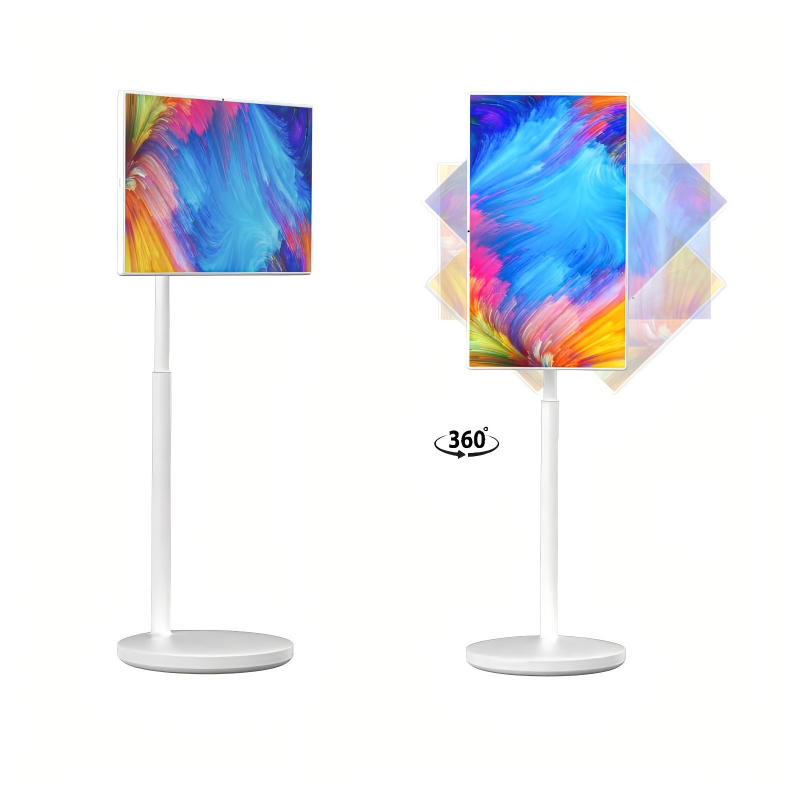
For modern restaurants prioritizing operational flexibility and premium guest experiences, investing in a portable smart TV is a highly recommended strategic upgrade. Innovative displays like Ikinor and the LG StanbyME are completely redefining commercial entertainment by eliminating the strict limitations and high installation costs of traditional, fixed screens.
Featuring built-in extended-life batteries, robust smart ecosystems, and smooth rolling bases, these devices free venues from complex wiring and wall mounting. Operators can effortlessly move the screen to an outdoor patio, a busy waiting area, or a VIP room based on real-time foot traffic, live sporting events, or private bookings. Whether broadcasting HD sports, displaying dynamic digital menus, or running interactive brand promotions, they adapt seamlessly to your dynamic business needs.
If your goal is to significantly reduce Total Cost of Ownership (TCO) while maximizing space utilization, portable smart TVs from brands like Ikinor and LG are an exceptional choice. They deliver on-demand immersive entertainment, directly boosting your venue’s revenue potential and overall brand appeal.
Preguntas frecuentes
What are the measurable benefits of installing Outdoor TVs in commercial venues?
Outdoor TVs can increase guest dwell time, average check size, and repeat visits. They also improve brand image and social media exposure through dynamic content.
How should buyers evaluate weatherproof ratings for Outdoor TVs?
Check IP ratings (IP65 or higher), UV protection, operating temperature, and corrosion resistance. Ensure the TV has passed standardized outdoor durability tests.
Which screen sizes optimize guest experience and space usage?
Choose screen size based on viewing distance and audience size: 55–75 inches for small terraces, 75–100 inches for larger patios or pool areas. Consider sightlines and multiple viewing angles.
Can installation complexity significantly impact long-term costs?
Yes, fixed installations with custom mounts or reinforcement increase upfront and maintenance costs. Temporary or seasonal setups may benefit from portable smart TVs.
Why is connectivity and content management important for ROI?
Seamless streaming of sports, ads, and brand content engages guests and supports repeat visits. Integration with POS or hotel systems improves operational efficiency.
Which portable smart TV manufacturer offers reliable commercial-grade options?
Select vendors with commercial certifications, IP-rated enclosures, and strong after-sales support. Reliable portable smart TVs ensure flexible deployment and stable performance.