Outdoor TV and Waterproof TV are often grouped together in commercial display discussions, yet they serve different technical purposes. For procurement managers, system integrators, and project planners, understanding this distinction is essential before making a capital investment. An outdoor TV is engineered for continuous exposure to open-air environments—sunlight, dust, wind, temperature shifts, and rain—while maintaining brightness and structural durability. A waterproof TV, by comparison, prioritizes moisture resistance and sealed construction, making it suitable for wet or high-humidity areas such as spas, bathrooms, or poolside zones.
Selecting the wrong category can lead to performance issues, shortened product lifespan, and unexpected maintenance costs. A clear understanding of standards, protection ratings, and application scenarios ensures smarter purchasing decisions and better long-term returns.
What Are the Official Definitions and Protection Standards for Outdoor TV and Waterproof TV?
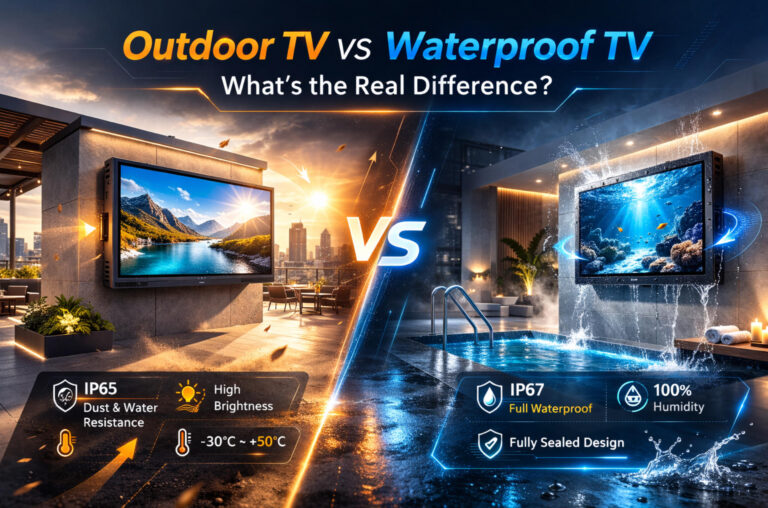
An Outdoor TV is specifically engineered to operate reliably in fully exposed environments, such as terraces, patios, resorts, stadiums, rooftop bars, and other commercial outdoor venues. Its design ensures resistance to rain, dust, UV radiation, temperature fluctuations, wind, and prolonged direct sunlight. Beyond basic sealing, outdoor TVs feature rugged housings, corrosion-resistant and weatherproof materials, advanced thermal management systems, and high-brightness displays, often exceeding 1,500 nits, to maintain clear visibility even in the brightest daylight. Their performance is validated through Ingress Protection (IP) ratings, most commonly IP65 or IP66, which indicate strong protection against dust and water jets. Additional certifications may include UV resistance, anti-corrosion testing, shock resistance, and wide operating temperature ranges, sometimes from –20°C to 55°C, depending on the manufacturer.
By contrast, a waterproof TV focuses primarily on moisture protection, making it suitable for bathrooms, poolside areas, spas, or marine cabins. Even with an IP65 or IP67 rating, it cannot guarantee sunlight readability, UV durability, or efficient heat dissipation, since its design priority is preventing water ingress rather than full outdoor performance.
For semi-outdoor or temporary deployments, a televisor inteligente portátil offers flexibility, mobility, and ease of installation. Partnering with a reputable portable smart TV manufacturer ensures that even portable solutions meet rigorous quality, safety, and compliance standards in varied environmental conditions.
Ultimately, IP ratings and certifications are only part of the picture. Evaluating both environmental resistance and operational performance—including brightness, UV durability, and thermal management—is essential for selecting a display that delivers long-term reliability for permanent outdoor installations or flexible portable deployments.
How Do Environmental Resistance Capabilities Differ Between Outdoor TV and Waterproof TV?
When evaluating displays for semi-outdoor or fully exposed environments, understanding environmental resistance capabilities is essential. An Outdoor TV is engineered to withstand a broad range of environmental stresses. This includes resistance to rain, dust, UV radiation, wind, temperature extremes, and even occasional debris or salt spray in coastal areas. Outdoor TVs often incorporate rugged housings made from corrosion-resistant metals or treated plastics, advanced thermal management systems to prevent overheating in direct sunlight, and high-brightness panels that maintain visibility in bright daylight. Many outdoor TVs undergo third-party testing for UV stability, thermal shock, humidity, and dust ingress to ensure long-term durability.
In contrast, a Waterproof TV focuses primarily on moisture protection. Its design is optimized to prevent water ingress in bathrooms, spas, poolside areas, or marine cabins. While waterproof TVs often meet IP65 or IP67 ratings, they may not tolerate prolonged UV exposure, extreme temperatures, or dust, and their heat dissipation systems are typically less robust. This makes them unsuitable for fully exposed outdoor installations where sunlight, wind, and thermal fluctuations are significant factors.
For temporary or semi-outdoor setups, a televisor inteligente portátil can provide flexibility, but buyers must evaluate whether the device meets environmental resistance requirements for the intended location. Partnering with a reliable portable smart TV manufacturer ensures that even mobile solutions adhere to quality and safety standards, including basic water and dust resistance, thermal stability, and corrosion protection.
In conclusion,understanding the differences in environmental resistance between outdoor and waterproof TVs allows B2B buyers to select a display that performs reliably in its intended setting, reducing maintenance costs and minimizing risk of premature failure.
Why Is Brightness and Anti-Glare Performance a Critical Difference?
Building on the environmental resistance differences between Outdoor TV y Waterproof TV, brightness and anti-glare performance is a crucial factor for B2B buyers evaluating displays for semi-outdoor, rooftop, or fully exposed environments. Outdoor TVs are engineered to remain readable under strong sunlight, with high-brightness displays typically ranging from 1,000 to 3,000 nits. Optical bonding and anti-glare coatings reduce reflections, enhance contrast, and maintain visibility in commercial settings such as restaurant terraces, hotel pools, stadiums, outdoor bars, theme parks, resort lobbies, and golf club terraces. These features ensure signage, menus, or promotional content remains visible throughout the day, even under direct sunlight or variable lighting, supporting effective customer engagement and operational efficiency.
Por el contrario, Waterproof TVs generally have lower brightness, often under 700–800 nits, because they are intended for moisture-prone, semi-enclosed, or indoor spaces like bathrooms, spa rooms, poolside cabanas, marine cabins, or shower areas. Without adequate brightness and anti-glare treatment, content becomes difficult to read in bright environments, limiting usefulness in fully outdoor or high-illumination areas.
For temporary or semi-outdoor deployments, a televisor inteligente portátil provides flexibility and quick setup. Working with a reliable portable smart TV manufacturer ensures mobile solutions meet brightness, contrast, and clarity standards for pop-up events, temporary exhibition booths, outdoor training, and mobile hospitality deployments, while maintaining readability under changing sunlight conditions.
By considering the brightness levels and anti-glare capabilities, businesses can match each display to its intended environment, ensuring clear visibility, consistent readability, and effective content delivery throughout the day, even under challenging lighting conditions.
Which Installation Scenarios Are Each Type Designed For?
Different commercial and semi-outdoor environments require displays that match specific usage needs. Outdoor TVs are designed for permanent or long-term outdoor placement where screens face frequent customer interaction and varying weather conditions. Common professional applications include restaurant terraces, hotel pool decks, stadium seating areas, rooftop bars, theme parks, resort lobbies, golf club terraces, and open-air conference or event spaces. In these settings, displays must support continuous operation while delivering content for promotional, informational, or entertainment purposes over extended periods.
Waterproof TVs are better suited for semi-enclosed areas where moisture or occasional splashes may occur, but full sunlight and dust exposure are limited. Commercial installation scenarios can include indoor atriums with water features, covered poolside lounges, fitness center wet zones, hotel kitchen demonstration areas, aquariums, or indoor fountain observation spaces. These locations prioritize protection against water ingress and humidity while remaining sheltered from harsh outdoor conditions.
For projects requiring flexible placement or temporary deployment, businesses often combine Outdoor TVs and Waterproof TVs depending on environmental exposure. For instance, seasonal outdoor events, covered outdoor exhibition areas, semi-open retail patios, or temporary promotional installations may integrate both types to balance durability and operational needs. Proper planning ensures that each display is positioned in an environment that matches its design strengths, maximizing longevity, usability, and overall commercial impact.
Careful alignment of each display type with the installation environment allows businesses to optimize operational efficiency, reduce maintenance risks, and deliver consistent, high-quality visual experiences across all targeted venues.
How Do Cost Structures and Long-Term Maintenance Compare?
In commercial and semi-outdoor deployments, evaluating both upfront costs and long-term maintenance requirements is crucial to ensure reliable operation and cost efficiency. Outdoor TVs are built with rugged enclosures, weatherproofing, and components rated for prolonged exposure to sun, rain, and dust, which results in higher initial investment. Market pricing typically ranges from $1,149 for 45″, $1,599 for 55″, and $2,199 for 65″ models. These features, including reinforced housings and outdoor-grade power systems, help minimize environmental wear, reduce downtime, and extend operational life. Routine upkeep generally involves cleaning, inspecting mounts and seals, and applying occasional firmware updates, which collectively lower long-term repair and replacement expenses.
Waterproof TVs prioritize moisture protection for semi-enclosed or indoor spaces and are not designed for full outdoor conditions. Typical pricing is $1,999 for 55″, $2,699 for 65″, and $3,799 for 75″. While these units include advanced sealing to prevent water ingress, deploying them in fully exposed outdoor environments can accelerate component degradation, increasing maintenance frequency and shortening service life.
For temporary or flexible projects, televisores inteligentes portátiles provide an adaptable solution. Working with a trusted portable smart TV manufacturer ensures that these displays meet necessary durability and safety standards for semi-outdoor or indoor use, while remaining easy to move, store, and reinstall between events. They are especially suitable for pop-up exhibitions, seasonal promotions, short-term training sessions, or temporary retail activations.
Comparing the initial purchase cost, expected lifespan, and projected maintenance allows businesses to select the most suitable display type for each environment, balancing upfront investment, operational reliability, and long-term value.
Can Outdoor TV and Waterproof TV Be Used Interchangeably?
Although Outdoor TVs y Waterproof TVs may appear similar, they are engineered for very different operational conditions, meaning they are rarely fully interchangeable. Outdoor TVs are specifically designed for continuous exposure to sunlight, rain, dust, and wide temperature ranges. High-brightness displays, anti-glare coatings, rugged housings, and full weatherproof certifications allow reliable operation in fully exposed commercial spaces such as restaurant terraces, stadiums, hotel rooftops, open-air bars, resort lobbies, golf club terraces, and outdoor event arenas. Using a Waterproof TV in these conditions risks reduced screen visibility under direct sunlight, insufficient heat dissipation, accelerated component wear, and potential failure, which could result in increased maintenance costs and operational downtime.
Conversely, Waterproof TVs focus primarily on moisture and humidity resistance for semi-enclosed or indoor environments, including covered poolside lounges, spa zones, kitchen demonstration spaces, gym wet areas, indoor water features, or aquarium observation rooms. While deploying an Outdoor TV in these areas is generally safe, the advanced weatherproofing and high-brightness capabilities may be unnecessary, leading to higher upfront costs without proportional benefits.
For temporary, semi-outdoor, or flexible deployments, televisores inteligentes portátiles offer a practical and cost-efficient alternative. Partnering with a trusted portable smart TV manufacturer ensures units meet durability and safety standards, while remaining easy to transport, set up, and store between events. These displays are ideal for short-term promotional events, pop-up exhibitions, seasonal marketing campaigns, temporary training sessions, or temporary outdoor activations.
Ultimately, selecting the right display depends on environmental conditions, expected exposure duration, required brightness and visibility, and maintenance considerations. Properly matching the display type to its intended deployment ensures optimal performance, longevity, and cost efficiency while minimizing the risk of premature failure.
Preguntas frecuentes
What IP rating is sufficient for a commercial outdoor TV installation?
For most fully exposed commercial environments, an IP65 or higher rating is recommended to ensure protection against dust, rain, and water jets.
Can a waterproof TV survive direct sunlight exposure?
No. Waterproof TVs are primarily designed for moisture-prone or semi-enclosed areas. Continuous direct sunlight can cause visibility issues, heat buildup, and potential component degradation.
How many nits are recommended for outdoor digital signage?
Outdoor displays should typically have 1,000–3,000 nits to ensure readability under bright sunlight, depending on the deployment location and ambient lighting conditions.
Is a portable smart TV suitable for semi-outdoor restaurant use?
Yes. Portable smart TVs provide flexible deployment options for semi-outdoor areas like covered terraces or temporary events, provided they meet durability and brightness requirements for the intended environment.
How do I choose a reliable portable smart TV manufacturer for OEM projects?
Look for manufacturers with proven durability testing, industry certifications, responsive support, and experience with semi-outdoor or temporary commercial deployments.
What certifications should B2B buyers request before purchasing?
Essential certifications include Ingress Protection (IP) ratings, UV resistance, operating temperature ranges, and any applicable safety or regulatory compliance certifications relevant to commercial installations.