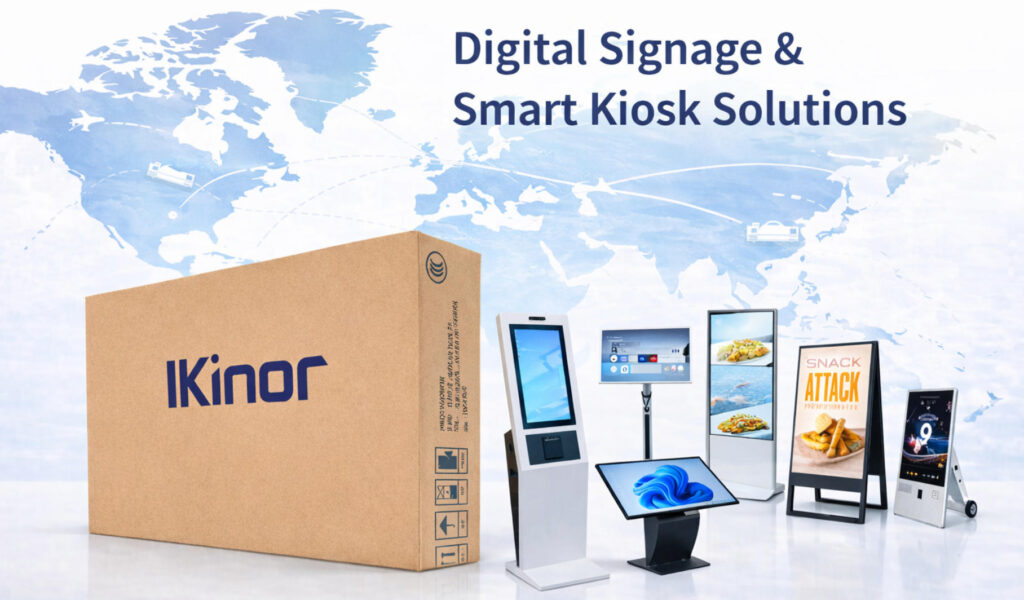
Digital signage has become an essential communication and marketing tool for businesses across South Africa, widely used in retail stores, shopping centres, corporate offices, hospitality venues, and public spaces. Compared with traditional static signage, digital displays offer greater flexibility, real-time content updates, and stronger visual impact, helping brands communicate more efficiently and consistently. As demand continues to grow, digital signage suppliers in South Africa now provide a broad range of solutions, from basic indoor screens to complex video walls and interactive systems, each with different pricing and configuration options. In this context, understanding how suppliers differ in terms of cost, technology, and service has become increasingly important. This article focuses on introducing the South African digital signage supplier landscape, while outlining pricing considerations and common configuration choices to support informed decision-making.
Digital Signage Market in South Africa
The South African digital signage market has been steadily expanding, supported by a maturing regional manufacturing and supply landscape. In 2024, South Africa’s digital signage sector generated around USD 338.6 million in revenue, with forecasts projecting growth to USD 578.2 million by 2030 at a CAGR of roughly 9.4 %. This reflects increasing adoption across retail, corporate, transit, and public environments as businesses shift from static to dynamic displays.
South Africa’s digital signage ecosystem benefits from a relatively established supply chain, with commercial displays and signage hardware widely available through local distributors and integrators. While high‑end panels are largely imported, local assembly and integration services contribute to shorter delivery times and more tailored configurations for domestic buyers. The availability of multi‑zone content platforms and CMS services further supports market development.
Core industry strengths include competitive labor costs, growing technical expertise in display integration, and strong demand from fast‑growing sectors such as retail and hospitality. Medium‑sized displays (32–52 inches) remain among the most widely deployed products due to their balance of visibility and cost‑effectiveness, particularly for indoor informational and promotional use.
Among popular product segments, interactive touchscreen kiosks y floor‑standing digital signage are gaining traction in venues like malls, airports, and corporate offices. South African suppliers and distributors often offer models such as 55″ and 65″ floor kiosks with Android‑based CMS support, reflecting strong demand for flexible and interactive digital signage hardware.
Overall, increasing infrastructure investment, diversified product portfolios, and evolving content software capabilities are strengthening South Africa’s position as a key digital signage market within the region.
Price & Configuration Guide Of Digital Signage In Singapore
Understanding the price and configuration options of digital signage products is essential for businesses in South Africa to plan budgets, select the right hardware, and maximize ROI. Prices vary significantly depending on product type, display size, features, and software integration.
Floor-standing digital signage is one of the most popular formats for retail, corporate, and public spaces. Standard indoor models (42–55 inches) typically range from USD 400–700 per unit, while advanced units with interactive touchscreens, embedded media players, or outdoor-rated LED panels can reach USD 1,200–2,500 per unit. These units usually support Android or Windows-based CMS platforms for remote content management and multi-zone display.
Portable digital signage displays or smart TV screens offer mobility and convenience, ideal for events, pop-up stores, or temporary promotions. These smaller units (32–43 inches) are generally priced USD 200–500, with optional battery packs or lightweight enclosures to enhance portability.
Touchscreen kiosks are widely used in airports, malls, and corporate environments for interactive content delivery. Mid-sized kiosks typically cost USD 1,000–3,000, while larger outdoor or ruggedized models can exceed USD 5,000. Key configuration considerations include touchscreen type (capacitive or resistive), screen resolution, connectivity options, and software compatibility.
Other configuration factors to consider include screen brightness, resolution, mounting type, enclosure material, and CMS capabilities. Many suppliers provide customizable configurations based on project requirements, allowing businesses to balance performance and budget.
In South Africa, working with suppliers who provide technical consultation, on-site installation, and after-sales support is recommended, especially for large-scale or complex deployments. By understanding typical price ranges and configuration options, buyers can make informed decisions and ensure digital signage solutions meet both operational and marketing objectives.
Top 10 Digital Signage Manufacturers and Providers in South Africa
Moving Tactics
| Founded | 1997 |
| Company Profile | One of South Africa’s longest‑established digital signage and retail analytics solution providers, integrating displays with audience measurement. |
| Core Products | Digital menu boards, interactive kiosks, video walls, content management systems, analytics dashboards |
| Key Strengths | Custom solutions, strong content creation capabilities, nationwide installation & support teams across Southern Africa. |
| Location | Offices in Johannesburg, Cape Town, Durban, and more across the region. |
| Best For | B2B distributors, brand owners & system integrators needing end‑to‑end digital signage solutions |
BBM Digital
| Founded | 2008 |
| Company Profile | Digital solutions specialist delivering signage, retail analytics, and interactive experiences |
| Core Products | Digital menu boards, promotional displays, touchscreen kiosks, interactive walls, AR experiences |
| Key Strengths | Broad product portfolio with creative content and tech services |
| Location | Umhlanga, KwaZulu‑Natal (Greater Durban area) |
| Best For | Retail & corporate clients, agencies, project contractors seeking both hardware and content solutions. |
PVision (Pty) Ltd
| Founded | 2003 |
| Company Profile | A commercial display and digital signage manufacturer and integrator |
| Core Products | LED & LCD digital signage, video walls, interactive screens, cloud CMS compatibility |
| Key Strengths | Turnkey solutions with custom design, installation, and maintenance services |
| Location | Midrand / Gauteng, South Africa |
| Best For | B2B resellers, AV integrators, and enterprises requiring high‑impact visual displays |
digids
| Founded | Not publicly specified |
| Company Profile | Nationwide digital signage and facility management provider based in Western Cape |
| Core Products | Digital signage screens, cloud‑based content management, installation & remote support |
| Key Strengths | Strong local service coverage across all nine South African provinces |
| Location | Saldanha, Western Cape |
| Best For | Local businesses, regional integrators, and agencies seeking scalable signage networks |
Dynamiccom (Distributor)
| Founded | Over a decade ago |
| Company Profile | Supplies digital signage hardware and cloud signage platforms (e.g., NowSignage) |
| Core Products | LED/LCD screens, media players, mounting hardware and CMS subscriptions |
| Key Strengths | Trusted hardware sourcing with local warranty and technical consultation |
| Location | South Africa (distributor network) |
| Best For | Integrators, resellers, brand owners needing reliable equipment sourcing. |
PDT South Africa (Public Display Technologies)
| Founded | Early 2000s |
| Company Profile | A long‑standing South African provider of digital signage and display solutions used in retail, hospitality, corporate and public environments |
| Core Products | Indoor/outdoor displays, video walls, interactive screens, digital shelf talkers, queue management displays and CMS systems |
| Key Strengths | Customized solutions, cloud‑based scheduling, strong installation track record |
| Location | South Africa (multiple regions) |
| Best For | B2B integrators, project contractors, large enterprises |
AVT Solutions
| Founded | 2000s |
| Company Profile | Leading AV systems integrator offering turnkey digital signage, LED and display solutions |
| Core Products | Digital menu boards, video walls, LCD signage, interactive touchscreens |
| Key Strengths | Deep technical expertise with customized installations across industries |
| Location | South Africa (nationwide service) |
| Best For | Brand owners, project contractors, corporate clients |
PolyComp Technologies
| Founded | 1990s |
| Company Profile | South African manufacturer of custom LED displays and digital signage hardware |
| Core Products | Indoor and outdoor LED signage, video walls, ticker boards. |
| Key Strengths | Local engineering, robust build quality for African environments |
| Location | South Africa |
| Best For | AV integrators, resellers, project contractors |
Signs4SA
| Founded | 1990s |
| Company Profile | Comprehensive signage provider including custom digital LED and display systems |
| Core Products | LED screens, digital billboards, custom signage solutions |
| Key Strengths | End‑to‑end signage production, strong local service support |
| Location | South Africa |
| Best For | Local businesses, integrators, agencies |
SimCo Distribution
| Founded | 2010s |
| Company Profile | Supplier and distributor of LED screens and digital display technology across South Africa |
| Core Products | LED billboards, large‑format signage, digital advertising screens |
| Key Strengths | Competitive pricing and broad product availability |
| Location | Durban, South Africa |
| Best For | Distributors, resellers, AV wholesalers |
How to Choose the Right South Africa Manufacturer — Key Evaluation Criteria
Choosing the right digital signage manufacturer in South Africa requires a structured evaluation approach to ensure product quality, reliable supply, and long-term support. The first factor to consider is production qualifications and certifications. Look for manufacturers with internationally recognized standards such as ISO 9001, CE, or RoHS compliance, which indicate adherence to quality management, safety, and environmental regulations.
Next, assess the factory scale and production capacity. Larger facilities with multiple production lines, a robust monthly output, and sufficient skilled employees often provide more consistent quality and shorter lead times. Technical capabilities are equally important—suppliers that offer design services, OEM/ODM options, and engineering supportcan help tailor solutions to specific business needs.
A strong quality control system is essential. Check whether the manufacturer implements procedures like IQC (Incoming Quality Control), IPQC (In-Process Quality Control), and OQC (Outgoing Quality Control), along with advanced testing equipment, to ensure every unit meets specifications.
Supply chain capabilities also influence reliability. Manufacturers with stable access to raw materials and proven delivery performance can minimize production delays and guarantee timely shipment.
Finally, selection criteria may vary depending on the buyer type. Brand owners may prioritize customization and long-term partnership, distributors may focus on cost-efficiency and stock availability, while project contractors often value technical support, turnkey solutions, and installation guidance.
By carefully considering certifications, production scale, technical expertise, quality assurance, and supply chain robustness, businesses in South Africa can identify manufacturers that align with their operational goals and project requirements, reducing risk and ensuring smooth digital signage deployment.
Common Business Scenarios When You Need to Work With Manufacturers (and How to Handle Them)
Working with digital signage manufacturers in South Africa can vary widely depending on your business type, project scale, and technical requirements. Understanding common business scenarios helps streamline supplier selection, reduce risk, and ensure successful project delivery.
One common scenario is branding or retail expansion, where brand owners need customized displays, interactive kiosks, or video walls. In such cases, manufacturers with strong OEM/ODM capabilities and design support are essential. Brands should clearly communicate design specifications, content requirements, and desired software integration to ensure the manufacturer can deliver turnkey solutions that align with their marketing objectives.
Another scenario involves B2B distributors or resellers looking to source products for multiple clients. Distributors need suppliers with stable production capacity, competitive pricing, and reliable supply chains. Placing bulk orders with clear quality expectations and negotiating favorable lead times can help maintain margins while ensuring product consistency for downstream clients.
Project contractors or system integrators often face the challenge of installing signage across multiple locations or large venues. In this context, manufacturers offering installation guidance, technical support, and local service teamsare critical. Establishing clear SLAs and support agreements ensures smooth deployment and minimizes downtime.
Smaller businesses or startups may seek off-the-shelf solutions, such as floor-standing digital signage or portable screens, without requiring heavy customization. Here, manufacturers with flexible packages, fast shipping, and user-friendly CMS platforms are preferred.
In all scenarios, maintaining open communication, detailed contracts, and quality checkpoints—including IQC, IPQC, and OQC—helps prevent misunderstandings and ensures products meet specifications. By matching business needs with the right manufacturer capabilities, companies can optimize costs, accelerate deployment, and achieve better long-term results with their digital signage investments.
Business Investigation Tips For Digital Signage Products in South Africa
When sourcing digital signage products in South Africa, conducting effective market research is key to identifying reliable suppliers and understanding the competitive landscape. A good starting point is defining targeted keywords for online research. Useful search terms include: “digital signage suppliers South Africa,” “LED display manufacturer South Africa,” “interactive kiosk supplier,” “floor-standing digital signage,” “touchscreen kiosk distributor,” “digital signage CMS South Africa,” y “outdoor digital signage supplier.” Combining product types with city names, such as Johannesburg, Cape Town, or Durban, helps locate region-specific suppliers and uncover smaller local manufacturers.
Beyond keyword research, there are multiple channels to discover reliable suppliers in South Africa. Trade shows and exhibitions, such as the Electronics & Digital Signage Expo South Africa or regional retail technology fairs, allow businesses to meet suppliers directly, compare products, and discuss custom requirements. Business directories and industry associations, including the South African Bureau of Standards (SABS) and local chamber of commerce directories, provide verified listings of reputable suppliers. Professional networking platforms, especially LinkedIn, enable connections with manufacturers, distributors, and integrators while offering insights into past client feedback. B2B marketplaces, both global like Alibaba and local equivalents, are also valuable sources to identify suppliers with international and domestic operations.
Additionally, reaching out to existing system integrators, signage installers, or corporate clients can reveal firsthand supplier performance, product reliability, and after-sales support quality. Combining targeted keyword searches with industry events, professional networks, and local directories ensures a comprehensive understanding of the supplier landscape, reducing risk and improving the chances of finding trusted partners for digital signage solutions in South Africa.
How Much Does Digital Signage Products Manufacturing Cost?
The cost of manufacturing digital signage products varies widely depending on product type, display size, features, software integration, and production scale. Understanding these factors is essential for businesses planning to source or manufacture signage in South Africa.
Hardware costs are the primary component. For floor-standing digital signage, standard indoor models (42–55 inches) typically cost between USD 400–700 per unit, while high-end units with interactive touchscreens, media players, or outdoor-rated LED panels can range from USD 1,200–2,500 per unit. Portable digital signage displays or smart TV screens (32–43 inches) are generally more affordable, costing USD 200–500 depending on portability features, battery life, and brightness. Touchscreen kiosks are among the more expensive categories, with mid-sized models priced USD 1,000–3,000, and larger or weatherproof outdoor units exceeding USD 5,000 per unit.
Software and CMS (Content Management Systems) also impact costs. Basic cloud-based CMS platforms typically charge USD 10–30 per screen per month, while enterprise-grade systems can range from USD 50–150 per screen per month, depending on features such as scheduling, remote management, and analytics.
Manufacturing and assembly costs vary by scale. Small-batch local assembly using imported screens may add USD 100–300 per unit in labor and assembly, whereas mass production reduces per-unit costs to around USD 50–100 for high-volume orders. Additional costs include shipping, packaging, import duties, custom branding, and quality testing (IQC, IPQC, OQC).
Overall, a typical indoor digital signage unit in South Africa costs USD 400–1,500 to manufacture, while interactive kiosks or large video walls can exceed USD 3,000–5,000 per unit. Businesses should consider hardware, software, assembly, and additional features when estimating total manufacturing costs to ensure accurate budgeting and supplier selection.
What QC Processes to Expect?
Quality control (QC) is a critical factor when sourcing digital signage products in South Africa, ensuring that displays, kiosks, and integrated systems meet performance, safety, and durability requirements. Understanding the QC processes of suppliers helps businesses reduce risks and secure reliable, long-lasting solutions.
The first step is Incoming Quality Control (IQC). South African manufacturers and distributors typically inspect all components before production, including LED/LCD panels, touchscreens, media players, enclosures, and power modules. IQC ensures that every component meets technical specifications and complies with certifications such as CE, RoHS, or ISO 9001, which are increasingly required for both local and export projects.
Next is In-Process Quality Control (IPQC). During assembly, suppliers check connectivity, screen alignment, touch response, and software installation. For interactive kiosks or video walls, IPQC includes verifying display calibration, network functionality, and component integration. This step minimizes defects during production and ensures each unit meets design requirements.
The final stage is Outgoing Quality Control (OQC). Completed units undergo comprehensive testing for brightness, color accuracy, touch sensitivity, software performance, and, for outdoor displays, environmental resilience against dust, moisture, and temperature fluctuations. Some manufacturers also conduct burn-in and stress tests to simulate long-term usage, ensuring reliability under continuous operation.
A robust QC system in South Africa typically combines documented procedures, trained inspectors, and specialized testing equipment. Suppliers adhering to these standards provide traceability, accountability, and consistent quality across batches.
By understanding and expecting these QC processes, businesses—whether brand owners, integrators, or distributors—can confidently select suppliers, reduce downtime, and ensure their digital signage deployments operate smoothly and reliably.
Common Challenges When Working With Manufacturers (and Solutions)
Working with digital signage manufacturers in South Africa offers opportunities for high-quality displays and customized solutions, but businesses often face several common challenges that can affect project timelines, costs, and overall performance. Understanding these challenges and their solutions can help buyers navigate the supplier landscape effectively.
One frequent challenge is variable product quality. With multiple suppliers offering different brands, components, and assembly standards, there can be inconsistencies between units. The solution is to prioritize manufacturers with ISO 9001, CE, and RoHS certifications and request sample units before committing to large orders. Conducting thorough IQC, IPQC, and OQC inspections also mitigates quality risks.
Lead times and supply chain delays are another concern, especially for imported components like LED panels or media players. To address this, buyers should select suppliers with reliable local inventory, diversified sourcing channels, and transparent delivery schedules. Bulk ordering and clear production agreements can further reduce delays.
Technical compatibility and software integration issues can arise when signage units require CMS platforms or third-party applications. Working with suppliers that provide OEM/ODM support, engineering guidance, and software training helps ensure smooth integration and long-term usability.
Finally, after-sales support and maintenance can vary widely. Poor service can lead to extended downtime, especially for outdoor or large-scale installations. Choosing manufacturers with local service teams, warranty coverage, and remote troubleshooting capabilities ensures timely maintenance and reduces operational risks.
By proactively addressing these challenges—through careful supplier selection, quality assurance processes, supply chain planning, and technical support—businesses in South Africa can maximize the value of their digital signage investments and ensure consistent, reliable performance.
Conclusion
In conclusion, the South African digital signage market presents significant opportunities for businesses across retail, corporate, hospitality, and public sectors. With the increasing adoption of interactive kiosks, floor-standing displays, portable signage, and touchscreen solutions, choosing the right suppliers is critical to achieving reliable, high-quality, and cost-effective deployments.
Understanding the regional manufacturing landscape is the first step. South Africa offers a mix of established local manufacturers, skilled integrators, and distributors capable of supporting both small-scale and large-scale projects. Evaluating a supplier’s production capacity, technical capabilities, and supply chain stability ensures that your chosen partner can consistently meet project timelines and quality expectations.
Quality control is another essential consideration. Robust IQC, IPQC, and OQC processes, along with relevant certifications such as ISO 9001, CE, and RoHS, guarantee that digital signage products perform reliably under South African conditions, including indoor and outdoor environments. Likewise, assessing after-sales support, maintenance services, and software compatibility can prevent operational issues and reduce long-term costs.
Businesses must also tailor their supplier selection to their specific needs. Brand owners may prioritize customization and design support, distributors focus on product availability and pricing, while project contractors value technical guidance and turnkey solutions. By understanding these differences and conducting thorough due diligence, companies can mitigate risks and ensure smooth project execution.
Ultimately, combining market knowledge, quality assurance, and strategic supplier evaluation allows South African businesses to leverage digital signage effectively, enhancing customer engagement, brand visibility, and operational efficiency. Careful planning and informed supplier selection are the keys to maximizing ROI and achieving long-term success in this rapidly growing market.
Related Resource
Preguntas frecuentes
Common digital signage products include floor-standing digital signage, touchscreen kiosks, portable digital signage displays, LED/LCD video walls, and interactive touchscreen systems. These products serve applications in retail, corporate environments, transportation hubs, and public spaces, offering both indoor and outdoor visibility.
When choosing a supplier, consider production qualifications and certifications (ISO 9001, CE, RoHS), factory capacity, technical expertise (OEM/ODM support, custom designs), quality control systems (IQC, IPQC, OQC), and supply chain reliability. Align the supplier’s capabilities with your business type—whether you are a brand owner, distributor, or project contractor—to ensure a smooth and reliable deployment.
Reputable suppliers implement a three-stage quality control system:
IQC (Incoming Quality Control) – inspections of raw materials and components.
IPQC (In-Process Quality Control) – checks during assembly for alignment, connectivity, and software integration.
OQC (Outgoing Quality Control) – final testing of brightness, touch responsiveness, software performance, and durability. Certifications like ISO 9001, CE, and RoHS are commonly provided.
Manufacturing costs depend on the product type, size, and features. Typical ranges:
Floor-standing digital signage: USD 400–2,500 per unit
Portable displays / smart TVs: USD 200–500 per unit
Touchscreen kiosks: USD 1,000–5,000 per unit
Additional costs include software licenses, assembly, shipping, and quality testing.
Suppliers can be found via industry trade shows, such as the Electronics & Digital Signage Expo South Africa, business directories like SABS or chambers of commerce, professional networking platforms like LinkedIn, and B2B marketplaces. Engaging with integrators or existing clients can also provide first-hand supplier insights.
Challenges include variable product quality, supply chain delays, software compatibility issues, and after-sales support gaps. Solutions involve choosing certified suppliers, conducting thorough QC checks, verifying delivery reliability, ensuring technical support, and selecting manufacturers with local service teams to reduce operational risks.