En el ámbito de las pantallas médicas, una pantalla es mucho más que una simple pantalla: desempeña un papel fundamental en el diagnóstico, la comunicación y la experiencia del paciente. Desde monitores médicos de alta precisión utilizados en radiología hasta quioscos de autoservicio que agilizan el flujo de pacientes, pasando por señalización digital inmersiva que mejora las salas de espera, la tecnología de pantallas está profundamente integrada en los sistemas sanitarios modernos.
En este artículo, le explicaremos el proceso. Tecnologías de visualización de vanguardia en el sector sanitario, Explicando cómo se aplican las diferentes soluciones en escenarios clínicos, operativos y de atención al paciente. Obtendrá una comprensión clara de cómo las pantallas avanzadas facilitan un diagnóstico preciso, mejoran la eficiencia hospitalaria y crean un entorno sanitario más conectado y centrado en el paciente.
Comprender el papel de la tecnología de visualización en la atención médica moderna
La tecnología de visualización juega un papel fundamental en todo el ecosistema de atención médica, influyendo en todo, desde la toma de decisiones clínicas hasta la comunicación con el paciente y la experiencia general. En los hospitales y clínicas modernos, las pantallas ya no son solo pantallas, sino que son herramientas esenciales para el diagnóstico, flujo de trabajo coordinación y participación del paciente. Desde imágenes radiológicas hasta sistemas digitales de orientación, cada tipo de pantalla cumple una función específica alineada con los resultados de la atención médica.
Históricamente, la atención médica dependía de monitores básicos para imágenes y tareas administrativas. Sin embargo, la industria ha evolucionado rápidamente hacia... sistemas de visualización digitales, en red e interactivos. Los entornos sanitarios actuales integran tecnologías de visualización avanzadas con datos en tiempo real, lo que permite una comunicación más rápida entre departamentos y mejora la eficiencia operativa. Este cambio refleja una transformación más amplia hacia la atención centrada en el paciente y una infraestructura hospitalaria inteligente.
Los distintos entornos sanitarios requieren distintas tecnologías de visualización. Por ejemplo, entornos de diagnóstico Las áreas como la radiología y la cirugía requieren monitores de grado médico de ultra precisión, mientras que áreas de cara al público Los vestíbulos y las salas de espera se benefician de los quioscos interactivos y la señalización digital. Por su parte, las clínicas ambulatorias y los centros de atención temporal priorizan soluciones de visualización flexibles y rentables para la comunicación y la orientación.
A medida que la atención médica continúa digitalizándose, seleccionar la Pantalla más avanzada para entornos sanitarios Depende de comprender estas diversas necesidades. La tecnología de visualización adecuada no solo mejora la precisión y la eficiencia, sino que también contribuye a una experiencia más fluida y tranquilizadora para el paciente.
Monitores de grado médico: precisión y fiabilidad para uso clínico.
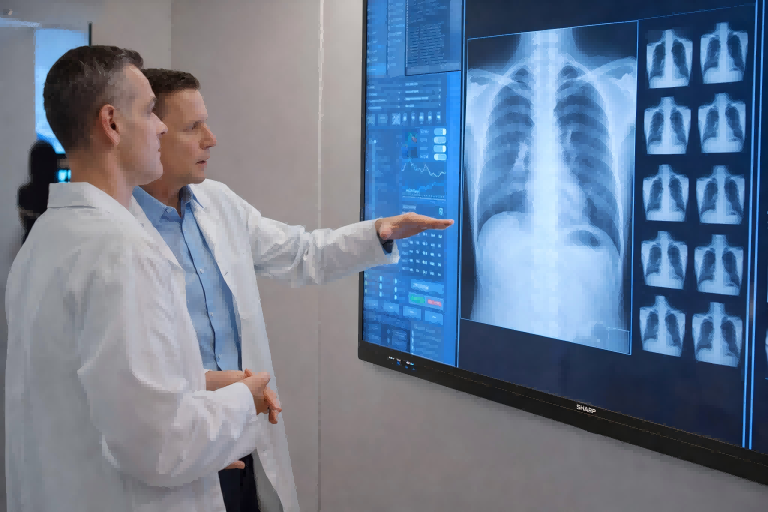
Los monitores de grado médico representan la base de la tecnología de visualización clínica, donde la precisión y la fiabilidad son innegociables. Estas pantallas están diseñadas específicamente para respaldar la precisión diagnóstica, lo que permite a los profesionales de la salud interpretar imágenes médicas con confianza. Las pantallas de alta resolución, a menudo con Claridad 4K y precisión de escala de grises superior, Son esenciales para detectar anomalías sutiles en radiografías, tomografías computarizadas y resonancias magnéticas.
Una característica definitoria de estos monitores es el cumplimiento de DICOM estándares de calibración, que aseguran un brillo y contraste uniformes en diferentes dispositivos y a lo largo del tiempo. Esto es particularmente crítico en radiología, donde incluso pequeñas inconsistencias pueden afectar el diagnóstico. Además, alta capacidad de renderizado en escala de grises Permite a los médicos distinguir variaciones sutiles en la densidad del tejido, lo que contribuye directamente a tomar mejores decisiones clínicas.
Las pantallas médicas también están diseñadas para un uso prolongado en entornos exigentes. Características como antideslumbrante recubrimientos, Los amplios ángulos de visión y la optimización de la comodidad ocular permiten largas sesiones de lectura sin fatiga. La estabilidad a lo largo del tiempo es igualmente importante, ya que los hospitales requieren pantallas que mantengan su rendimiento durante años de funcionamiento continuo.
Estos monitores se utilizan ampliamente en departamentos de radiología, quirófanos, unidades de cuidados intensivos y puestos de trabajo de los médicos, donde la claridad de la imagen influye directamente en los resultados del paciente. En esencia, no son solo pantallas, sino herramientas de diagnóstico fundamentales que ayudan a los médicos a tomar las decisiones correctas. Para instalaciones que lo soliciten ¿Cuál es la mejor tecnología de visualización en el sector sanitario?, Los monitores de grado médico siguen siendo el estándar de oro para las aplicaciones clínicas.
Quioscos de autoservicio con pantalla táctil: Optimización del flujo de pacientes y las operaciones hospitalarias.
Los quioscos de autoservicio con pantalla táctil están transformando la forma en que los centros de atención médica gestionan el flujo de pacientes y la eficiencia operativa. A diferencia de las pantallas tradicionales que simplemente presentan información, estos sistemas están diseñados para Sustituir los procesos manuales y automatizar las interacciones clave con los pacientes.. Desde el autorregistro y el check-in hasta el pago y la obtención de informes, los quioscos reducen significativamente la dependencia del personal de recepción.
Una de las mayores ventajas de los quioscos de autoservicio es su capacidad para minimizar los tiempos de espera y mejorar el rendimiento. Al distribuir las tareas entre varios quioscos, los hospitales pueden atender a un mayor volumen de pacientes sin aumentar la plantilla. Esto se traduce en flujos de trabajo más eficientes, menor congestión en las áreas de recepción y una experiencia del paciente más organizada.
Los quioscos modernos están equipados con funciones avanzadas como: interfaces multilingües, verificación de identidad (escaneo de identificación o reconocimiento facial), e integración con sistemas de información de seguros y hospitales (HIS/Registro médico electrónico). Estas capacidades garantizan tanto la accesibilidad como la precisión, especialmente en entornos sanitarios diversos y con mucho tráfico.
Además, los quioscos generan datos valiosos que pueden utilizarse para Optimización del flujo de pacientes y análisis operativos.. Los hospitales pueden analizar las horas pico, los cuellos de botella en el servicio y el comportamiento de los usuarios para perfeccionar continuamente sus procesos.
Los escenarios de implementación comunes incluyen: vestíbulos de hospitales, entradas de clínicas y centros de chequeo médico., donde la eficiencia es fundamental. Como uno de los La mejor tecnología de pantallas avanzadas para hospitales. En lo que respecta a la automatización de flujos de trabajo, los quioscos de autoservicio desempeñan un papel clave en la creación de sistemas de atención médica más inteligentes y escalables.
Señalización digital inmersiva: mejorando la experiencia y la participación del paciente.
La señalización digital inmersiva representa un cambio de pantallas funcionales a pantallas digitales. entornos impulsados por la experiencia en el ámbito sanitario. En lugar de limitarse a proporcionar información, estos sistemas están diseñados para influir en cómo se sienten los pacientes, ayudando a reducir el estrés, mejorar la participación y crear un ambiente más acogedor.
En las salas de espera, especialmente en entornos de alto estrés como los servicios de urgencias o las clínicas pediátricas, El contenido visual inmersivo puede reducir significativamente la ansiedad del paciente.. Las pantallas de gran formato, combinadas con gráficos en movimiento, imágenes relajantes y narraciones ambientales, crean un ambiente más tranquilo. Esto resulta especialmente eficaz en las zonas pediátricas, donde las animaciones brillantes y los elementos interactivos pueden distraer y reconfortar a los pacientes más pequeños.
Un avance clave en este ámbito es Entrega de contenido personalizado impulsada por IA. Por ejemplo, en una clínica pediátrica, el sistema puede detectar grupos de edad y mostrar automáticamente material educativo sobre salud en formato de dibujos animados o animaciones divertidas, convirtiendo el tiempo de espera en una experiencia positiva. Este nivel de personalización mejora tanto la participación como la percepción de la calidad de la atención.
Más allá de los beneficios emocionales, la señalización inmersiva también apoya educación sanitaria interactiva, utilizando vídeos y contenido dinámico para explicar procedimientos, promover el bienestar o guiar a los pacientes a lo largo de sus tratamientos.
Las aplicaciones típicas incluyen: salas de espera, pasillos, centros de rehabilitación y clínicas especializadas, donde la experiencia importa tanto como la eficiencia. Al entregar experiencias inmersivas y contenido personalizado, Esta tecnología está redefiniendo la forma en que los espacios sanitarios se comunican y conectan con los pacientes.
Digital Sandwich Boards and Wayfinding Displays in Healthcare Facilities
Los paneles digitales tipo sándwich y las pantallas de orientación desempeñan un papel crucial para ayudar a los pacientes a navegar de manera eficiente por entornos sanitarios complejos. A diferencia de la señalización inmersiva o los quioscos, estos sistemas están diseñados como Herramientas de información práctica que guían el movimiento y mejoran la percepción espacial. dentro de hospitales y clínicas.
Los paneles de señalización proporcionan indicaciones claras hacia los departamentos, salas de consulta y áreas de servicio, reduciendo la confusión y minimizando las demoras. En los grandes hospitales, donde los pacientes a menudo tienen dificultades para encontrar la ubicación correcta, estos sistemas mejoran significativamente la experiencia del paciente. eficiencia de navegación y experiencia general.
Los paneles publicitarios digitales tipo sándwich —pantallas independientes colocadas en entradas o zonas de mucho tránsito— ofrecen despliegue flexible y en tiempo real actualizaciones de información. Se pueden reubicar fácilmente para que sirvan como puntos de referencia temporales durante las horas pico, emergencias o cambios en la distribución del espacio. Por ejemplo, pueden mostrar el estado de las filas, cambios de departamento o anuncios de salud pública, como las pautas de control de infecciones.
Estas pantallas también mejoran utilización del espacio y alcance de la comunicación, garantizando que la información crítica sea visible justo donde se necesita. Ya sea ubicadas en las entradas del hospital, en las zonas de consulta externa o en las áreas de triaje temporales, funcionan como nodos de comunicación dinámicos.
Al combinar en tiempo real Actualizaciones con ubicación estratégica, Los sistemas de señalización y los carteles informativos ayudan a que los centros sanitarios funcionen con mayor fluidez, garantizando que los pacientes puedan avanzar de forma rápida y segura a lo largo de su proceso de atención médica.
Cómo elegir la tecnología de visualización adecuada para entornos sanitarios
Seleccionar la tecnología de visualización adecuada para entornos sanitarios requiere una comprensión clara de los escenarios de aplicación y las prioridades operativas. Los diferentes casos de uso, como el diagnóstico, la entrega de información y el autoservicio, exigen distintos tipos de pantallas, cada una optimizada para resultados específicos.
Para entornos clínicos, monitores de grado médico son esenciales debido a sus estándares de precisión y cumplimiento. Por el contrario, quioscos de autoservicio son ideales para mejorar la eficiencia del flujo de trabajo, mientras que pantallas de señalización digital y orientación Mejorar la comunicación y la navegación. Adaptar la tecnología al caso de uso es el primer paso hacia una implementación eficaz.
Otros factores importantes incluyen: durabilidad, brillo, facilidad de limpieza y compatibilidad con el sistema. Los entornos sanitarios requieren pantallas que puedan soportar un uso continuo, cumplir con los estándares de higiene e integrarse sin problemas con los sistemas informáticos existentes. Además, se requiere soporte para Gestión basada en la nube y control remoto Permite actualizaciones centralizadas y reduce la carga de trabajo de mantenimiento.
La personalización es otro aspecto clave. Muchos proveedores de atención médica se benefician de soluciones OEM/ODM adaptadas a sus flujos de trabajo específicos y necesidades de marca, además de contar con soporte técnico a largo plazo.
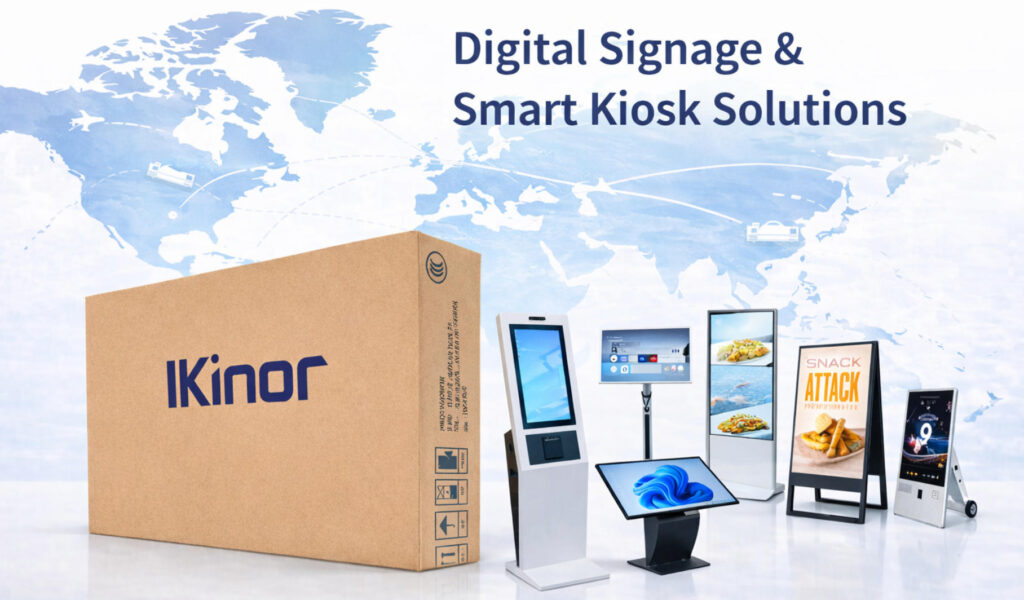
Por ejemplo, Ikinor ofrece servicios especializados soluciones de señalización digital para el sector sanitario Estos sistemas están específicamente adaptados a entornos médicos. Se pueden personalizar para integrarse con los sistemas de información hospitalaria (HIS), mostrar actualizaciones de colas en tiempo real, facilitar el registro de pacientes y garantizar contenido claro y accesible para diferentes grupos de usuarios. Desde un diseño de interfaz de usuario optimizado para pacientes mayores hasta configuraciones de hardware aptas para el funcionamiento ininterrumpido en zonas de alto tránsito, estas soluciones a medida ayudan a los profesionales sanitarios a mejorar la eficiencia, reducir la carga de trabajo del personal y optimizar la experiencia general del paciente.
¿Busca soluciones de visualización para el sector sanitario adaptadas a sus instalaciones? Ikinor Ofrece una gama completa de tecnologías de visualización avanzadas, desde quioscos interactivos hasta señalización digital inmersiva, diseñadas para satisfacer las demandas cambiantes de los entornos sanitarios modernos.
Preguntas frecuentes
¿Cuáles son las principales tecnologías de visualización utilizadas en el sector sanitario?
En el sector sanitario se utilizan habitualmente diversas tecnologías de visualización, como monitores médicos, quioscos de autoservicio con pantalla táctil, señalización digital inmersiva y pantallas de orientación. Cada una cumple una función distinta, desde la obtención de imágenes clínicas y el diagnóstico hasta la interacción con el paciente, la navegación y la automatización de los flujos de trabajo.
¿Cómo se utilizan los monitores médicos en entornos clínicos?
Los monitores médicos se utilizan para mostrar datos de pacientes, imágenes de diagnóstico y visualizaciones de procedimientos en entornos como quirófanos, estaciones de enfermería y departamentos de diagnóstico por imagen. Están diseñados para una reproducción precisa de la imagen, un rendimiento fiable y un uso continuo en entornos sanitarios.
¿Qué características definen una pantalla de "grado médico"?
Las pantallas de grado médico están diseñadas para su uso en el sector sanitario, con características como una calidad de imagen fiable, una construcción robusta y el cumplimiento de las normas de seguridad médica. Muchos modelos también incorporan diseños higiénicos, como resistencia a salpicaduras o superficies antimicrobianas, para adaptarse mejor a los entornos clínicos.
¿Cómo mejora la señalización digital interactiva las operaciones sanitarias?
La señalización digital interactiva ayuda a los centros sanitarios a compartir información en tiempo real, mejorar la orientación y facilitar tareas de autoservicio como el registro de entrada o la navegación por las habitaciones. Además, puede reducir la confusión entre pacientes y visitantes, aliviando la carga de comunicación del personal.
5. ¿Dónde resulta más útil la señalización interactiva en un hospital?
La señalización interactiva es especialmente útil en salas de espera, vestíbulos, habitaciones de pacientes, pasillos y áreas de recepción, donde la comunicación oportuna es fundamental. En estos lugares, puede mostrar indicaciones, información actualizada sobre el tiempo de espera, contenido educativo y mensajes personalizados para los pacientes.
6. ¿Qué deben tener en cuenta las organizaciones sanitarias al elegir la tecnología de visualización?
Las organizaciones sanitarias deben tener en cuenta el uso previsto de la pantalla, la calidad de imagen, la durabilidad, la compatibilidad táctil, los requisitos de limpieza y las necesidades de integración del sistema. Asimismo, deben adaptar la tecnología al entorno, ya que las imágenes diagnósticas, la comunicación del personal y la interacción con el paciente requieren capacidades de visualización diferentes.