South Africa has emerged as a strong regional hub for self-service kiosk adoption, supported by its developed tourism industry and its role as a host for many international conferences and large-scale events. To improve efficiency, reduce waiting times, and serve both local and international users, businesses and public institutions are increasingly deploying interactive self-service kiosks. Demand is growing rapidly across retail, banking, healthcare, transportation, and government services, where automation and digital access are becoming essential. However, the market includes a wide range of solution providers, from local integrators to international manufacturers, making selection challenging. This article is designed to help buyers identify reliable self-service kiosk solution providers in South Africa, understand their strengths, and choose the right kiosk solution based on application needs, budget, and long-term operational requirements.
What Is an Interactive Self-Service Kiosk?
An interactive self-service kiosk is a standalone digital terminal that allows users to complete tasks independently without direct staff assistance. These kiosks are built around a touch screen interface and are typically equipped with multiple functional components, including payment modules (card, NFC, QR), receipt or ticket printers, barcode or QR scanners, and cameras for identity verification or facial recognition. Depending on the application, kiosks may also integrate microphones, speakers, and secure enclosures designed for high-traffic environments.
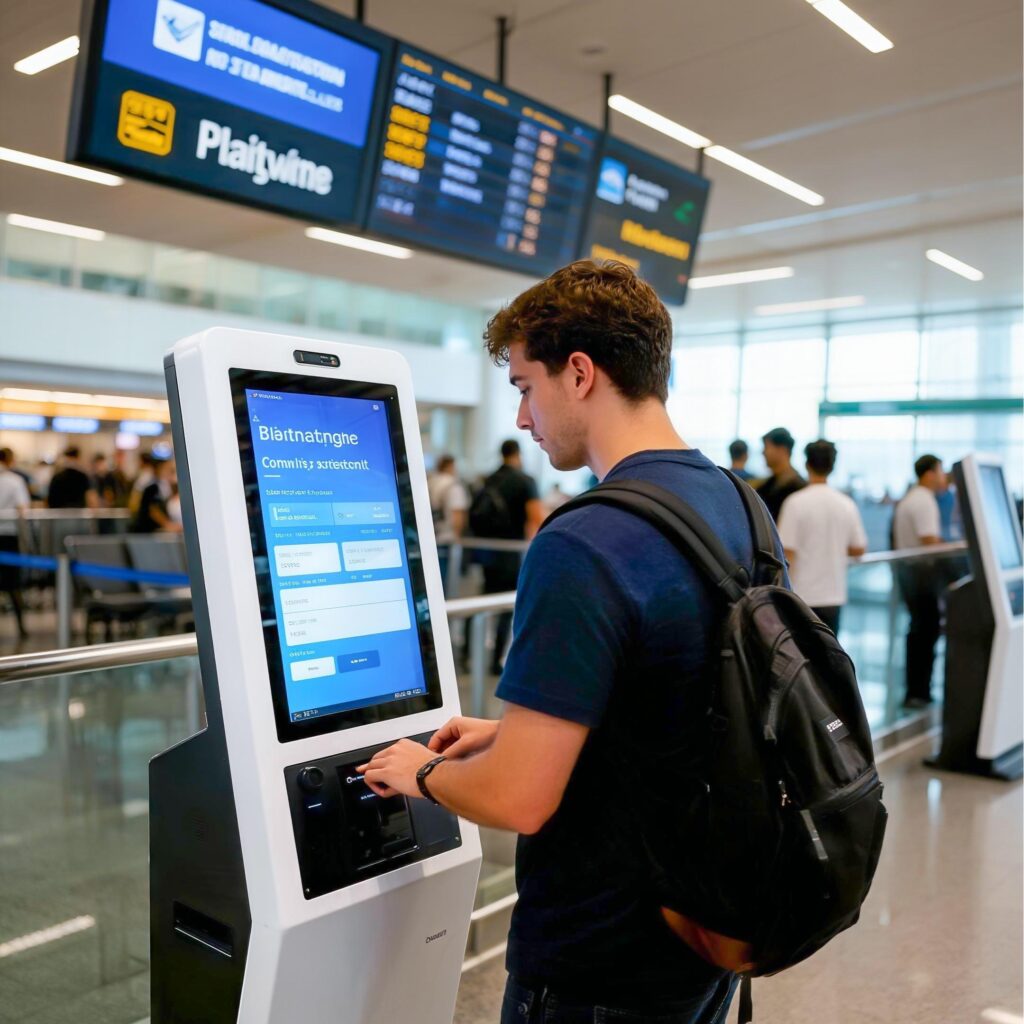
En South Africa, interactive self-service kiosks are widely used across both commercial and public sectors. In retail and shopping malls, kiosks support self-checkout, product lookup, and loyalty program enrollment. Banks and financial institutions deploy kiosks for account services, bill payments, and customer onboarding. In healthcare, kiosks are used for patient check-in, appointment registration, and queue management. Transportation hubs such as airports and bus terminals rely on kiosks for ticketing and wayfinding, while government services increasingly use them for document submission, license applications, and public information access.
The benefits are clear for both businesses and public services. Self-service kiosks reduce waiting times, lower operational costs, and improve service consistency. They also enhance user experience by offering multilingual interfaces and 24/7 availability. For service providers, kiosks enable better resource allocation, data collection, and scalability—making them a key part of South Africa’s ongoing digital transformation.
Interactive Self-Service Kiosk Market Overview in South Africa
South Africa’s interactive self-service kiosk market is mid-sized but fast growing, with adoption accelerating across retail, banking, transportation, hospitality, and public services. The market is largely hardware-led, with most deployments focused on physical kiosks integrated with payment, identification, and information systems. While detailed vendor-by-vendor market share data is not publicly disclosed and typically sits behind paywalled industry reports, overall market size and growth trends are well documented.
Recent country-level estimates value the South African interactive kiosk market at approximately USD 579.9 million in 2024, with projections reaching around USD 980.3 million by 2030, indicating strong annual growth. Another industry source places the market at USD 490.4 million in 2022, forecasting expansion to about USD 1.14 billion by 2032, suggesting sustained high single- to low double-digit growth over the next decade.
Within the broader Middle East & Africa (MEA) region, the interactive kiosk market generated roughly USD 3.02 billion in 2024 and is expected to reach USD 4.77 billion by 2030. South Africa is consistently highlighted as the fastest-growing national market in the region, despite accounting for only around 1.3% of global self-service kiosk revenues—underscoring its importance within Africa rather than globally.
From a supply perspective, hardware accounts for nearly half of market revenue, while services such as software, integration, and maintenance are the fastest-growing segments. Most projects combine imported kiosk hardware—often from Asia—with local system integrators that handle customization, deployment, and long-term support, forming a practical hybrid sourcing model for the South African market.
Top 10 Interactive Self-Service Kiosk Solution Providers in South Africa
Below is a curated list of high-quality interactive self-service kiosk providers in South Africa, compiled based on many years of market research and hands-on industry experience. The selection reflects practical insights into supplier capabilities, project execution, and local service strength rather than promotional ranking. All providers are listed in no particular order and are presented for reference purposes only to assist buyers during initial evaluation and comparison.
AVT (Audio Visual Technology)
| Item | Detalles |
|---|---|
| Company Profile | AVT is a South Africa–based digital signage and interactive kiosk solution provider, offering turnkey systems to enhance customer engagement and operational efficiency across industries. |
| Core Products | Interactive digital kiosks, digital signage systems, touch displays |
| Core Strengths | End-to-end solutions, strong local integration capability, multi-industry experience |
| Location | South Africa |
| Best For | Engineering contractors, enterprises, public-sector projects |
| Contact | https://avt.co.za  |
Retail Digital Media
| Item | Detalles |
|---|---|
| Company Profile | Retail Digital Media designs and installs intelligent interactive kiosk solutions focused on customer interaction, product browsing, and self-service ordering. |
| Core Products | Interactive kiosks, retail digital signage, touchscreens |
| Core Strengths | Retail-focused solutions, UX-driven design, installation expertise |
| Location | South Africa |
| Best For | Retail brands, shopping malls, brand owners |
| Contact | https://retaildigitalmedia.co.za |
Kiosks.co.za (Pretoria)
| Item | Detalles |
|---|---|
| Company Profile | Kiosks.co.za provides turnkey kiosk solutions from hardware and enclosures to software and applications, serving clients nationwide. |
| Core Products | Touchscreen kiosks, kiosk enclosures, kiosk software |
| Core Strengths | Full A–Z kiosk solutions, local engineering, customization |
| Location | Pretoria, South Africa |
| Best For | System integrators, engineering firms, enterprise buyers |
| Contact | http://kiosks.co.za |
XIPHIAS Software Technologies (South Africa Operations)
| Item | Detalles |
|---|---|
| Company Profile | XIPHIAS is an ISO-certified international kiosk manufacturer and solution provider, offering interactive kiosks and digital signage solutions in South Africa. |
| Core Products | Interactive kiosks, bill payment kiosks, digital signage kiosks |
| Core Strengths | Manufacturing scale, ISO certification, global project experience |
| Location | South Africa (regional operations) |
| Best For | Large projects, B2B wholesalers, government tenders |
| Contact | https://www.xiphiastec.com |
Just Brand
| Item | Detalles |
|---|---|
| Company Profile | Just Brand specialises in supplying custom-branded kiosks in bulk for companies operating across South Africa and Southern Africa. |
| Core Products | Custom branded kiosks, promotional kiosks |
| Core Strengths | Bulk supply capability, branding expertise, regional rollout |
| Location | South Africa |
| Best For | Brand owners, marketing agencies, multi-branch businesses |
| Contact | https://www.justbrand.co.za |
Hotelstuff (Online Access Kiosks)
| Item | Detalles |
|---|---|
| Company Profile | Hotelstuff designs and locally manufactures custom kiosks, integrating hardware such as large-format touch screens, ticketing systems, and access solutions. |
| Core Products | Access kiosks, hospitality kiosks, information kiosks |
| Core Strengths | Local manufacturing, hospitality focus, hardware integration |
| Location | South Africa |
| Best For | Hotels, hospitality groups, property operators |
| Contact | https://www.hotelstuff.co.za |
BBM Digital (Bamboo Beat Media)
| Item | Detalles |
|---|---|
| Company Profile | BBM Digital Solutions is a digital media provider and official distributor of Kylii Kids interactive touchscreen kiosks in South Africa. |
| Core Products | Children’s touchscreen kiosks, educational interactive kiosks |
| Core Strengths | Niche focus on kids’ education, licensed content, distribution rights |
| Location | South Africa |
| Best For | Shopping malls, family venues, education spaces |
| Contact | https://www.bbmdigital.co.za |
OnlineAccess Kiosks
| Item | Detalles |
|---|---|
| Company Profile | OnlineAccess Kiosks specializes in the design, engineering, and local manufacture of customized self-service touchscreen kiosk solutions. |
| Core Products | Self-service kiosks, customized touchscreen kiosks |
| Core Strengths | Local manufacturing, engineering-driven customization |
| Location | South Africa |
| Best For | Engineering contractors, public-sector projects |
| Contact | https://onlineaccess.co.za |
DynamicCom
| Item | Detalles |
|---|---|
| Company Profile | DynamicCom supplies professional digital signage and kiosk hardware, including branded floor-standing kiosks for commercial environments. |
| Core Products | Hikvision digital signage kiosks, 4K floor-standing kiosks |
| Core Strengths | Strong hardware portfolio, global brands, ready stock |
| Location | South Africa |
| Best For | System integrators, resellers, enterprise buyers |
| Contact | https://www.dynamiccom.co.za |
ShowLED
| Item | Detalles |
|---|---|
| Company Profile | ShowLED provides touch screen floor-standing kiosks and LED display solutions for information points and commercial environments. |
| Core Products | Touch screen information kiosks, LED displays |
| Core Strengths | Public-area solutions, simple deployment, visual impact |
| Location | South Africa |
| Best For | Public venues, retail spaces, SMEs |
| Contact | https://showled.co.za |
Key Features to Look for in a Touchscreen Kiosk Solution Provider
When selecting a self-service kiosk solution provider, the first priority should be hardware quality and customization capability. Kiosks are typically deployed in high-traffic environments such as malls, airports, and public service areas, so the hardware must be durable, stable, and designed for long operating hours. Beyond standard designs, strong providers should offer deep customization, including enclosure materials, screen size, internal layout, and expansion ports to support unique applications.
Payment module support is another critical factor. A reliable kiosk provider should seamlessly integrate multiple payment options, including NFC, bank cards, and QR-based payments, to meet local consumer habits and future payment trends. Flexible payment integration is especially important in retail, ticketing, and service environments.
Equally important is software integration and CMS capability. The kiosk system should support stable operating systems, API integration with third-party platforms, and a robust content or device management system. This allows operators to update content, manage devices remotely, and integrate the kiosk into existing business workflows.
Finally, buyers must evaluate compliance, security, and durability. Kiosks often handle sensitive data and payments, so compliance with relevant standards, secure hardware design, and long-term reliability are essential.
Advanced providers also stand out through highly customized solutions. For example, some shopping malls combine kiosks with scent diffuser systems to enhance customer experience—an application successfully delivered through Ikinor’s interactive kiosk OEM/ODM solutions, demonstrating how innovation and customization can create real competitive value.
Local Supplier vs International Manufacturer: Which Is Better?
Choosing between a local kiosk provider and an international manufacturer depends largely on project scale, complexity, and long-term objectives. Local providers make the most sense for small to mid-sized deployments where speed and simplicity are priorities. They offer on-site consultations, installation, local compliance handling, and faster response times for maintenance or repairs. For projects with tight timelines, limited quantities, or strong service-level requirements, working with a local supplier reduces coordination risk and operational burden.
However, overseas manufacturers—especially established manufacturers in China—often offer better value for large-scale projects. China has the most complete kiosk and interactive hardware supply chain globally, covering displays, touch technology, metal enclosures, payment modules, sensors, and custom peripherals. This vertical integration allows Chinese manufacturers to deliver lower unit costs, deeper customization, and faster scaling. For nationwide or multi-location rollouts, sourcing directly from a reliable Chinese manufacturer can significantly reduce total project cost while enabling OEM/ODM customization in hardware design, UI layout, and functional modules.
In practice, many successful deployments adopt a hybrid model that combines the strengths of both approaches. In this setup, the international manufacturer handles production, customization, and cost optimization, while a local integrator manages installation, compliance, software localization, and after-sales support. This model is particularly effective for complex or high-volume projects, balancing price efficiency with reliable local execution.
Ultimately, the better choice is determined by project size, customization requirements, and support expectations, not simply geography. Buyers who evaluate both options strategically often achieve the best long-term results.
How to Choose the Right Kiosk Partner in South Africa
Choosing the right self-service kiosk partner in South Africa starts with matching the provider to your project size and industry. Small deployments in retail or hospitality may only require a local supplier offering standard kiosk models and basic support. Larger projects—such as banking networks, transport hubs, shopping malls, or government services—demand providers with proven experience in complex, multi-site rollouts and industry-specific compliance.
The importance of installation, maintenance, and service-level agreements (SLAs) cannot be overstated. Kiosks are often deployed in high-traffic, mission-critical environments, where downtime directly affects customer experience and revenue. A reliable partner should provide professional installation, clear maintenance processes, defined response times, and access to spare parts. In South Africa’s geographically diverse market, nationwide service coverage is a key advantage.
Pilot testing is another essential step before full deployment. Running a small pilot allows businesses to validate hardware stability, software usability, payment integration, and user interaction under real operating conditions. Feedback from pilots often leads to improvements in layout, UI flow, or hardware configuration.
Finally, consider scalability from the beginning. The right kiosk partner should support future expansion, whether that means adding more units, enabling new functions, or integrating additional peripherals. Providers that offer modular designs, flexible software platforms, and long-term upgrade paths help protect your investment and ensure the kiosk solution continues to meet evolving business and customer needs.