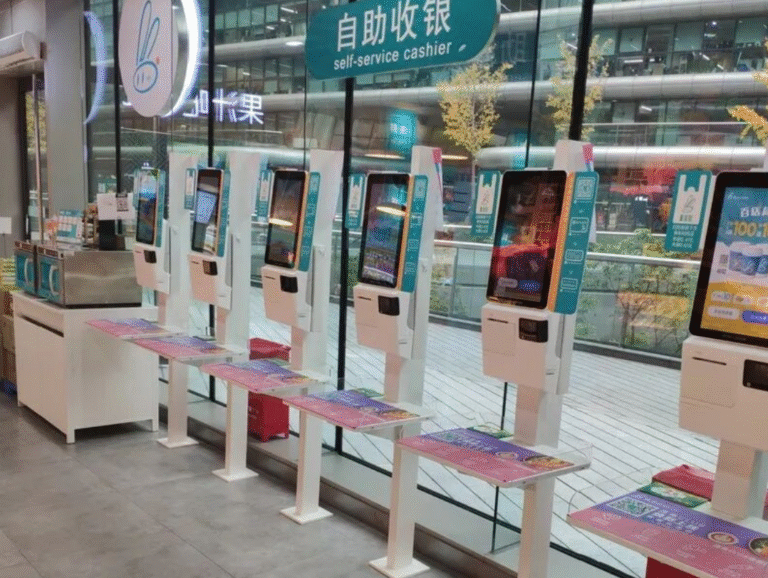
As every industry moves toward smarter and more automated solutions, retail shops are rapidly adopting Self-Checkout Kiosks to replace or reduce traditional manpower. This technology is transforming how customers shop—offering faster checkout, shorter queues, and a smoother in-store experience. For retailers, self-service kiosks not only reduce labor costs but also improve accuracy, operational efficiency, and overall customer satisfaction.
Today, I want to share key insights about Self-Service Kiosks in retail environments—including their costs, long-term value, future trends, and why so many stores are choosing automation between 2025 and 2030. Whether you operate a small boutique or a chain supermarket, understanding this technology will help you stay competitive in the new era of smart retail.
The Evolution of Retail Shop Services (2025–2030 Trends)
Between 2025 and 2030, retail shops around the world are undergoing a major transformation as automation becomes a core part of store operations. One of the biggest driving forces is the global shift toward contactless experiences, accelerated by changing consumer behavior and technological maturity. Customers today expect faster checkout, minimal waiting time, and seamless interactions—preferences that naturally align with the rise of self-service kiosks.
Another major factor is the steady increase in labor costs and staffing shortages, especially in countries such as the United States. In many U.S. cities, the hourly wage for cashiers has climbed significantly over the past decade, and retailers often struggle to recruit and retain front-line staff. In certain high-crime regions, cashier positions also face added risks, including theft-related conflicts or late-night safety concerns, increasing both operational pressure and insurance costs for store owners. These challenges make automated self-checkout systems an attractive, safer, and more sustainable alternative.
At the same time, consumer preference for speed continues to rise. Traditional checkout lines often lead to frustration, impulse abandonment, or lost sales. Self-service kiosks dramatically shorten queuing time by allowing multiple customers to check out simultaneously—improving overall throughput and customer satisfaction.
Finally, the integration of AI, data analytics, and digital payment ecosystems marks the next evolution of smart retail. Modern kiosks can recommend add-ons, analyze buying patterns, synchronize inventory, accept multiple digital payments, and even detect out-of-stock items. This intelligent ecosystem empowers retailers to operate more efficiently, reduce costs, and create a smooth, modern shopping experience aligned with 2030 retail expectations.
Why Self-Service Kiosks Are Becoming Essential in Retail
Self-service kiosks are quickly becoming a core element of modern retail because they directly improve operational efficiency and customer satisfaction. One of the biggest advantages is faster checkout and significantly reduced queue times. Industry studies and retail deployments show that self-service kiosks can reduce waiting times by 30–50%, as multiple customers can check out simultaneously without relying on a single staffed counter. This smoother flow not only increases throughput during peak hours, but also reduces customer frustration and improves the overall shopping experience.
Another key benefit is improved order accuracy. Unlike traditional checkout interactions that may be influenced by human error or miscommunication, kiosks ensure the information entered is consistent and clear—reducing operational friction, minimizing voided orders, and lowering costs related to mistakes.
Self-service kiosks also provide consistent customer service regardless of staffing levels. Whether the store is busy, understaffed, or facing unexpected staff shortages, kiosks deliver the same level of speed and reliability every time. This consistency is crucial for large retail chains aiming to standardize customer experience across multiple branches.
The technology further enables 24/7 unmanned or low-staff retail models, which are becoming increasingly popular in major cities such as Tokyo, Seoul, Shenzhen, and Shanghai. In these markets, convenience stores, cafés, and lifestyle shops already utilize kiosks to handle checkout, membership scanning, and digital payments without requiring full-time cashiers. This model not only reduces labor costs but also meets the demand for late-night and round-the-clock shopping.
As retail moves toward automation, self-service kiosks offer an essential pathway to efficiency, reliability, and smarter operations.
Key Advantages of Self-Service Kiosks for Retail Shops
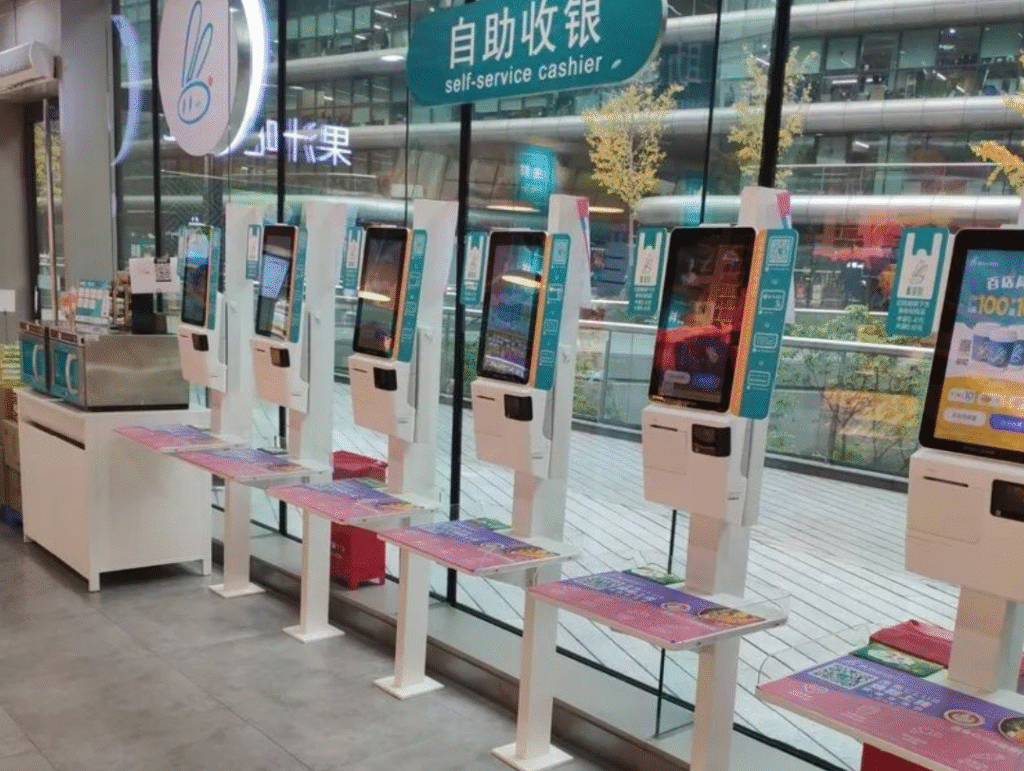
Self-service kiosks deliver several powerful advantages that directly reshape the retail experience for both customers and store operators. First, they create an enhanced customer experience through intuitive, interactive user interfaces. Instead of rushing through checkout or waiting in long lines, shoppers can browse products calmly, review items, and complete transactions at their own pace. Clear visuals, large touch targets, and user-friendly steps make the process smooth, even for first-time users.
Retailers also benefit from personalized recommendations powered by AI and purchase history. Modern kiosks can suggest complementary products, highlight limited-time offers, or remind customers of previous purchases. These subtle, data-driven prompts often increase average order value and convert more impulse buys—something difficult to achieve consistently with human cashiers.
Another advantage is the ability to push real-time updates for pricing, promotions, and inventory. Store managers can instantly update product availability, adjust prices, or launch flash sales without printing new materials. This ensures accuracy at checkout and prevents confusion caused by outdated signage, especially during peak seasons.
Additionally, self-service kiosks cater to a diverse customer base through multilingual menus and accessibility-friendly design. Retailers in multicultural cities—such as Toronto, Dubai, Singapore, London, or Los Angeles—benefit the most, as kiosks can switch languages instantly. Features like voice assistance, high-contrast mode, and adjustable text size improve accessibility for elderly customers or those with visual impairments.
In short, self-service kiosks bring precision, personalization, and flexibility to retail environments—helping businesses deliver a modern, efficient, and inclusive shopping experience.
ROI: How Self-Service Kiosks Deliver Measurable Returns
Self-service kiosks deliver strong and measurable ROI for retail shops by reducing labor costs, increasing efficiency, and improving sales performance. In many regions, retail staff wages have risen steadily—often reaching levels above the local average income. For example, retail workers in major U.S. cities like Seattle or San Francisco commonly earn well above minimum wage, and retailers must also cover training, turnover, and peak-hour staffing. By introducing self-checkout kiosks, stores can operate smoothly even with fewer employees, reallocating staff to tasks that create higher value such as customer assistance or inventory management.
One of the strongest ROI contributors is an increase in sales. Self-service kiosks often generate a higher average order value thanks to smart upsell prompts. The kiosk can automatically suggest complementary items, offer bundle discounts, or highlight promotional add-ons—something that human cashiers may forget or feel uncomfortable repeating. Many retailers report noticeable growth in beverage add-ons, seasonal products, and small accessories when kiosks are introduced.
Self-checkout also reduces mistakes. With clearer product listings, standardized workflows, and digital price accuracy, kiosks create lower error rates and fewer refunds, saving operational cost and improving customer satisfaction. Errors caused by miscommunication or manual input are significantly minimized.
Lastly, faster service means more revenue opportunities. By shortening queue time and allowing multiple simultaneous checkouts, kiosks increase transactions per hour, especially during lunch rushes, holiday weekends, or promotional events. This higher throughput directly boosts daily revenue without needing additional labor.
Altogether, self-service kiosks bring strong financial returns, making them a strategic investment for modern retail.
How to Deploy Self-Service Kiosks at Scale
Deploying self-service kiosks across multiple retail stores requires a strategic, structured approach to ensure smooth operations, consistent user experience, and long-term efficiency. The first step is implementing a centralized CMS (Content Management System) that allows retailers to configure products, pricing, and promotions across all branches from one platform. This ensures consistency while reducing time spent on manual updates store by store.
To simplify maintenance and reduce operational costs, retailers should select unified hardware specifications—the same touchscreen size, scanner model, printer type, and core components. Standardizing hardware makes spare parts easier to manage and allows technicians to troubleshoot issues more quickly across multiple locations.
Before rolling out kiosks chain-wide, it is essential to conduct pilot testing in a few selected stores. This phase helps retailers identify customer behavior patterns, refine UI workflow, adjust product categories, and gather staff feedback. Real customer usage data during pilot testing often reveals unexpected needs—such as the ideal kiosk height, preferred button layout, or best kiosk placement.
Another critical factor is staff training, operational integration, and layout planning. Today, most stores adopt a hybrid model by setting up a self-checkout zone while retaining traditional cashier counters. Store employees still play a vital role—they assist customers unfamiliar with kiosks, verify age-restricted items, resolve scanning issues, and provide support during peak hours. Properly trained staff ensure a smooth transition and help customers trust the new system.
Thoughtful layout design, consistent hardware, centralized management, and strong staff coordination ensure that self-service kiosks can be successfully deployed at scale—enhancing efficiency and delivering a modern retail experience.
Technologies Behind Modern Self-Service Kiosks
Modern self-service kiosks are powered by a combination of advanced hardware and intelligent software systems designed to create a smooth, fast, and secure shopping experience. At the core is touchscreen UX design, where large, responsive displays guide customers through scanning, product browsing, payment, and checkout. Clear visuals, intuitive layouts, and accessibility-focused features ensure that users of all ages can operate the kiosk comfortably.
Payment technology has also evolved significantly. Today’s kiosks commonly support QR payment, NFC tap-to-pay, biometric verification, and RFID-based recognition depending on the region. In markets like China and Southeast Asia, QR-based mobile payments such as Alipay and WeChat Pay are widely adopted, while in Western markets, customers rely more on NFC card payments or digital wallets. Retailers can enable different payment modules based on local consumer habits.
To function as part of a larger retail ecosystem, kiosks must integrate seamlessly with POS, CRM, and inventory systems. This ensures real-time stock updates, accurate pricing, synchronized membership points, and automated receipt generation. When products run low, the system can alert staff or auto-adjust availability on the kiosk interface.
Additionally, modern self-service kiosks use cloud management, remote diagnostics, and data analytics to simplify operation and maintenance. Retailers can remotely push software updates, monitor device status, detect component failures, and analyze customer purchase behavior. These insights help optimize product placement, recommend upsell items, and improve overall store performance.
Together, these technologies make self-service kiosks not just checkout tools, but intelligent hubs that support smarter retail operations.
Choosing the Right OEM/ODM Partner
When it comes to large-scale deployment—especially for chain retailers—choosing the right retail kiosk manufacturers becomes one of the most critical decisions in a self-service kiosk project. A reliable manufacturer ensures consistent quality, seamless integration, and long-term operational stability across all store locations. This is where Ikinor stands out.
Ikinor offers custom kiosk design tailored to different retail formats, including convenience stores, supermarkets, lifestyle shops, pharmacies, and specialty boutiques. Whether the retailer needs compact desktop kiosks, full-height freestanding units, or space-saving wall-mounted designs, Ikinor’s engineering team can adjust screen sizes, modules, housing structure, and branding elements to match the store’s customer flow and layout requirements.
Beyond hardware, Ikinor provides full hardware and software integration, ensuring that scanners, printers, QR/NFC modules, POS systems, CRM databases, and digital payment gateways all communicate smoothly. This level of integration is essential for retailers seeking a unified, reliable checkout ecosystem across multiple branches.
For chain retailers planning expansion, Ikinor’s scalable manufacturing capacity guarantees stable production cycles and consistent quality, whether the rollout requires hundreds or thousands of kiosks. This is especially important for brands with aggressive store-opening timelines.
Finally, Ikinor ensures long-term technical support and spare parts availability, which is crucial for maintaining uptime in high-traffic retail environments. Remote diagnostics, firmware updates, and component replenishment help retailers keep kiosks running smoothly for years.
With strong engineering capability and global deployment experience, Ikinor is a trusted OEM/ODM partner for modern retail automation.