In modern RV living, a television has become an essential standard feature. Whether it’s a small weekend camper or a large motorhome for extended journeys, a high-quality TV not only provides entertainment but also significantly enhances the overall onboard experience. Passengers can enjoy movies, news, sports, or stream online content, making every trip more comfortable, engaging, and enjoyable. For B2B buyers and fleet operators, selecting the right TV involves more than just screen size—it requires careful evaluation of durability, power consumption, vibration and dust resistance, heat tolerance, and installation flexibility. Portable smart TVs, in particular, offer an efficient, flexible, and mobile solution, allowing different RV types to balance passenger experience with operational efficiency and long-term reliability.
What Are the Key Differences Between Small Campers and Large Motorhomes That Affect TV Selection?
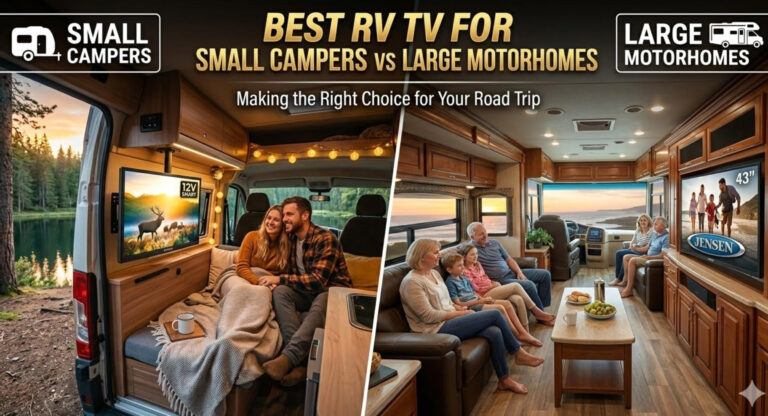
To meet market demand, there are now a wide variety of Small Campers and Large Motorhomes, which bring different considerations for B2B buyers when selecting RV TVs. Vehicle space and layout are primary decision points that directly affect screen size, installation, and usability. Small campers typically have limited interior space, so smaller screen TVs are more suitable to avoid taking up too much living area or interfering with passenger movement. In contrast, large motorhomes offer significantly more room, allowing not only larger screens but also multi-screen setups, providing passengers with a richer and more immersive entertainment experience during long trips.
Beyond space, power supply and energy limitations are also critical factors. Small campers often rely on limited battery capacity or 12V electrical systems, making low-power or energy-efficient TVs the ideal choice, while large motorhomes can accommodate more robust power systems, supporting high-brightness, large-screen, or fully featured smart TVs without concern for overloading circuits.
Installation location and support structures further influence TV selection. Small campers may benefit from portable smart TVs or wall-mounted units that provide flexibility in tight spaces while minimizing vibration-related damage. Large motorhomes, however, can utilize built-in or fixed installations, ensuring both stability and viewing comfort, while taking advantage of the vehicle’s structural strength to enhance long-term durability and reduce maintenance needs.
Overall, selecting the right RV TV requires careful evaluation of space, power availability, and installation conditions to ensure optimal viewing experience and operational efficiency across different vehicle types. Portable smart TVs are particularly well-suited for small campers due to their mobility and adaptability, whereas large motorhomes can fully leverage fixed or multi-screen systems to maximize passenger entertainment and comfort.
5 RV TV You Should Consider
SYLVOX – One of the Best-Selling RV Smart TV Brands
| Attribute | Details |
| Brand Name | SYLVOX |
| Estimated Price | ~$250 – $290 |
| Screen Size | 32 inches (24-inch option also available) |
| Best Suited For | Both (24″ for Small Campers; 32″ for Large Motorhomes) |
| Key Features | 1. Full Smart System: Built-in WebOS, supporting major streaming apps like Netflix, YouTube, and Prime Video. 2. RV-Specific Protection: Features an anti-vibration structure to withstand bumps and shocks on the road. 3. Wide Voltage Support: Supports 10.5V – 28V input, preventing motherboard burnout from unstable RV power. 4. Connectivity: Dual-band Wi-Fi, Bluetooth, HDMI, and USB ports. 5. Screen Mirroring: Easily cast content from your smartphone. |
Free Signal TV – Highly Rated US-Based RV Brand
| Attribute | Details |
| Brand Name | Free Signal TV (Transit Series) |
| Estimated Price | ~$269 – $299 |
| Screen Size | 28 inches |
| Best Suited For | Small Campers & Medium Motorhomes |
| Key Features | 1. Designed for Mobility: The Transit series is custom-built for RVs and campers with direct 12V DC power. 2. Anti-Glare Screen: Premium anti-glare panel ensures clear visibility even in well-lit RV interiors or near windows. 3. Top-Tier Customer Support: Offers a 1-year US-based warranty and highly responsive tech support. 4. HD Picture: 1080P resolution for crisp, detailed visuals. 5. Ultra-Lightweight: Perfect for RV walls with strict weight limits. |
SuperSonic – Excellent Value for Small Campers
| Attribute | Details |
| Brand Name | SuperSonic (SC-2412 Series) |
| Estimated Price | ~$150 – $180 |
| Screen Size | 24 inches |
| Best Suited For | Small Campers & Campervans |
| Key Features | 1. 2-in-1 Design: Features a built-in DVD player, perfect for watching movies at remote campsites with no Wi-Fi. 2. AC/DC Dual Power: Comes with both a 12V car cord and a standard 110V wall adapter for indoor/outdoor use. 3. Budget-Friendly: Highly affordable, making it a go-to choice for RVers on a budget. 4. Versatile Inputs: Includes HDMI, USB, and VGA ports, making it easy to plug in a Roku or Fire TV stick to add smart features. |
Jensen – Industrial-Grade Durability for Harsh Environments
| Attribute | Details |
| Brand Name | Jensen |
| Estimated Price | ~$330 – $380 |
| Screen Size | 32 inches |
| Best Suited For | Large Motorhomes & 5th Wheels |
| Key Features | 1. Conformal Coated Circuit Boards: Internal components are coated to resist moisture, humidity, and corrosion—ideal for coastal or damp climates. 2. Extreme Anti-Vibration: Features Jensen’s heavy-duty metal cabinet design, rigorously tested for extreme shocks and bumps. 3. Wide Temperature Tolerance: Engineered to operate flawlessly in extreme heat or freezing cold. 4. Audio Enhancement: Audio is specially tuned to cut through the often noisy acoustic environment of an RV. |
TrekPower – Feature-Rich Android Ecosystem
| Attribute | Details |
| Brand Name | TrekPower |
| Estimated Price | ~$190 – $220 |
| Screen Size | 24 inches |
| Best Suited For | Small Campers & Travel Trailers |
| Key Features | 1. Built-in Android TV: Comes with the Android ecosystem, allowing you to download thousands of apps directly from the Google Play Store. 2. Google Assistant: Supports smart voice control so you can search for shows hands-free. 3. Surge Protection: Built-in 12V/24V surge protection guards the TV against sudden current spikes when starting or stopping the generator. 4. Low Power Consumption: Specially designed for off-grid living, drawing very little power to save your RV’s house batteries. |
Which Screen Size Is Optimal for Small Campers and Which for Large Motorhomes?
Choosing the right RV TV involves paying close attention to many factors, and one of the first considerations is how different vehicle types influence optimal screen size. For space‑limited small campers, a 19–32 inch screen is generally recommended. Smaller TVs provide clear viewing without taking up excessive living area, ensuring they don’t interfere with interior movement while still delivering a satisfying entertainment experience.
In contrast, large motorhomes offer significantly more interior space, allowing for larger screens that better match wide open living and lounge areas. A prime example comes from Winnebago Industries, a well‑known U.S. RV manufacturer. In their Adventurer Class A lineup, Winnebago equips certain floor plans with HDTVs ranging from 39 inches up to 50 inches, with the 50″ display often installed in the main living space to deliver an elevated home‑style entertainment experience. This size choice reflects real enterprise‑level deployment of TVs in commercial RV production and aligns with what many fleet buyers expect in larger motorhomes.
Beyond raw size, RV buyers should also consider flexible installation options such as fold‑away or swivel‑mounted displays and portable smart TVs, which can adapt to changing seating arrangements and maximize usable space in both small and large vehicles.
Ultimately, selecting the right screen size should account for interior viewing distance, seating layout, and typical passenger use. By aligning vehicle type, screen dimension, and installation strategy, B2B decision‑makers and procurement teams can ensure an optimal blend of entertainment value, spatial comfort, and long‑term user satisfaction across diverse RV models.
What Connectivity and Integration Features Matter Most for RV TVs in Small vs Large Vehicles?
With the growing demand for advanced functionality in RV TVs, connectivity and integration features have become a major consideration for buyers. Understanding the specific requirements of different vehicle types is essential to ensure a consistent and flexible entertainment experience across the fleet.
In Small Campers, limited space makes it important for TVs to offer multiple input and output options, such as HDMI, USB, and AV ports, allowing connections to portable devices or multifunction media players. Wireless casting technologies like AirPlay or Chromecast enable passengers to share content from smartphones or tablets without taking up valuable space. Even in compact vehicles, basic satellite TV or onboard antenna compatibility ensures reliable reception of external signals.
In Large Motorhomes, more interior space and power availability allow for more complex setups. Features such as multi-screen or split-screen functionality and integration with smart home systems can support passengers in different areas of the vehicle watching different content simultaneously. Full satellite TV systems and high-performance network connectivity provide smooth HD streaming, live broadcasts, and remote content updates.
Ensuring that RV TVs offer comprehensive connectivity and flexible integration enhances passenger experience while optimizing overall fleet operation. Selecting the right combination of ports, wireless casting capabilities, satellite compatibility, and smart home integration based on vehicle type is key to creating a long-lasting and efficient RV entertainment system.
What Features Should B2B Buyers Prioritize in an RV TV for Reliability and Long‑Term Use?
Whether for Small Campers or Large Motorhomes, reliability and long-term use are key considerations for B2B buyers when selecting RV TVs. In commercial fleets and corporate procurement, choosing a durable TV helps reduce maintenance costs and ensures a consistent viewing experience for passengers over time.
Durability features such as vibration resistance, dust protection, and tolerance to extreme temperatures are essential. RVs are exposed to constant movement and road vibrations, interiors may collect dust, and internal temperatures can fluctuate widely between summer and winter. TVs designed to withstand these conditions maintain performance and longevity.
A high-brightness or anti-glare screen is also important for clear visibility under various lighting conditions. In RVs with side windows or skylights, this ensures passengers enjoy a comfortable viewing experience regardless of direct sunlight.
Power compatibility must be carefully considered. Ideally, an RV TV should support 12V, 24V, AC, and DC inputs, allowing installation in both small campers and large motorhomes without additional converters.
Ease of maintenance and part replacement helps minimize downtime, which is critical for fleet operations. Long-term warranties and reputable brands further enhance reliability, as established manufacturers provide strong after-sales support and ready access to replacement components.
Additionally, incorporating a portable smart TV can offer flexibility, enabling the screen to be moved within the vehicle or even between vehicles while still meeting durability and operational standards.
By evaluating vibration and dust resistance, temperature tolerance, high-brightness displays, power compatibility, ease of maintenance, and brand reliability, B2B buyers can select RV TVs that deliver consistent performance and maximize long-term value.
How Do Portable Smart TV Options Compare to Built‑in TV Systems for RV Applications?
Many people have questions about whether to choose a portable smart TV or a built-in TV for RV applications. Both options offer advantages depending on vehicle type, operational needs, and usage scenarios.
Portable smart TVs provide high flexibility, allowing easy movement within a vehicle or deployment across multiple vehicles. They are ideal for small campers or large motorhomes with multi-functional spaces. These TVs typically include smart applications, network connectivity, and remote update capabilities, enabling fleet operators to manage content centrally while quickly deploying devices to different vehicles, reducing overall investment risk.
In contrast, built-in TVs are fixed installations, offering a clean, integrated look that complements the interior layout. They are suitable for models prioritizing long-term stable installation and premium aesthetics. Built-in TVs generally offer strong durability and lower maintenance requirements over time but lack mobility, making relocation or sharing across multiple vehicles difficult once installed.
Functionally, both options support smart apps, streaming services, and remote content updates, yet portable smart TVs’ mobility makes them more versatile for multi-use scenarios. From a cost perspective, portable smart TVs typically involve lower initial investment but may require additional mounts or protective accessories. Built-in TVs have higher upfront costs but can reduce maintenance frequency and related expenses in the long term.
For B2B purchasing decisions, selecting between portable and built-in systems should be based on flexibility, functional requirements, cost, and maintenance convenience. Portable smart TVs are well-suited for multi-purpose deployment and flexible operations, whereas built-in TVs are ideal for premium motorhomes that prioritize stable, long-term fixed installation.
Which Manufacturers Provide the Best Support and Warranty for RV TVs in Commercial Fleets?
Once the type of RV TV has been determined, identifying reliable manufacturers is critical for long-term stability and operational efficiency. For commercial RV fleets, partnering with reputable brands reduces operational risks and ensures consistent performance across multiple vehicles, which is particularly important for fleets that rely on entertainment systems to enhance passenger satisfaction and maintain a premium service experience.
Well-established built-in and portable smart TV manufacturers typically provide extensive after-sales networks, including regional service centers, technical support hotlines, and rapid-response teams. For instance, Ikinor has emerged as a standout portable smart TV manufacturer, producing what is widely recognized as the most cost-effective portable smart TV currently on the market, perfectly balancing budget constraints with commercial-grade reliability. When evaluating such options, B2B buyers should carefully examine warranty terms and service policies, paying attention to coverage for malfunctions, response times, spare part availability, and any exclusions, as these factors directly influence fleet uptime and maintenance planning.
For large-scale deployments, understanding bulk or production discounts is essential. Many manufacturers offer tiered pricing for fleet-wide orders, enabling buyers to manage budgets efficiently while standardizing equipment across multiple vehicles. Some brands also provide custom collaboration options, such as designing vehicle-specific mounting brackets, compatible power interfaces, or integrating TVs with existing fleet management software. These services allow operators to optimize installation, maintain operational flexibility, and reduce potential compatibility issues between vehicles.
Evaluating after-sales coverage, warranty scope, response speed, bulk pricing, and customization options allows B2B buyers to select manufacturers that support both reliability and operational efficiency. By choosing brands with comprehensive support and robust warranties, RV TVs—including high-value portable smart TVs from manufacturers like Ikinor—remain dependable, maintainable, and capable of delivering consistent entertainment across commercial fleets. This approach ensures long-term performance, minimizes downtime, and maximizes return on investment while enabling fleets to adapt to evolving operational needs.
How Should Total Cost of Ownership Be Evaluated When Choosing RV TVs for Different Camper Types?
Whether for small campers or large motorhomes, cost is always a key consideration when purchasing an RV, especially when selecting an RV TV. Evaluating the Total Cost of Ownership (TCO) is critical for B2B buyers, as it involves not only initial purchase expenses but also long-term operational and maintenance efficiency.
Initial procurement cost is an obvious factor. A 32-inch portable smart TV typically costs around $699, making it ideal for smaller vehicles or fleets requiring flexible deployment. In contrast, a 43-inch built-in TV costs approximately $1699and is generally used in larger motorhomes, offering higher viewing quality and the stability of fixed installation.
However, purchase price alone does not capture the full picture. Long-term maintenance, accessory replacement, and power consumption all impact overall ROI. Portable TVs can be easily removed or replaced, reducing future upgrade or replacement costs, while built-in TVs may offer lower ongoing maintenance needs over their service life.
Brand reliability and after-sales support also contribute to indirect savings. Established manufacturers provide stable warranties, fast response, and spare part availability, which significantly reduces downtime and operational disruptions, thereby improving overall fleet efficiency.
When evaluating TCO, it is important to consider initial purchase cost, maintenance and power consumption, brand and service reliability, and optional upgrade or replacement flexibility. By analyzing these factors, B2B buyers can select RV TVs for both Small Campers and Large Motorhomes that deliver economic value, operational reliability, and long-term return on investment.
FAQs
What screen sizes are ideal for small campers versus large motorhomes?
For small campers, 19–32-inch screens are recommended to avoid visual crowding, while large motorhomes can accommodate 40–55-inch or larger TVs. The choice should consider viewing distance, passenger layout, and space availability.
How do portable smart TVs compare to built-in TVs for commercial RV fleets?
Portable smart TVs are flexible, allowing multi-location use and easy redeployment between vehicles. Built-in TVs offer a fixed, integrated look and higher long-term stability, but cannot be moved easily. Both support smart apps, streaming, and remote updates.
Which features most influence reliability and long-term use of RV TVs?
Key features include vibration and dust resistance, temperature tolerance, high-brightness or anti-glare screens, compatible power options (12V/24V/AC/DC), ease of maintenance, and strong warranty support from reputable brands.
How should B2B buyers evaluate RV TV manufacturers?
Buyers should assess after-sales network coverage, warranty terms, response times, bulk order discounts, and customization capabilities such as vehicle-specific mounts or power interface integration. Reliable manufacturers reduce downtime and operational risk.
What connectivity and integration features are most important for RV TVs?
Essential features include HDMI, USB, and AV ports; wireless casting (AirPlay, Chromecast); satellite or onboard antenna compatibility; multi-screen or split-screen options; and smart home system integration, depending on vehicle type.
How can total cost of ownership (TCO) be evaluated for RV TVs?
TCO should account for initial purchase cost (e.g., 32-inch portable smart TVs ~$699, 43-inch built-in TVs ~$1699), maintenance, accessory replacements, power consumption, brand reliability, warranty coverage, and potential upgrade options like removable or portable screens.