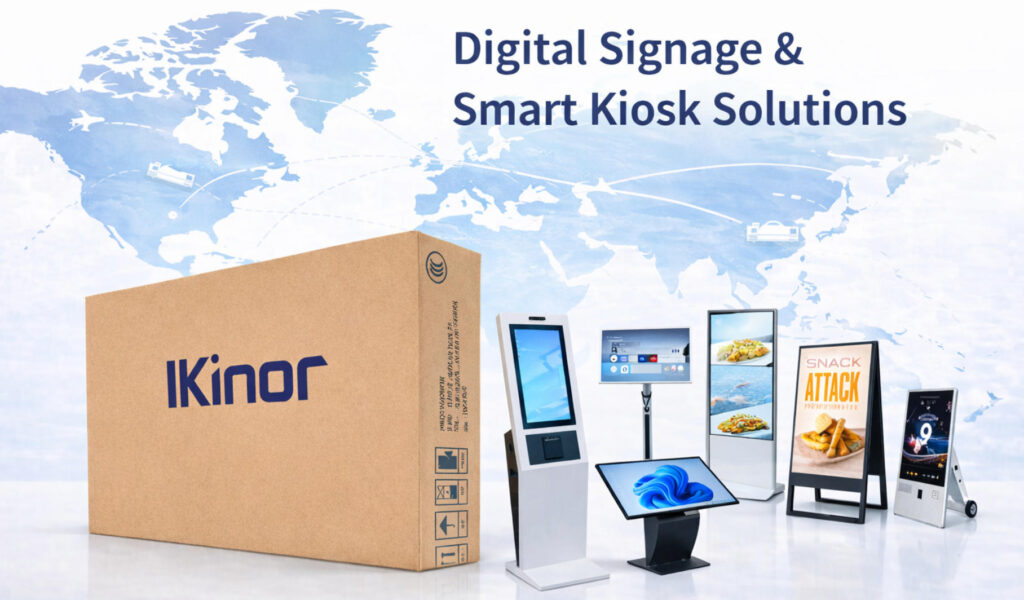

Interactive wayfinding screens have become a critical tool for navigating complex physical spaces in a digital-first world. As commercial buildings, hospitals, campuses, and mixed-use developments grow larger and more dynamic, traditional static signage can no longer keep pace with frequent layout changes and rising visitor expectations. By combining real-time maps, search functions, and touch-based navigation, interactive wayfinding screens help visitors quickly reach their destinations without relying on front-desk staff. Beyond navigation, they improve operational efficiency, strengthen brand image, and support smarter space management, making them a strategic investment rather than a simple display upgrade.
What Business Problems Should Interactive Wayfinding Screens Solve First?
Interactive wayfinding screens should only be adopted when they directly solve real business and operational problems. In most commercial and public environments, the most common challenges involve visitor confusion, excessive pressure on service desks, inefficient information flow in high-traffic areas, and growing expectations for digital experiences.
In large shopping malls and mixed-use developments, visitors often get lost due to complex layouts and frequent tenant changes. Royal Hawaiian Center in Honolulu introduced interactive wayfinding screens to replace static directories, allowing visitors to search for stores, view routes, and switch languages easily. This significantly reduced repeated directional inquiries and improved overall visitor circulation.
Healthcare facilities face similar but more sensitive challenges. At Cleveland Clinic, interactive wayfinding kiosks were deployed across multiple buildings to help patients and visitors navigate independently. By reducing reliance on staff for basic directions, front-desk teams were able to focus more on patient support and administrative efficiency.
High-traffic transportation environments highlight another priority: information distribution efficiency. San José Mineta International Airport (SJC) uses interactive wayfinding screens to guide passengers to gates, amenities, and services in real time, helping reduce congestion and improve passenger flow during peak travel periods.
Beyond functionality, interactive wayfinding screens also play a growing role in brand perception. For organizations positioning themselves as modern, digital-first, or user-centric, these screens provide a consistent and professional experience that static signage can no longer deliver.

Which Locations and Use Cases Actually Require Interactive Wayfinding Screens?
Interactive wayfinding screens are not universally necessary for every space. Their value depends heavily on location type, spatial complexity, and the nature of navigation demand. Understanding where they create real impact helps decision-makers avoid overinvestment or underutilization.
In commercial complexes, frequent visitor turnover, changing tenants, and multiple destinations make interactive wayfinding highly effective. Shoppers expect fast, self-service navigation, especially in large malls or mixed-use developments where static directories quickly become outdated. In contrast, office buildings with fixed tenants and familiar occupants often benefit less, unless the building hosts frequent visitors, shared facilities, or public services.
Hospitals represent one of the strongest use cases. Patients and visitors are often unfamiliar with layouts and under time or emotional pressure. Interactive wayfinding screens help reduce confusion, missed appointments, and reliance on staff for basic directions. Similarly, campuses—especially large universities—benefit from interactive navigation due to dispersed buildings, seasonal visitors, and event-driven traffic.
Deployment scale also matters. Single-point installations may work in small or linear spaces, but environments with multiple entrances, multiple floors, or complex pathways usually require a coordinated network of screens to guide users effectively from entry to destination.
Another key consideration is whether navigation needs are temporary or long-term. Temporary deployments suit exhibitions, events, or pop-up venues, where short-term clarity is essential. Long-term installations are better suited for facilities with ongoing visitor flow, evolving layouts, and long-term digital infrastructure planning.
When location complexity, visitor unfamiliarity, and sustained navigation demand intersect, interactive wayfinding screens become a practical necessity rather than an optional enhancement.
How Do Screen Size, Orientation, and Placement Affect Wayfinding Efficiency?
The effectiveness of interactive wayfinding screens depends not only on software but heavily on hardware decisions—specifically screen size, orientation, and physical placement. Poor hardware choices can undermine even the most advanced wayfinding system.
Screen size must align with viewing distance and foot traffic density. In high-traffic entrances or open atriums, larger screens (55 inches or above) improve visibility and reduce crowding caused by users standing too close. In corridors or elevators lobbies with shorter viewing distances, mid-sized screens (43–49 inches) often deliver better readability without overwhelming the space.
Screen orientation influences how information is consumed. Vertical screens are well-suited for directory-style navigation, floor listings, and step-by-step routing, especially in multi-floor environments. Horizontal screens work better for overview maps, campus layouts, or transportation hubs where spatial context matters more. Video walls or spliced displays are typically reserved for landmark locations, combining wayfinding with branding and announcements, but they require higher budgets and stronger content management.
Placement is equally critical. Freestanding kiosks offer flexibility and strong visibility, making them ideal for main entrances and public plazas. Wall-mounted screens save space and integrate cleanly into corridors or lobbies with predictable traffic flow. Embedded or recessed installations provide a premium, architectural look but demand early planning and higher installation costs.
When screen size, orientation, and placement are aligned with real user behavior and spatial conditions, wayfinding efficiency improves significantly. When they are not, even the best system risks becoming underused or ignored.
What Software and Content Capabilities Are Essential for Interactive Wayfinding Screens?
When evaluating interactive wayfinding screens, long-term software capability matters more than hardware durability. Screens may function for years, but without adaptable software, the system can quickly fall behind real operational needs.
Real-time map updates and centralized backend management are essential in environments where layouts change frequently. Shopping malls with rotating tenants, hospitals with department relocations, and office campuses with flexible spaces all require instant updates across multiple screens. A centralized CMS prevents outdated information and reduces ongoing maintenance costs.
Multi-language support, accessibility features, and efficient search interaction become critical in specific locations. International airports, tourist-oriented commercial complexes, and city-center landmarks serve visitors from different countries, making language switching a basic expectation. Hospitals, government buildings, and transportation hubs must also consider elderly users, wheelchair users, and visually impaired visitors. Larger text options, simplified interfaces, and clear contrast improve usability for these groups. High-efficiency search is especially important in places like hospitals or large campuses, where users typically arrive with a specific destination in mind and need results within seconds rather than browsing long directories.
Another long-term capability is data integration. Advanced wayfinding systems can connect with tenant databases in malls, meeting room booking systems in office buildings, or event schedules on campuses. This allows screens to display live information—such as available rooms, ongoing events, or relocated services—without manual updates.
Without these software capabilities, interactive wayfinding screens quickly become digital versions of static signage. With them, they remain flexible, relevant, and operationally valuable over a 3–5 year lifecycle.
How Can Interactive Wayfinding Screens Integrate With Existing Systems?
One of the most critical considerations when deploying interactive wayfinding screens is system integration. Without proper integration, each screen risks becoming an isolated “information island,” duplicating effort and limiting operational value.
Integration with property management systems (PMS) and commercial management platforms ensures that wayfinding content stays synchronized with real-world changes. For example, when a new tenant opens in a mall or a conference room is booked in an office building, the wayfinding screens can automatically reflect these updates without manual intervention.
Compatibility with APIs, CMS platforms, and third-party data sources further enhances flexibility. Advanced wayfinding solutions allow administrators to pull in live data from room booking systems, event schedules, store directories, or transportation feeds. This enables real-time routing and ensures visitors always see accurate, actionable information.
Considering long-term scalability and technical dependency is equally important. Systems that rely on proprietary platforms without open integration options can create future bottlenecks, raising costs if additional screens, locations, or data sources need to be connected. Choosing solutions with open APIs, modular CMS, and proven third-party integrations reduces risk and makes expansion more manageable.
In short, successful integration transforms interactive wayfinding screens from standalone signage into a dynamic component of a facility’s digital ecosystem. When designed correctly, screens remain accurate, efficient, and adaptable, providing lasting operational and visitor experience value rather than becoming static, isolated displays.
Why Do Total Cost of Ownership and ROI Matter More Than Hardware Price?
When selecting interactive wayfinding screens, the initial hardware cost is only one part of the equation. For B2B decision-makers, long-term efficiency, operational savings, and measurable impact often outweigh the upfront purchase price.
The total cost of ownership (TCO) includes hardware acquisition, software licensing, installation, maintenance, content updates, and the labor saved by reducing front-desk queries. A lower-priced screen with limited software and high maintenance needs can end up costing more over time than a higher-quality, integrated system.
ROI should be evaluated not only in terms of cost reduction but also operational efficiency and visitor experience improvements. For example, Westfield London, one of Europe’s largest shopping centers, deployed interactive wayfinding screens that reduced front-desk directional inquiries by nearly 40% and improved visitor dwell time and engagement with stores and promotional events. Similarly, The Dubai Mall saw measurable reductions in visitor congestion around information desks while simultaneously increasing awareness of ongoing activities.
Typical ROI payback periods range from 12 to 36 months, depending on the scale of deployment, integration level, and the complexity of visitor navigation. Organizations with high foot traffic and dynamic spaces often see faster returns, as time and labor savings accumulate quickly.
Ultimately, evaluating TCO and ROI shifts the focus from “buying a device” to investing in a sustainable operational tool. A well-integrated interactive wayfinding system delivers long-term value, operational efficiency, and measurable user experience benefits—making it a strategic investment rather than a simple hardware purchase.
Can Vendor Experience and After-Sales Support Impact Long-Term Performance?
Vendor experience and after-sales support are often as important as the technology itself when deploying interactive wayfinding screens. Even the most advanced hardware and software can fail to deliver long-term value if the vendor lacks relevant experience or responsive support.
A key factor is whether the vendor has demonstrated successful implementations in environments similar to yours. Shopping malls, hospitals, corporate campuses, and airports each present unique challenges. For instance, Westfield London partnered with 22Miles due to their proven expertise in high-traffic retail complexes, ensuring smooth content management and visitor navigation. Choosing a vendor with misaligned experience may result in deployment delays, underutilized screens, or costly adjustments.
Software updates, remote maintenance, and fast troubleshooting are critical for operational continuity. Vendors that provide cloud-based CMS updates, remote diagnostics, and rapid on-site support help avoid prolonged downtime. In hospitals or transportation hubs, even a short outage can disrupt operations and affect visitor trust.
Another consideration is customization versus standardized delivery. Vendors offering highly customizable solutions can better match branding, multi-floor navigation, and unique workflows, but may require higher upfront investment and project management resources. Standardized platforms may reduce cost and speed deployment but could limit long-term adaptability.
In conclusion, vendor reliability, relevant project experience, and strong after-sales support determine whether interactive wayfinding screens remain operational, effective, and aligned with evolving facility needs over a multi-year horizon. Selecting the right partner transforms a technology purchase into a sustainable, long-term operational asset.
FAQs
What are interactive wayfinding screens mainly used for in commercial buildings?
They are primarily used to reduce visitor confusion, lower front-desk workload, improve navigation efficiency, and enhance digital brand experience in complex spaces.
How do I know if my facility actually needs interactive wayfinding screens?
If your space has high foot traffic, multiple entrances, frequent visitors, or complex layouts, interactive wayfinding screens usually deliver clear operational value.
Which screen size is best for interactive wayfinding applications?
The optimal size depends on viewing distance and traffic flow, but most commercial deployments use 43–55 inch screens for balanced visibility and cost efficiency.
Can interactive wayfinding screens work without constant manual updates?
Yes, if the system supports centralized CMS management and real-time data integration, most updates can be automated or batch-managed.
What should B2B buyers prioritize when choosing a wayfinding screen vendor?
Beyond hardware, buyers should focus on software stability, system integration capability, long-term support, and proven experience in similar use cases.