A escolha de um fabricante de sinalização digital não se resume apenas à comparação de produtos de exibição. Para empresas que planejam redes de varejo, painéis de cardápio para restaurantes, telas interativas, quiosques ou grandes instalações comerciais, o fabricante responsável pelo hardware afeta diretamente a confiabilidade do produto, a capacidade de personalização, a estabilidade da produção e o suporte a longo prazo.
Este guia apresenta 10 das principais fábricas e fabricantes de sinalização digital, incluindo marcas globais de monitores, fornecedores de monitores profissionais e fornecedores OEM/ODM. Ele também explica como avaliar os fabricantes, compreender os fatores que influenciam os preços e escolher o fornecedor certo para os diferentes requisitos de cada projeto.
Por que é importante escolher a fábrica certa de sinalização digital
O mercado de sinalização digital abrange diversos tipos de fornecedores, desde marcas internacionais de telas até fábricas OEM especializadas e empresas comerciais. Embora muitos fornecedores possam oferecer telas prontas para uso, suas capacidades de fabricação e modelos de serviço podem ser bem diferentes.
Em projetos comerciais, a escolha do fornecedor errado pode gerar problemas após a implantação. Uma solução de exibição que pareça adequada durante a fase de compra pode, posteriormente, apresentar desafios como personalização limitada, qualidade inconsistente, atrasos no suporte técnico ou dificuldade em obter peças de reposição.
Uma fábrica confiável de sinalização digital deve oferecer mais do que apenas o fornecimento de hardware. Os compradores devem avaliar se o fabricante tem controle sobre as principais etapas do processo de produção, incluindo:
- Projeto e engenharia de produtos
- Seleção de componentes
- Processos de fabricação
- Controle de qualidade
- Capacidade de personalização
- Suporte técnico
Por exemplo, uma rede multinacional de varejo pode precisar de centenas de expositores padronizados com capacidade de fornecimento estável, enquanto uma empresa que desenvolve quiosques de autoatendimento de marca própria pode precisar de estruturas personalizadas, integração com tela sensível ao toque ou ajustes de software.
Portanto, o melhor fabricante de sinalização digital nem sempre é a maior empresa. A escolha certa depende da escala do projeto, do ambiente de aplicação, dos requisitos de personalização e dos objetivos de parceria de longo prazo.
Entendendo os diferentes tipos de fabricantes de sinalização digital
Antes de comparar fábricas de sinalização digital, os compradores devem entender que nem todos os fabricantes de sinalização digital operam da mesma maneira. O setor inclui marcas globais de telas, fornecedores profissionais de telas comerciais, empresas de telas interativas e fábricas OEM/ODM.
Embora todos esses fabricantes ofereçam produtos de sinalização digital, seus pontos fortes são diferentes. Alguns se concentram na reputação da marca e em implantações em grande escala, enquanto outros se especializam em aplicações profissionais, soluções interativas ou fabricação sob medida.
Compreender essas diferenças ajuda os compradores a avaliar os fornecedores com base nos requisitos reais de seus projetos, em vez de comparar as empresas apenas pelo tamanho ou pelo reconhecimento da marca.
| Tipo de fabricante | Exemplos | Principais pontos fortes | Adequado para |
|---|---|---|---|
| Marcas Globais de Monitores | Samsung Electronics, LG Electronics | Forte reconhecimento da marca, tecnologias avançadas de exibição, redes globais de atendimento, ecossistemas de produtos consolidados | Implantações corporativas, projetos de varejo internacional, instalações comerciais de alto padrão |
| Fabricantes de monitores profissionais | Sharp NEC Display Solutions, Philips Professional Display Solutions (PPDS), Panasonic Connect | Confiabilidade de nível comercial, capacidade de integração profissional, suporte estável ao ciclo de vida do produto | Ambientes corporativos, educação, hotelaria, transporte e instalações públicas |
| Fornecedores de soluções de exibição e interativas | ViewSonic, BenQ | Conhecimento especializado em tecnologia de exibição, painéis interativos, soluções de colaboração, produtos visuais profissionais | Educação, ambientes empresariais, aplicativos interativos |
| Fábricas de sinalização digital OEM/ODM | Ikinor, Lucky XFC Monitor, Eastidea (Yeastidea) | Desenvolvimento personalizado de hardware, produção sob marca própria, fabricação flexível, soluções baseadas em projetos | Marcas de sinalização digital, distribuidores, integradores de sistemas, projetos personalizados |
1. Global Display Brands
As marcas globais de monitores concentram-se em soluções de monitores comerciais em grande escala e, geralmente, contam com forte reconhecimento no mercado, amplos portfólios de produtos e redes de suporte em todo o mundo.
As empresas dessa categoria costumam investir pesadamente em tecnologia de telas, capacidade de produção e canais de distribuição globais. Suas vantagens incluem:
- Sólida reputação da marca
- Tecnologias avançadas de exibição
- Capacidade de produção em grande escala
- Suporte ao cliente global
- Ecossistemas de produtos maduros
Elas costumam ser escolhidas para projetos que exigem produtos padronizados, fornecimento confiável e redes de atendimento consolidadas, como redes internacionais de varejo, instalações corporativas e grandes implantações comerciais.
No entanto, as marcas globais costumam se concentrar em suas próprias plataformas de produtos e linhas de produtos padrão. Para compradores que buscam produtos de marca própria, projetos personalizados de gabinetes ou configurações de hardware altamente específicas, as fábricas OEM/ODM podem oferecer maior flexibilidade.
2. Fabricantes de monitores profissionais
Os fabricantes de monitores profissionais se concentram em soluções de nível comercial projetadas para ambientes empresariais e institucionais, nos quais a confiabilidade e a operação de longo prazo são fundamentais.
Em comparação com os monitores voltados para o consumidor, as soluções de monitores profissionais são normalmente desenvolvidas para aplicações que exigem:
- Horário de funcionamento mais longo
- Desempenho estável
- Integração profissional
- Disponibilidade constante dos produtos
As aplicações típicas incluem:
- Sistemas de comunicação corporativa
- Ambientes educacionais
- Projetos de hospitalidade
- Meios de transporte
- Painéis de informações ao público
Empresas como a Sharp NEC Display Solutions, a Philips Professional Display Solutions (PPDS) e a Panasonic Connect são comumente associadas aos mercados de monitores profissionais.
Esses fabricantes são indicados para compradores que priorizam a confiabilidade comercial e a estabilidade na implantação, em vez de uma ampla personalização do produto.
3. Fornecedores de soluções de exibição e interativas
Algumas empresas do setor de telas se dedicam não apenas ao hardware de sinalização digital, mas também às tecnologias de telas interativas, às soluções de colaboração e aos produtos de comunicação visual.
Essa categoria inclui empresas como a ViewSonic e a BenQ.
Os pontos fortes desses produtos geralmente incluem:
- Telas planas interativas
- Monitores profissionais
- Soluções de colaboração
- Tecnologias de apresentação visual
Esses fabricantes são comumente utilizados em:
- Escolas e universidades
- Salas de reunião corporativas
- Ambientes de treinamento
- Espaços de colaboração empresarial
Para projetos que exigem funções interativas, capacidade de toque ou recursos de colaboração integrados, essas empresas podem oferecer soluções especializadas que vão além dos monitores tradicionais de sinalização digital.
4. Fábricas de sinalização digital OEM/ODM
As fábricas de sinalização digital OEM/ODM se concentram na fabricação personalizada e no desenvolvimento flexível de produtos. Em vez de se limitarem a vender produtos já existentes, essas fábricas trabalham em parceria com os clientes para desenvolver soluções com base em requisitos específicos.
As capacidades típicas de OEM/ODM incluem:
- Projeto personalizado de gabinetes
- Personalização do logotipo e da identidade visual
- Configuração do sistema Android
- Integração com tela sensível ao toque
- Desenvolvimento de quiosques
- Estruturas especiais de montagem
- Ajustes de hardware e software
As fábricas OEM/ODM costumam ser selecionadas por:
- Marcas de sinalização digital
- Distribuidores
- Integradores de sistemas
- Empresas que desenvolvem soluções personalizadas
Para empresas que precisam de produtos com marca própria ou configurações exclusivas de hardware, os fabricantes OEM/ODM podem oferecer maior flexibilidade no projeto do produto, nas especificações e no planejamento da produção.
Ao avaliar uma fábrica OEM/ODM, os compradores devem prestar atenção à capacidade de fabricação, ao suporte de engenharia, aos processos de controle de qualidade e à capacidade de prestação de serviços a longo prazo, em vez de se concentrarem apenas no preço dos produtos.
As 10 principais fábricas e fabricantes de sinalização digital em 2026
As empresas a seguir representam os principais fabricantes e fábricas de sinalização digital, cada uma com seus pontos fortes, incluindo marcas globais de telas, fornecedores de telas profissionais e fornecedores OEM/ODM.
Samsung Electronics
A Samsung Electronics é uma das principais marcas mundiais de monitores comerciais, com grande capacidade na implantação de sinalização digital em grande escala e em tecnologias avançadas de exibição. Seu portfólio de produtos abrange monitores comerciais, sinalização LED, paredes de vídeo e soluções de sinalização inteligente.
A Samsung é reconhecida principalmente por projetos de nível empresarial, redes globais de varejo, ambientes de transporte e instalações comerciais de alto padrão, nos quais a reputação da marca, a liderança tecnológica e o suporte técnico mundial são fatores importantes.
LG Electronics
A LG Electronics é líder global em tecnologia de telas, conhecida por suas soluções visuais inovadoras, especialmente sinalização OLED, telas LED e produtos de exibição comercial de alta qualidade.
Em comparação com fabricantes que se concentram principalmente em telas comerciais padrão, a LG apresenta fortes vantagens em aplicações visuais de alto impacto, nas quais a qualidade da imagem, o design fino e a experiência do cliente são fundamentais. Suas soluções de sinalização digital são comumente utilizadas em lojas de varejo, ambientes de hospitalidade, exposições e espaços comerciais de alto padrão.
Sharp NEC Display Solutions
A Sharp NEC Display Solutions é especializada em soluções profissionais de exibição projetadas para ambientes que exigem confiabilidade, estabilidade e longa vida útil.
A empresa se concentra em telas de grande formato, monitores profissionais e soluções visuais integradas para instalações corporativas, educação, salas de controle, transporte e projetos do setor público. Seu ponto forte está nas aplicações de missão crítica, nas quais o desempenho consistente e o suporte profissional são mais importantes do que recursos voltados para o consumidor.
Philips Professional Display Solutions (PPDS)
A Philips Professional Display Solutions (PPDS) se dedica a soluções de telas comerciais para setores como varejo, hotelaria, educação e ambientes corporativos.
A empresa combina a tecnologia de telas da Philips com recursos de implantação profissional, incluindo telas de sinalização digital, telas interativas e soluções para o setor de hospitalidade. A PPDS é particularmente adequada para empresas que precisam de soluções específicas para o setor, redes de telas gerenciadas e operação comercial confiável.
Panasonic Connect
A Panasonic Connect é a divisão de áudio e vídeo profissional da Panasonic, com foco em soluções integradas de comunicação visual para ambientes empresariais e profissionais.
Ao contrário das empresas que se concentram exclusivamente em equipamentos de exibição, a Panasonic Connect oferece soluções que se integram a ecossistemas de áudio e vídeo mais amplos. Seus produtos são comumente utilizados em instalações corporativas, projetos do setor público, sistemas de transporte e instalações profissionais, onde a capacidade de integração e a confiabilidade são requisitos essenciais.
ViewSonic
A ViewSonic é uma empresa global de tecnologia de telas que expandiu sua atuação, passando dos monitores tradicionais para soluções interativas e de colaboração.
A empresa se destaca especialmente em telas planas interativas, monitores comerciais e produtos de comunicação visual para o setor educacional, reuniões de negócios e ambientes de colaboração. A ViewSonic é uma escolha adequada para projetos em que a interação por toque, o trabalho em equipe e o envolvimento do usuário são elementos importantes da experiência de exibição.
BenQ
A BenQ se concentra em soluções profissionais de tecnologia visual, incluindo monitores interativos, monitores comerciais, projetores e produtos para colaboração.
A empresa possui ampla experiência nas áreas de educação, treinamento corporativo e ambientes empresariais, onde o desempenho visual e os recursos interativos são fundamentais. A BenQ é frequentemente escolhida para projetos que exigem uma combinação de qualidade de imagem, facilidade de uso e recursos interativos.
Ikinor
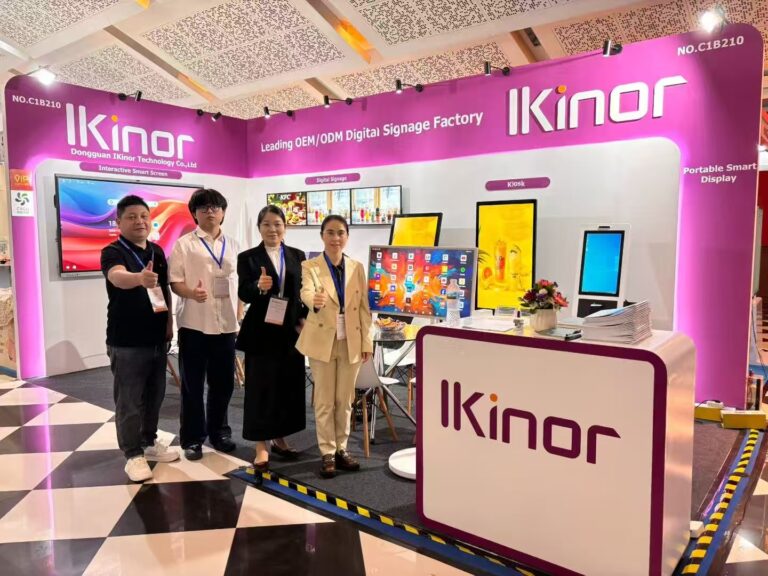
A Ikinor é uma fabricante de sinalização digital OEM/ODM sediada na China, especializada em soluções personalizadas de telas comerciais.
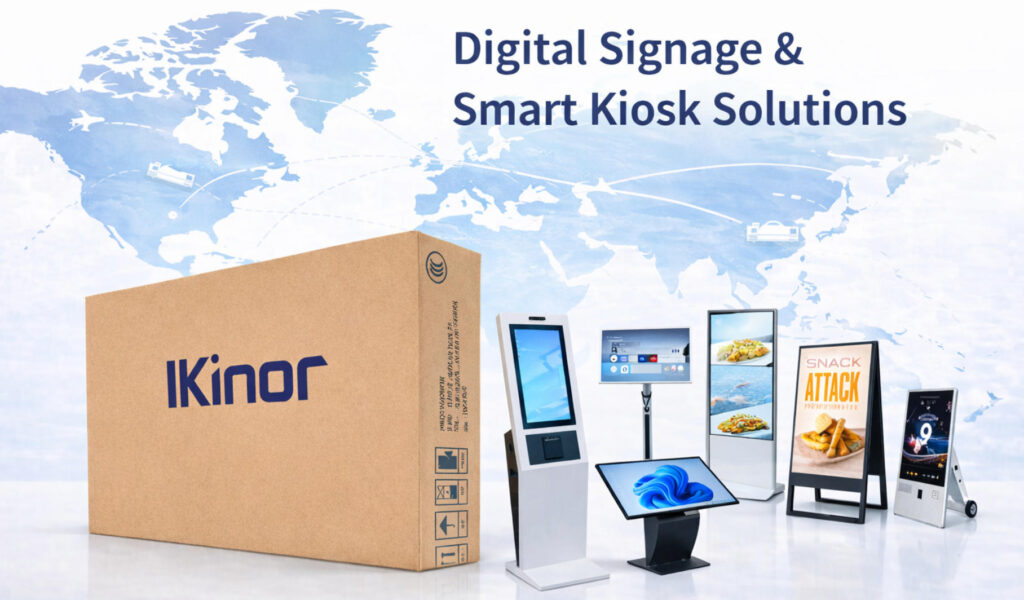
Ao contrário das marcas globais de telas, que oferecem principalmente linhas de produtos padronizadas, a Ikinor trabalha com distribuidores, marcas e integradores de sistemas no desenvolvimento de produtos de marca própria e projetos de hardware personalizados. Seus serviços incluem telas para sinalização digital, quiosques, telas interativas, smart TVs portáteis, personalização de gabinetes e serviços de fabricação OEM/ODM.
Monitor Lucky XFC
A Lucky XFC Monitor é uma fabricante de telas com sede na China, especializada em OEM/ODM, que oferece soluções personalizadas de sinalização digital, telas sensíveis ao toque e telas interativas.
A principal vantagem da empresa é sua capacidade de fabricação flexível, que atende aos clientes que necessitam de configurações de hardware personalizadas, produção baseada em projetos e soluções de exibição adaptadas a aplicações comerciais específicas.
É comumente considerado por distribuidores, integradores e empresas que buscam opções alternativas de fornecimento além das grandes marcas de monitores.
Eastidea (Yeastidea)
A Eastidea (Yeastidea) é uma fabricante de hardware para sinalização digital sediada na China, especializada em telas publicitárias, quiosques, telas sensíveis ao toque e terminais de exibição personalizados.
A empresa se concentra em soluções de sinalização digital com foco em hardware para publicidade no varejo, aplicações de autoatendimento, displays comerciais e projetos personalizados. Seu ponto forte reside na personalização de produtos, na integração de hardware e no suporte à fabricação OEM para empresas que necessitam de formatos específicos de exibição.
Como escolher a fábrica de sinalização digital certa para o seu projeto
Depois de analisar diferentes fabricantes, o próximo desafio é determinar qual tipo de fornecedor é o mais adequado para o seu projeto específico.
Não existe uma única fábrica de sinalização digital que seja a melhor para todos os compradores. Uma empresa global, um distribuidor regional e uma empresa que desenvolve um produto de marca própria podem precisar de parceiros de fabricação completamente diferentes.
1. Considere a escala do seu projeto
O tamanho do projeto é um dos fatores mais importantes na escolha de um fornecedor.
Implantações em grande escala geralmente exigem que os fabricantes tenham:
- Capacidade de produção estável
- Cadeias de suprimentos confiáveis
- Qualidade consistente do produto
- Capacidade de suporte de longo prazo
Por exemplo, empresas que instalam centenas de monitores em vários locais podem priorizar a estabilidade da fabricação e a cobertura de serviços.
Projetos menores ou aplicações personalizadas podem se beneficiar mais das fábricas OEM/ODM, pois elas podem oferecer:
- Ajustes mais rápidos nos produtos
- Configurações mais flexíveis
- Menos obstáculos à personalização
2. Considere o ambiente de sua aplicação
Os requisitos de sinalização digital variam significativamente dependendo do local onde os monitores são instalados.
| Inscrição | Requisitos principais |
|---|---|
| Lojas de varejo | Alta qualidade de imagem, gerenciamento remoto, opções flexíveis de tela |
| Restaurantes | Personalização do painel de cardápio, atualizações fáceis de conteúdo, economia |
| Educação | Funções interativas, capacidade de toque, longas horas de funcionamento |
| Publicidade externa | Alto brilho, durabilidade, resistência às intempéries |
| Quiosques de autoatendimento | Estruturas personalizadas, integração com tela sensível ao toque, flexibilidade de hardware |
Compreender o cenário de aplicação ajuda os compradores a evitar a escolha de um fornecedor com base apenas na reputação da marca ou no preço inicial do produto.
3. Considere suas necessidades de personalização
Os displays comerciais padrão podem atender a muitas necessidades básicas, mas alguns projetos exigem soluções personalizadas.
Os fabricantes OEM/ODM costumam ser a escolha preferida quando os compradores precisam de:
- Designs personalizados de aparência
- Logotipos de marcas
- Soluções sensíveis ao toque
- Personalização do Android
- Estruturas de quiosques
- Soluções especiais de montagem
A capacidade de personalização é especialmente importante para empresas que desenvolvem experiências exclusivas para os clientes ou produtos de marca própria.
4. Considere as especificações do produto
As especificações técnicas influenciam diretamente o desempenho adequado de uma solução de sinalização digital no ambiente para o qual foi projetada.
Entre os fatores importantes estão:
- Tamanho da tela
- Resolução
- Nível de brilho
- Qualidade do painel
- Desempenho do processador
- Sistema operacional
- Capacidade de armazenamento
- Tecnologia sensível ao toque
Por exemplo, um painel de menu para ambientes internos e um painel publicitário para ambientes externos podem exigir configurações de hardware completamente diferentes, mesmo que ambos utilizem telas do mesmo tamanho.
Lista de verificação para a verificação na fábrica de sinalização digital
Escolher um fabricante com base apenas em um site, catálogo de produtos ou material de divulgação comercial pode acarretar riscos no processo de seleção de fornecedores. Antes de fazer um pedido de grande volume, os compradores devem verificar se o fornecedor possui capacidade real de fabricação, controle de qualidade confiável e suporte técnico suficiente.
Uma fábrica de sinalização digital confiável deve ser capaz de fornecer informações claras sobre seu processo de produção, capacidade de engenharia e procedimentos de teste dos produtos.
1. Verificar a capacidade de fabricação
Um fabricante genuíno deve ter controle sobre os principais processos de produção, em vez de se limitar a adquirir produtos acabados de outros fornecedores.
Entre os fatores importantes a serem verificados estão:
- Localização da fábrica
- Instalações de produção
- Equipe de engenharia
- Capacidade de montagem
- Processo de gestão da qualidade
- Capacidade de produção
Os compradores podem solicitar:
- Fotos ou vídeos da fábrica
- Visitas virtuais à fábrica
- Informações sobre a linha de produção
- Exemplos de relatórios de testes
Os fabricantes com capacidade de produção direta geralmente estão mais bem posicionados para lidar com solicitações de personalização, questões técnicas e futuras atualizações de produtos.
2. Verificar as certificações e a conformidade
Os produtos de sinalização digital podem exigir certificações diferentes, dependendo do mercado-alvo e da aplicação.
Entre as certificações mais comuns estão:
- Sistema de gestão da qualidade ISO 9001
- Certificação CE
- Certificação da FCC
- Conformidade com a diretiva RoHS
No caso de telas interativas baseadas no Android, os compradores corporativos também podem levar em consideração a certificação Google EDLA quando forem necessários os serviços oficiais do Google e suporte ao Android de nível corporativo.
As certificações não garantem a qualidade perfeita do produto, mas demonstram se um fabricante segue procedimentos reconhecidos de conformidade e gestão da qualidade.
3. Avaliar os processos de controle de qualidade
Espera-se frequentemente que os produtos de sinalização digital comercial funcionem por longos períodos. Portanto, o controle de qualidade é um fator importante na escolha de uma fábrica.
Fabricantes confiáveis geralmente realizam:
- Inspeção de componentes recebidos
- Testes de desempenho da tela
- Testes de envelhecimento
- Teste da função de toque
- Inspeção final de qualidade antes do envio
No caso de grandes implantações, os compradores também devem conhecer as políticas de garantia, os procedimentos para lidar com falhas e a disponibilidade de peças de reposição.
4. Testar amostras antes da produção em massa
Antes de se comprometerem com grandes quantidades, os compradores devem avaliar amostras do produto.
A análise de amostras pode ajudar a verificar:
- Desempenho da tela
- Estabilidade do hardware
- Funções do software
- Requisitos de instalação
- Aparência do produto
- Adequação para aplicações no mundo real
Um fabricante profissional deve ser capaz de dar suporte à transição dos testes de protótipos para a produção em massa.
Guia de fábricas de sinalização digital OEM/ODM
A fabricação OEM e ODM tornou-se uma importante opção de fornecimento para empresas que precisam de produtos personalizados de sinalização digital.
Em vez de escolher apenas produtos padrão, as empresas podem trabalhar com parceiros OEM para desenvolver monitores com base em sua própria marca, nos requisitos de aplicação e nas especificações técnicas.
Por que escolher uma fábrica de sinalização digital OEM/ODM?
A fabricação OEM/ODM permite que as empresas alcancem:
- Produtos de marca própria
- Projetos de hardware personalizados
- Configurações flexíveis
- Soluções específicas para cada aplicação
- Maior controle sobre as características do produto
Essa abordagem é comumente utilizada por:
- Marcas de sinalização digital
- Distribuidores
- Integradores de sistemas
- Fornecedores de soluções para o varejo
Por exemplo, uma empresa que desenvolve um quiosque de autoatendimento pode precisar de uma solução diferente daquela necessária para um varejista que instala telas publicitárias padrão. Uma fábrica OEM pode ajustar o projeto do hardware, a configuração da tela e as opções de integração com base nos requisitos do projeto.
Trabalhar com um parceiro OEM experiente pode ajudar as empresas a desenvolver produtos de sinalização digital personalizados sem precisar construir sua própria infraestrutura de fabricação. Ikinor – Fabricante de sinalização digital fornece soluções de sinalização digital OEM/ODM para empresas globais, distribuidores e integradores de sistemas, abrangendo monitores comerciais, telas de sinalização digital, quiosques, monitores interativos e soluções de hardware personalizadas.
Processo de desenvolvimento OEM de sinalização digital
Um projeto típico de OEM/ODM geralmente inclui várias etapas:
| Palco | Descrição |
|---|---|
| Análise de Requisitos | Definir as especificações do produto, os cenários de aplicação e os requisitos de personalização |
| Desenvolvimento de protótipos | Criar amostras para avaliação técnica e de design |
| Testes e aprovação | Verifique o desempenho do hardware, as funções do software e os requisitos de instalação |
| Produção em massa | Fabricar produtos de acordo com as especificações aprovadas |
| Entrega e Suporte | Fornecer coordenação de remessas, suporte técnico e atendimento pós-venda |
Um processo OEM estruturado ajuda a reduzir os riscos de desenvolvimento e garante que o produto final atenda às expectativas do projeto.
Fatores que influenciam os preços da sinalização digital: o que afeta os custos de fábrica?
Os custos de fabricação de sinalização digital são influenciados por diversos fatores. O custo final não é determinado apenas pelo tamanho da tela, mas também pela tecnologia de exibição, pela configuração do hardware, pelos requisitos de personalização e pelas condições de produção.
Compreender esses fatores ajuda os compradores a comparar as cotações dos fornecedores com maior precisão.
Tamanho da tela e tecnologia do painel
O tamanho da tela é um dos fatores mais importantes que afetam os custos de fabricação.
Telas maiores geralmente exigem:
- Custos mais elevados dos painéis
- Estruturas mecânicas mais resistentes
- Soluções mais complexas de embalagem e transporte
A tecnologia dos painéis também influencia o custo. Os painéis LCD de nível comercial, as telas OLED e as soluções LED apresentam diferentes requisitos de fabricação e características de desempenho.
Brilho e ambiente de instalação
O ambiente de instalação afeta diretamente as especificações do produto.
As exibições em ambientes fechados geralmente se concentram em:
- Brilho padrão
- Ângulos de visão
- Eficiência energética
Os monitores para uso ao ar livre ou em ambientes com muita luz ambiente podem exigir:
- Painéis de alto brilho
- Gerenciamento térmico avançado
- Projetos com maior capacidade de proteção
Requisitos de maior brilho costumam aumentar tanto os custos dos componentes quanto a complexidade da engenharia.
Configuração de hardware
Os produtos de sinalização digital podem apresentar configurações de hardware significativamente diferentes.
Entre os principais fatores de custo estão:
- Modelo do processador
- Memória RAM e capacidade de armazenamento
- Versão do Android
- Opções de computadores da OPS
- Recursos de conectividade
- Capacidade de processamento de mídia
Um display publicitário básico e um display inteligente interativo com recursos avançados de computação podem ter custos de fabricação muito diferentes.
Nível de personalização
A personalização é uma das maiores diferenças de custo entre produtos padrão e projetos OEM.
Outros requisitos de desenvolvimento podem incluir:
- Projeto personalizado de gabinetes
- Identidade visual do logotipo
- Integração com tela sensível ao toque
- Personalização de software
- Soluções especiais de montagem
Quanto mais personalizado um produto se torna, mais recursos de engenharia e tempo de desenvolvimento podem ser necessários.
Quantidade do pedido
O volume de produção afeta a eficiência da fabricação e os custos de aquisição.
Pedidos de grande volume podem se beneficiar de:
- Maior eficiência na aquisição de componentes
- Processos de produção otimizados
- Custos de fabricação por unidade mais baixos
Projetos personalizados de menor porte podem envolver custos de desenvolvimento mais elevados, pois os recursos de engenharia e produção são distribuídos entre um número menor de unidades.
Requisitos de certificação
Mercados diferentes podem exigir certificações e procedimentos de teste distintos.
Por exemplo:
- Os mercados europeus podem exigir a conformidade com a marcação CE
- Os mercados dos EUA podem exigir conformidade com as normas da FCC
- Os requisitos ambientais podem incluir a diretiva RoHS
Os requisitos de certificação devem ser considerados logo no início da fase de planejamento do projeto, a fim de evitar atrasos inesperados.
Por que muitas empresas adquirem sinalização digital da China
A China tornou-se um importante centro de fabricação de sinalização digital devido ao seu ecossistema eletrônico maduro e às suas capacidades de produção flexíveis.
Muitos compradores internacionais adquirem produtos de sinalização digital da China porque a cadeia de suprimentos abrange várias etapas do processo de fabricação, incluindo:
- Fornecimento de painéis LCD
- Componentes eletrônicos
- Fabricação de placas de circuito impresso
- Fabricação de metais
- Produção de módulos sensíveis ao toque
- Serviços de montagem
Em comparação com a aquisição apenas de produtos acabados, trabalhar com Fábricas chinesas de OEM/ODM pode oferecer maior flexibilidade para soluções personalizadas, produtos de marca própria e fabricação sob encomenda.
Para empresas que necessitam de configurações específicas, as fábricas localizadas na China costumam oferecer vantagens em:
- Personalização do produto
- Flexibilidade de fabricação
- Coordenação da cadeia de suprimentos
- Integração de hardware
Tendências na fabricação de sinalização digital em 2026
O setor de sinalização digital está evoluindo de simples equipamentos de exibição para soluções mais conectadas e inteligentes.
Várias tendências estão moldando o futuro desenvolvimento da sinalização digital.
Gerenciamento de conteúdo baseado em IA
A inteligência artificial está sendo integrada aos sistemas de sinalização digital para melhorar a otimização de conteúdo, a interação com o público e o gerenciamento automatizado.
Telas interativas e inteligentes
Telas sensíveis ao toque, painéis interativos e soluções de autoatendimento continuam a se expandir em setores como o varejo, a educação e a hotelaria.
Plataformas de gerenciamento baseadas na nuvem
As soluções de CMS em nuvem permitem que as empresas gerenciem vários monitores remotamente, facilitando a operação de implantações em grande escala.
Eficiência energética e projeto sustentável
Os fabricantes estão se concentrando cada vez mais na redução do consumo de energia, em ciclos de vida mais longos dos produtos e em projetos ambientalmente responsáveis.
Perguntas frequentes
Uma fábrica de sinalização digital controla diretamente a produção, enquanto um fornecedor pode adquirir produtos de outros fabricantes e prestar serviços de distribuição.
As marcas globais são adequadas para projetos empresariais padronizados, enquanto as fábricas OEM são mais indicadas para soluções personalizadas e produtos de marca própria.
Verifique a capacidade da fábrica, as certificações, os processos de produção, as amostras dos produtos e o suporte pós-venda antes de fazer um pedido.
Os custos são influenciados pelo tamanho da tela, pela tecnologia do painel, pelo brilho, pela configuração de hardware, pelo nível de personalização, pela quantidade do pedido e pelos requisitos de certificação.
Sim. Muitas fábricas de sinalização digital oferecem serviços de OEM/ODM, incluindo projetos personalizados, personalização com a marca do cliente, configuração de hardware e fabricação sob encomenda.