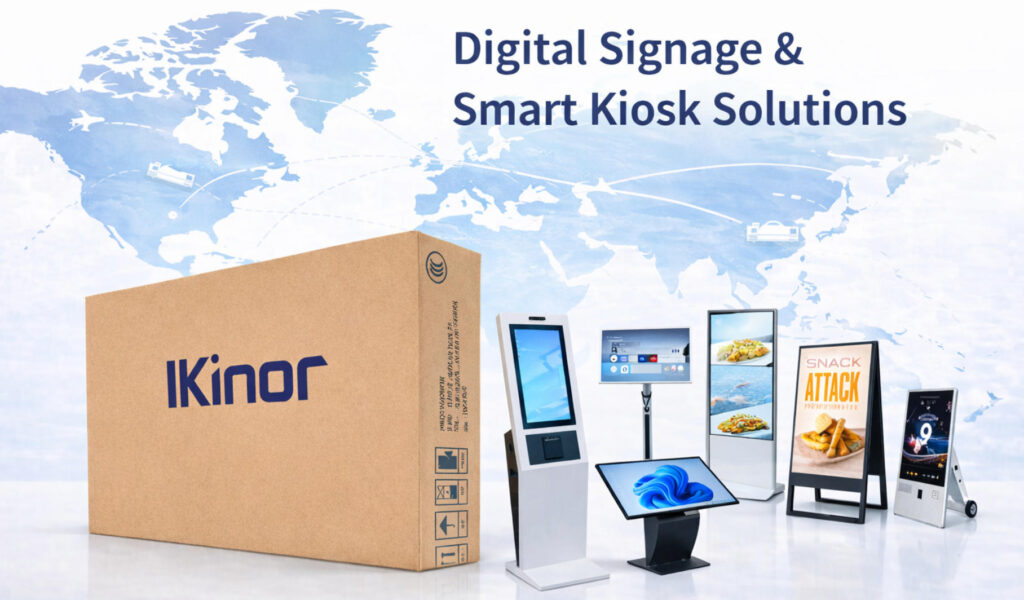
Selecting a digital signage factory is not only about comparing display products. For businesses planning retail networks, restaurant menu boards, interactive displays, kiosks, or large commercial installations, the manufacturer behind the hardware directly affects product reliability, customization capability, production stability, and long-term support.
This guide introduces 10 leading digital signage factories and manufacturers, including global display brands, professional display providers, and OEM/ODM suppliers. It also explains how to evaluate manufacturers, understand pricing factors, and choose the right supplier for different project requirements.
Why Choosing the Right Digital Signage Factory Matters
The digital signage market includes various types of suppliers, from international display brands to specialized OEM factories and trading companies. While many suppliers can provide finished screens, their manufacturing capabilities and service models can be very different.
For commercial projects, choosing the wrong supplier may create problems after deployment. A display solution that appears suitable during the purchasing stage may later face challenges such as limited customization, inconsistent quality, delayed technical support, or difficulty obtaining replacement parts.
A reliable digital signage factory should provide more than hardware supply. Buyers should evaluate whether the manufacturer has control over key parts of the production process, including:
- Product design and engineering
- Component selection
- Manufacturing processes
- Quality control
- Customization capability
- Technical support
For example, a multinational retail chain may need hundreds of standardized displays with stable supply capacity, while a company developing a branded self-service kiosk may require customized structures, touch integration, or software adjustments.
Therefore, the best digital signage manufacturer is not always the largest company. The right choice depends on project scale, application environment, customization requirements, and long-term partnership goals.
Understanding Different Types of Digital Signage Manufacturers
Before comparing digital signage factories, buyers should understand that not all digital signage manufacturers operate in the same way. The industry includes global display brands, professional commercial display providers, interactive display companies, and OEM/ODM factories.
These manufacturers may all provide digital signage products, but their strengths are different. Some focus on brand reputation and large-scale deployments, while others specialize in professional applications, interactive solutions, or customized manufacturing.
Understanding these differences helps buyers evaluate suppliers based on their actual project requirements instead of comparing companies only by size or brand awareness.
| Manufacturer Type | Examples | Main Strengths | Suitable For |
|---|---|---|---|
| Global Display Brands | Samsung Electronics, LG Electronics | Strong brand recognition, advanced display technologies, global service networks, mature product ecosystems | Enterprise deployments, international retail projects, premium commercial installations |
| Professional Display Manufacturers | Sharp NEC Display Solutions, Philips Professional Display Solutions (PPDS), Panasonic Connect | Commercial-grade reliability, professional integration capability, stable product lifecycle support | Corporate environments, education, hospitality, transportation, and public facilities |
| Display & Interactive Solution Providers | ViewSonic, BenQ | Display technology expertise, interactive panels, collaboration solutions, professional visual products | Education, business environments, interactive applications |
| OEM/ODM Digital Signage Factories | Ikinor, Lucky XFC Monitor, Eastidea (Yeastidea) | Custom hardware development, private-label production, flexible manufacturing, project-based solutions | Digital signage brands, distributors, system integrators, customized projects |
1. Global Display Brands
Global display brands focus on large-scale commercial display solutions and usually have strong market recognition, extensive product portfolios, and worldwide support networks.
Companies in this category typically invest heavily in display technology, manufacturing capacity, and global distribution channels. Their advantages include:
- Strong brand reputation
- Advanced display technologies
- Large-scale production capability
- Global customer support
- Mature product ecosystems
They are often selected for projects that require standardized products, reliable supply, and established service networks, such as international retail chains, corporate installations, and large commercial deployments.
However, global brands usually focus on their own product platforms and standard product lines. For buyers looking for private-label products, custom enclosure designs, or highly specific hardware configurations, OEM/ODM factories may provide more flexibility.
2. Professional Display Manufacturers
Professional display manufacturers focus on commercial-grade solutions designed for business and institutional environments where reliability and long-term operation are important.
Compared with consumer displays, professional display solutions are typically developed for applications requiring:
- Longer operating hours
- Stable performance
- Professional integration
- Consistent product availability
Parmi les applications courantes, on peut citer :
- Corporate communication systems
- Education environments
- Hospitality projects
- Transportation facilities
- Public information displays
Companies such as Sharp NEC Display Solutions, Philips Professional Display Solutions (PPDS), and Panasonic Connect are commonly associated with professional display markets.
These manufacturers are suitable for buyers who prioritize commercial reliability and deployment stability rather than extensive product customization.
3. Display & Interactive Solution Providers
Some display companies focus not only on digital signage hardware but also on interactive display technologies, collaboration solutions, and visual communication products.
This category includes companies such as ViewSonic and BenQ.
Their product strengths often include:
- Interactive flat panels
- Professional displays
- Collaboration solutions
- Visual presentation technologies
These manufacturers are commonly used in:
- Schools and universities
- Corporate meeting rooms
- Training environments
- Business collaboration spaces
For projects requiring interactive functions, touch capability, or integrated collaboration features, these companies can provide specialized solutions beyond traditional digital signage displays.
4. OEM/ODM Digital Signage Factories
OEM/ODM digital signage factories focus on customized manufacturing and flexible product development. Instead of only selling existing products, these factories work with customers to develop solutions based on specific requirements.
Typical OEM/ODM capabilities include:
- Custom enclosure design
- Logo and branding customization
- Android system configuration
- Touchscreen integration
- Kiosk development
- Special mounting structures
- Hardware and software adjustments
OEM/ODM factories are commonly selected by:
- Digital signage brands
- Distributors
- System integrators
- Businesses developing customized solutions
For companies that need private-label products or unique hardware configurations, OEM/ODM manufacturers can provide greater flexibility in product design, specifications, and production planning.
When evaluating an OEM/ODM factory, buyers should pay attention to manufacturing capability, engineering support, quality control processes, and long-term service capability rather than focusing only on product pricing.
Top 10 Digital Signage Factories and Manufacturers in 2026
The following companies represent leading digital signage manufacturers and factories with different strengths, including global display brands, professional display providers, and OEM/ODM suppliers.
Samsung Electronics
Samsung Electronics is one of the world’s leading commercial display brands, with strong capabilities in large-scale digital signage deployment and advanced display technologies. Its product portfolio covers commercial displays, LED signage, video walls, and smart signage solutions.
Samsung is mainly recognized for enterprise-level projects, global retail networks, transportation environments, and premium commercial installations where brand reputation, technology leadership, and worldwide service support are important factors.
LG Electronics
LG Electronics is a global display technology leader known for innovative visual solutions, especially OLED signage, LED displays, and premium commercial display products.
Compared with manufacturers focused mainly on standard commercial screens, LG has strong advantages in high-impact visual applications where image quality, slim design, and customer experience are critical. Its digital signage solutions are commonly used in retail stores, hospitality environments, exhibitions, and premium commercial spaces.
Sharp NEC Display Solutions
Sharp NEC Display Solutions specializes in professional display solutions designed for environments requiring reliability, stability, and long operational lifecycles.
The company focuses on large-format displays, professional monitors, and integrated visual solutions for corporate facilities, education, control rooms, transportation, and public sector projects. Its strength lies in mission-critical applications where consistent performance and professional support are more important than consumer-oriented features.
Philips Professional Display Solutions (PPDS)
Philips Professional Display Solutions (PPDS) focuses on commercial display solutions for industries such as retail, hospitality, education, and corporate environments.
The company combines Philips display technology with professional deployment features, including digital signage displays, interactive displays, and hospitality solutions. PPDS is particularly suitable for businesses that need sector-specific solutions, managed display networks, and reliable commercial operation.
Panasonic Connect
Panasonic Connect is Panasonic’s professional AV division, focusing on integrated visual communication solutions for enterprise and professional environments.
Unlike companies focused only on display hardware, Panasonic Connect provides solutions that work within broader AV ecosystems. Its products are commonly used in corporate facilities, public sector projects, transportation systems, and professional installations where integration capability and reliability are key requirements.
ViewSonic
ViewSonic is a global display technology company that has expanded from traditional displays into interactive and collaboration solutions.
The company is particularly strong in interactive flat panels, commercial displays, and visual communication products for education, business meetings, and collaboration environments. ViewSonic is a suitable choice for projects where touch interaction, teamwork, and user engagement are important parts of the display experience.
BenQ
BenQ focuses on professional visual technology solutions, including interactive displays, commercial displays, projectors, and collaboration products.
The company has strong experience in education, corporate training, and business environments where visual performance and interactive features are important. BenQ is often selected for projects requiring a combination of display quality, usability, and interactive capabilities.
Ikinor
Ikinor is a China-based OEM/ODM digital signage manufacturer specializing in customized commercial display solutions.
Unlike global display brands that mainly provide standardized product lines, Ikinor works with distributors, brands, and system integrators on private-label products and customized hardware projects. Its capabilities include digital signage displays, kiosks, interactive displays, portable smart TVs, enclosure customization, and OEM/ODM manufacturing services.
Lucky XFC Monitor
Lucky XFC Monitor is a China-based OEM/ODM display manufacturer providing customized digital signage, touch displays, and interactive display solutions.
The company’s main advantage is flexible manufacturing capability, supporting customers that require customized hardware configurations, project-based production, and display solutions adapted to specific commercial applications.
It is commonly considered by distributors, integrators, and businesses looking for alternative sourcing options beyond large display brands.
Eastidea (Yeastidea)
Eastidea (Yeastidea) is a China-based digital signage hardware manufacturer specializing in advertising displays, kiosks, touchscreens, and customized display terminals.
The company focuses on hardware-oriented digital signage solutions for retail advertising, self-service applications, commercial displays, and customized projects. Its strength lies in product customization, hardware integration, and OEM manufacturing support for businesses requiring specific display formats.
How to Choose the Right Digital Signage Factory for Your Project
After reviewing different manufacturers, the next challenge is determining which type of supplier matches your specific project.
There is no single best digital signage factory for every buyer. A global enterprise, a regional distributor, and a company developing a private-label product may require completely different manufacturing partners.
1. Consider Your Project Scale
Project size is one of the most important factors when selecting a supplier.
Large-scale deployments usually require manufacturers with:
- Stable production capacity
- Reliable supply chains
- Consistent product quality
- Long-term support capability
For example, companies deploying hundreds of displays across multiple locations may prioritize manufacturing stability and service coverage.
Smaller projects or customized applications may benefit more from OEM/ODM factories because they can provide:
- Faster product adjustments
- More flexible configurations
- Lower customization barriers
2. Consider Your Application Environment
Digital signage requirements vary significantly depending on where displays are installed.
| Candidature | Key Requirements |
|---|---|
| Magasins de détail | High image quality, remote management, flexible screen options |
| Restaurants | Menu board customization, easy content updates, cost efficiency |
| Éducation | Interactive functions, touch capability, long operating hours |
| Outdoor advertising | High brightness, durability, weather resistance |
| Bornes en libre-service | Custom structures, touchscreen integration, hardware flexibility |
Understanding the application scenario helps buyers avoid selecting a supplier based only on brand reputation or initial product pricing.
3. Consider Your Customization Requirements
Standard commercial displays may meet many basic needs, but some projects require customized solutions.
OEM/ODM manufacturers are often preferred when buyers need:
- Custom appearance designs
- Brand logos
- Touch solutions
- Android customization
- Kiosk structures
- Special mounting solutions
Customization capability is especially important for businesses developing unique customer experiences or private-label products.
4. Consider Product Specifications
Technical specifications directly affect whether a digital signage solution can perform properly in its intended environment.
Important factors include:
- Taille de l'écran
- Résolution
- Brightness level
- Panel quality
- Processor performance
- Operating system
- Storage capacity
- Technologie tactile
For example, an indoor menu board and an outdoor advertising display may require completely different hardware configurations, even if both use the same screen size.
Digital Signage Factory Verification Checklist
Choosing a manufacturer based only on a website, product catalog, or sales communication can create sourcing risks. Before placing a large order, buyers should verify whether the supplier has real manufacturing capability, reliable quality control, and sufficient technical support.
A trustworthy digital signage factory should be able to provide clear information about its production process, engineering capability, and product testing procedures.
1. Verify Manufacturing Capability
A genuine manufacturer should have control over key production processes rather than only purchasing finished products from other suppliers.
Important factors to check include:
- Factory location
- Production facilities
- Engineering team
- Assembly capability
- Quality management process
- Production capacity
Buyers can request:
- Factory photos or videos
- Virtual factory tours
- Production line information
- Sample testing reports
Manufacturers with direct production capability are usually better positioned to handle customization requests, technical issues, and future product updates.
2. Check Certifications and Compliance
Digital signage products may need different certifications depending on the target market and application.
Common certifications include:
- ISO 9001 quality management system
- CE certification
- FCC certification
- RoHS compliance
For Android-based interactive displays, enterprise buyers may also consider Google EDLA certification when official Google services and enterprise-level Android support are required.
Certifications do not guarantee perfect product quality, but they demonstrate whether a manufacturer follows recognized compliance and quality management procedures.
3. Evaluate Quality Control Processes
Commercial digital signage products are often expected to operate for extended periods. Therefore, quality control is an important factor when selecting a factory.
Reliable manufacturers typically perform:
- Incoming component inspection
- Display performance testing
- Aging tests
- Touch function testing
- Final quality inspection before shipment
For large deployments, buyers should also understand warranty policies, failure handling procedures, and replacement part availability.
4. Test Samples Before Mass Production
Before committing to large quantities, buyers should evaluate product samples.
Sample testing can help verify:
- Display performance
- Hardware stability
- Software functions
- Installation requirements
- Product appearance
- Real-world application suitability
A professional manufacturer should be able to support the transition from prototype testing to mass production.
OEM/ODM Digital Signage Factory Guide
OEM and ODM manufacturing has become an important sourcing option for businesses that need customized digital signage products.
Instead of selecting only standard products, companies can work with OEM partners to develop displays based on their own branding, application requirements, and technical specifications.
Why Choose an OEM/ODM Digital Signage Factory?
OEM/ODM manufacturing allows businesses to achieve:
- Private-label products
- Customized hardware designs
- Flexible configurations
- Application-specific solutions
- Better control over product features
This approach is commonly used by:
- Digital signage brands
- Distributors
- System integrators
- Retail solution providers
For example, a company developing a self-service kiosk may require a different solution from a retailer deploying standard advertising displays. An OEM factory can adjust hardware design, screen configuration, and integration options based on project requirements.
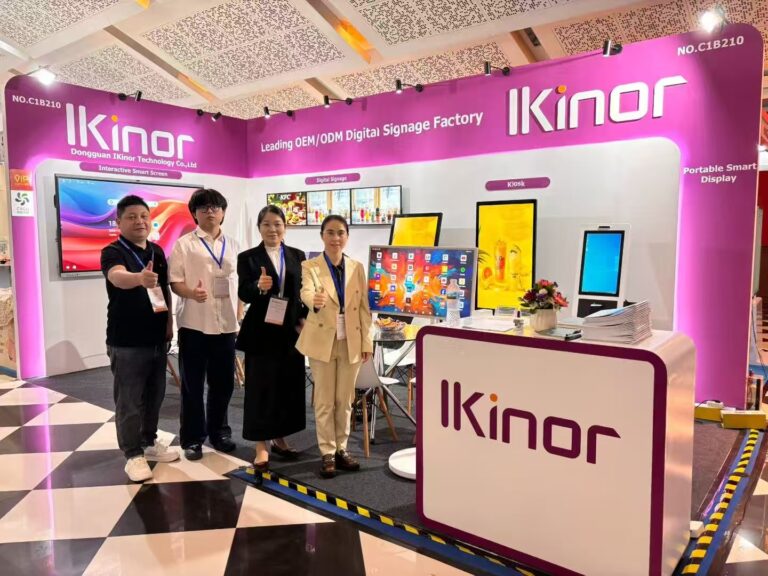
Working with an experienced OEM partner can help businesses develop customized digital signage products without building their own manufacturing infrastructure. Ikinor Digital Signage Manufacturer provides OEM/ODM digital signage solutions for global businesses, distributors, and system integrators, covering commercial displays, digital signage screens, kiosks, interactive displays, and customized hardware solutions.
Digital Signage OEM Development Process
A typical OEM/ODM project usually includes several stages:
| Stage | Description |
|---|---|
| Analyse des besoins | Define product specifications, application scenarios, and customization requirements |
| Prototype Development | Create samples for design and technical evaluation |
| Testing and Approval | Verify hardware performance, software functions, and installation requirements |
| Production en série | Manufacture products according to approved specifications |
| Delivery and Support | Provide shipment coordination, technical support, and after-sales service |
A structured OEM process helps reduce development risks and ensures the final product meets project expectations.
Digital Signage Pricing Factors: What Affects Factory Costs?
Digital signage manufacturing costs are influenced by many factors. The final cost is not determined only by screen size but also by display technology, hardware configuration, customization requirements, and production conditions.
Understanding these factors helps buyers compare supplier quotations more accurately.
Display Size and Panel Technology
Screen size is one of the most important factors affecting manufacturing costs.
Larger displays usually require:
- Higher panel costs
- Stronger mechanical structures
- More complex packaging and transportation solutions
Panel technology also affects cost. Commercial-grade LCD panels, OLED displays, and LED solutions have different manufacturing requirements and performance characteristics.
Brightness and Installation Environment
The installation environment directly affects product specifications.
Indoor displays usually focus on:
- Luminosité standard
- Viewing angles
- Energy efficiency
Outdoor or high-ambient-light displays may require:
- High-brightness panels
- Advanced thermal management
- Stronger protective designs
Higher brightness requirements often increase both component costs and engineering complexity.
Configuration matérielle
Digital signage products can have significantly different hardware configurations.
Important cost factors include:
- Processor model
- RAM and storage capacity
- Android version
- OPS computer options
- Connectivity features
- Media processing capability
A basic advertising display and an interactive smart display with advanced computing capability may have very different manufacturing costs.
Customization Level
Customization is one of the biggest cost differences between standard products and OEM projects.
Additional development requirements may include:
- Custom enclosure design
- Logo branding
- Touchscreen integration
- Software customization
- Special mounting solutions
The more customized a product becomes, the more engineering resources and development time may be required.
Order Quantity
Production volume affects manufacturing efficiency and purchasing costs.
Large-volume orders may benefit from:
- Better component purchasing efficiency
- Optimized production processes
- Lower per-unit manufacturing costs
Smaller customized projects may involve higher development costs because engineering and production resources are allocated across fewer units.
Certification Requirements
Different markets may require different certifications and testing procedures.
Par exemple :
- European markets may require CE compliance
- US markets may require FCC compliance
- Environmental requirements may involve RoHS
Certification requirements should be considered early in the project planning stage to avoid unexpected delays.
Why Many Businesses Source Digital Signage from China
China has become an important manufacturing hub for digital signage due to its mature electronics ecosystem and flexible production capabilities.
Many international buyers source digital signage products from China because the supply chain covers multiple parts of the manufacturing process, including:
- LCD panel supply
- Electronic components
- PCB manufacturing
- Metal fabrication
- Touch module production
- Assembly services
Compared with sourcing only finished products, working with Chinese OEM/ODM factories can provide greater flexibility for customized solutions, private-label products, and project-based manufacturing.
For businesses requiring specific configurations, China-based factories often provide advantages in:
- Product customization
- Manufacturing flexibility
- Supply chain coordination
- Hardware integration
Digital Signage Manufacturing Trends in 2026
The digital signage industry is moving from simple display hardware toward more connected and intelligent solutions.
Several trends are shaping future digital signage development.
AI-Driven Content Management
Artificial intelligence is being integrated into digital signage systems to improve content optimization, audience interaction, and automated management.
Interactive and Smart Displays
Touchscreens, interactive panels, and self-service solutions continue to expand across industries such as retail, education, and hospitality.
Cloud-Based Management Platforms
Cloud CMS solutions allow businesses to manage multiple displays remotely, making large-scale deployments easier to operate.
Energy Efficiency and Sustainable Design
Manufacturers are focusing more on lower power consumption, longer product lifecycles, and environmentally responsible product designs.
Foire aux questions
Une usine d'affichage numérique gère directement la fabrication, tandis qu'un fournisseur peut s'approvisionner auprès d'autres fabricants et proposer des services de distribution.
Les marques internationales conviennent aux projets d'entreprise standardisés, tandis que les usines OEM sont plus adaptées aux solutions sur mesure et aux produits sous marque de distributeur.
Vérifiez les capacités de l'usine, ses certifications, ses processus de production, les échantillons de produits et le service après-vente avant de passer commande.
Les coûts dépendent de la taille de l'écran, de la technologie de la dalle, de la luminosité, de la configuration matérielle, du niveau de personnalisation, de la quantité commandée et des exigences en matière de certification.
Oui. De nombreux fabricants d'affichage numérique proposent des services OEM/ODM, notamment la conception sur mesure, la personnalisation à l'image de marque, la configuration matérielle et la fabrication sur mesure en fonction des projets.