
Germany’s digital signage market is experiencing significant growth as businesses accelerate digital transformation across retail, transportation, healthcare, and corporate environments. In 2024, the market generated approximately USD 2.07 billion in revenue, and it is projected to reach around USD 3.30 billion by 2030, growing at an 8.1 % CAGR from 2025 to 2030. The kiosk segment alone was the largest revenue contributor in 2024, reflecting strong demand for interactive self-service solutions.
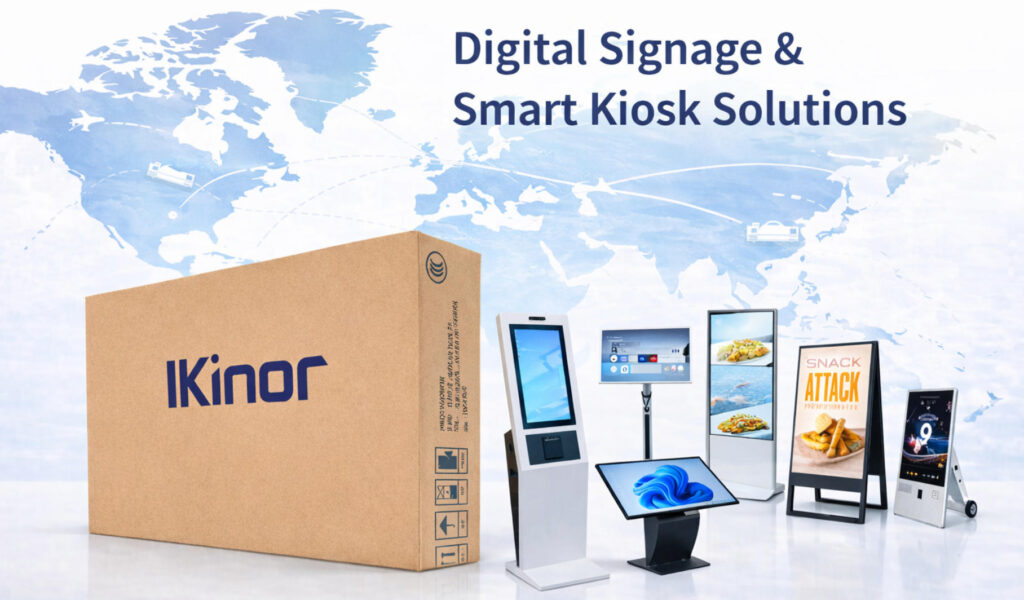
This article explores why German companies are upgrading digital signage systems, breaks down core solution types such as self-service kiosks, mobile smart displays, and wall-mounted signage, and provides a complete buyer’s guide. It also ranks the Top 10 digital signage solution providers in Germany, offers comparisons, and gives practical recommendations for successful deployment.
Why German Businesses Are Upgrading Digital Signage Systems
Building on the strong growth of Germany’s digital signage market, many businesses are now actively upgrading existing systems rather than simply expanding display networks. This shift reflects a broader understanding of digital signage as a long-term operational platform, not just a visual communication tool.
Operational efficiency is a primary driver. Rising labor costs and persistent workforce shortages have accelerated the adoption of self-service kiosks in retail, transportation, and public services. Upgraded digital signage systems help automate routine interactions, reduce waiting times, and maintain consistent service quality—areas where older systems often fall short.
At the same time, expectations for user experience are increasing. German consumers and employees demand real-time, accurate, and interactive information across physical environments. Static content, manual updates, and fragmented control systems are no longer sufficient. Modern digital signage enables dynamic content management, touch-based interaction, and seamless integration with live data sources.
Security and regulatory compliance also play a decisive role. Germany’s strict GDPR framework has exposed limitations in legacy platforms, particularly in data storage transparency, access control, and remote device management. New-generation solutions address these gaps through EU-based hosting, enhanced cybersecurity, and centralized permission controls.
Another key motivation is system integration and scalability. Businesses increasingly require digital signage to connect with POS systems, ERP platforms, queue management software, and analytics tools. Centralized management across multiple locations—often spanning regions or countries—has become a standard requirement.
Finally, long-term cost efficiency is reshaping investment decisions. While upgrades involve upfront costs, modern platforms significantly reduce total cost of ownership through remote maintenance, higher uptime, and flexible software licensing. As a result, digital signage upgrades are now viewed as a strategic investment supporting efficiency, compliance, and sustainable growth.
Key Digital Signage Solution Types in the German Market
Following the growing emphasis on system upgrades and long-term scalability, German businesses are increasingly selecting digital signage solutions based on clearly defined application types rather than generic display hardware. The market is broadly shaped by three core solution categories, each serving distinct operational needs.
Self-service kiosks represent one of the most mature segments in Germany. In retail, they are widely used for self-ordering and checkout, helping stores manage peak traffic while reducing labor dependency. Healthcare facilities and public service institutions deploy kiosks for patient check-ins, appointment management, and information access, where accuracy and reliability are critical. In industrial parks and office buildings, kiosk-based visitor management systems streamline registration and access control. For these use cases, German buyers prioritize durable, commercial-grade hardware, precise touch performance, multilingual user interfaces, and software platforms that support secure data handling, system integration, and GDPR-compliant operations.
Mobile smart displays address the need for flexibility in dynamic environments. Demand is particularly strong in trade fairs, pop-up retail, and in-store promotional campaigns, where temporary installations must deliver strong visual impact without complex setup. High battery capacity is essential to support full-day operation, while robust structural design ensures safety during frequent movement. Equally important is remote content control, allowing marketing teams to update messaging centrally without on-site intervention.
Wall-mounted digital signage remains the most common format for permanent installations in shopping malls, corporate offices, and transportation hubs. These environments typically require continuous operation, high brightness, and long service life. As a result, German deployments overwhelmingly favor commercial-grade displays over consumer-grade screens, valuing reliability, serviceability, and compliance with local safety and electrical standards.
Six Common Pitfalls Buyers Should Avoid
Despite the clear advantages of upgrading digital signage systems, German buyers often encounter several common pitfalls that can undermine both performance and return on investment. A frequent mistake is focusing solely on hardware specifications, such as screen size, resolution, or brightness, while overlooking the capabilities of the content management system (CMS). Without a robust CMS, even high-quality displays cannot deliver dynamic content, remote updates, or scheduling across multiple locations. Another challenge arises when businesses select international brands that lack local technical support. In Germany, timely service, spare parts availability, and on-site troubleshooting are critical to ensure uninterrupted operations and compliance with local standards. Buyers also frequently underestimate long-term software subscription and upgrade costs; while initial hardware purchases are visible, recurring licensing fees, CMS enhancements, and analytics services can accumulate significantly over time. Data compliance is another key concern, as digital signage often involves personal or operational data; systems that do not meet GDPR requirements for data storage, access control, and logging expose organizations to regulatory risks. Integration limitations can further reduce system value if displays cannot connect with POS, ERP, or other operational platforms, limiting automation and real-time insights. Finally, installation and maintenance costs are often underappreciated, including mounting, cabling, calibration, and ongoing servicing. Without careful planning for these factors, businesses may experience downtime, increased operational complexity, and reduced return on investment. By anticipating these pitfalls, German enterprises can select digital signage solutions that deliver reliability, compliance, and measurable efficiency gains, complementing the benefits of kiosks, mobile smart displays, and wall-mounted screens.
Complete Buying Guide: From Planning to Deployment
After understanding the different solution types and common pitfalls, German businesses can approach digital signage procurement more strategically by following a structured buying guide. The process begins with clearly defining business objectives, which determines whether the system will primarily serve as an information display, support interactive experiences, or collect operational and customer data. Aligning objectives with use cases ensures that hardware and software investments deliver measurable value. Once objectives are established, buyers must carefully evaluate hardware specifications. Screen size and resolution should correspond to viewing distance and audience engagement needs, while brightness, anti-glare performance, and continuous 24/7 operation are essential for high-traffic environments. Touch technologies, whether infrared or capacitive, should match the level of interactivity required, and the choice between industrial-grade or commercial-grade displays must reflect durability, operational demands, and long-term maintenance considerations.
Equally important is the evaluation of software and content management systems. A robust CMS allows centralized management of multiple devices, efficient content scheduling, remote updates, and granular user permissions with activity logging. For deployments in Germany, German-language interfaces and localization are critical to ensure usability and staff adoption. Security and regulatory compliance are also non-negotiable; data hosting should preferably be EU-based or on local servers, with device-level security and remote access controls in place. The system must support GDPR-compliant data collection and processing to mitigate legal risks. By following these planning and deployment considerations, businesses can select digital signage solutions that are scalable, secure, and fully aligned with operational goals, while maximizing efficiency and long-term return on investment.
Top 10 Digital Signage Solution Providers In Germany
Cancom
| Founded | 1992 |
| Company Profile | Headquartered in Munich, Germany, CANCOM is a major Digital Business Provider serving enterprises, public sector organizations, and multinational clients. It offers end‑to‑end digital solutions including IT infrastructure, managed services, cloud, security, AI, IoT, and comprehensive digital signage integration services. The company operates across the DACH region and beyond with around 5,600 employees and approximately 80 locations. CANCOM SE is publicly traded on the Frankfurt Stock Exchange (TecDAX & SDAX). |
| Core Products | While CANCOM’s portfolio spans broad IT transformation services, its digital signage solutions include centrally controlled multimedia systems that deliver dynamic content via displays, LED walls, and interactive terminals. These solutions are deployed in retail, corporate communication, public spaces, wayfinding, employee communication, and information kiosks. CANCOM also provides infrastructure, security, hosting, installation, remote monitoring, and managed services that support signage ecosystems. |
| Key Strengths | CANCOM is recognized as a DACH digital signage market leader, ranking #1 in the invidis digital signage rankings multiple times. It distinguishes itself with full‑service integration, strong IT security, sustainable operations, local support teams, and the ability to manage complex, large‑scale global deployments. Its expertise in AI, IoT, and content strategy further enhances signage value. |
| Location | Munich, Germany (Headquarters) with a network of offices throughout Germany, Austria, Switzerland, and neighboring countries. |
| Best For | Large enterprises and public sector organizations seeking holistic, secure, and scalable digital signage solutions integrated into broader IT and cloud environments. |
| Contact | https://www.cancom.de/ |
Viewneo
| Founded | 2008 |
| Company Profile | viewneo is a German digital signage provider specializing in cloud‑based content management and integrated hardware solutions. Developed by Adversign Media GmbH, viewneo has grown into a global provider used in over 150 countries with more than 20,000 customers worldwide. The company focuses on delivering intuitive, scalable digital signage systems that blend software, hardware, IoT, and AI capabilities to support a wide range of industries. |
| Core Products | viewneo’s offerings include its cloud‑based digital signage software platform, the viewneo 4K SignageBox media player, IoT devices such as the viewneo Butler gateway, AI‑camera systems like FR‑CAM, RFID modules, smart sensors, and specialized displays such as the viewneo Diwa digital chalkboard for hospitality. |
| Key Strengths | viewneo is known for its user‑friendly CMS, centralized management of multiple screens, strong AI and IoT integration, and flexible hardware ecosystem. The platform supports dynamic content, video walls, audience analytics, and smart retail applications. viewneo also holds ISO/IEC 27001:2022 certification for information security, emphasizing robust data protection. |
| Location | Headquarters in Düsseldorf, Germany (Adversign Media GmbH), with additional presence in the United States and global partner networks. |
| Best For | Businesses of all sizes looking for a scalable, cloud‑based digital signage platform with strong CMS capabilities, IoT and AI enhancements, and integrated hardware for retail, hospitality, corporate communication, and public information deployments. |
| Contact | https://www.viewneo.com/ |
Delfi
| Founded | 1988 |
| Company Profile | Delfi Technologies GmbH is a technology company with headquarters in Schönkirchen, Germany, and additional offices across Europe including Denmark, Sweden, Norway, and Italy. The company specializes in electronic shelf labels (ESL), barcode and POS solutions, handheld terminals, and software that supports digital signage, store communication, and workflow automation. With more than 13 million electronic shelf labels installed in nearly 3,000 stores, its Breece system is among the leading platforms for digital price tags and connected in‑store displays. |
| Core Products | Breece System: Cloud‑based platform integrating ESL, digital signage, mobile devices, and queue management.Electronic Shelf Labels (ESL): Fully graphic e‑ink tags for dynamic price and information display.Mobile Software & Apps: Tools like BreeceGo to manage labels and signage content. |
| Key Strengths | Delfi’s strengths lie in its comprehensive in‑store ecosystem, which connects digital price tags with broader digital signage and retail communication frameworks. Its cloud‑based solutions allow real‑time updates, seamless integration with inventory systems, and simplified deployment, which help retailers reduce manual tasks and enhance customer experience. |
| Location | Headquarters in Schönkirchen, Germany, with European offices supporting local deployments. |
| Best For | Retail and logistics businesses looking for integrated digital price labeling and signage systems that merge ESL, interactive displays, and cloud‑based content management. |
| Contact | https://www.delfi.com/ |
Bütema AG
| Founded | 2004 |
| Company Profile | Headquartered in Bietigheim‑Bissingen, Germany, Bütema AG is a German digital signage and retail technology provider offering integrated software, hardware, and services for modern visual communication and customer engagement. Its solutions support retail, hospitality, public spaces, and corporate environments with comprehensive digital signage and mobile ERP systems developed in‑house. |
| Core Products | Digital Signage Hardware: Displays, interactive terminals, digital menu boards, LED walls, outdoor displays, and kiosk systems.Digital Signage Software: Cloud‑based CMS for content creation, scheduling, centralized management, user permissions, and analytics.Retail & Mobile Solutions: InStore Assistant, self‑checkout systems, and mobile ERP hardware/software.Customized Solutions: Tailored installations, integration services, and industry‑specific applications. |
| Key Strengths | Bütema stands out for its full‑service approach, combining consulting, hardware, software, installation, and ongoing support from a single provider. Its solutions are designed for robust 24/7 operation, seamless integration with existing systems, and flexible deployment tailored to specific industry needs. It also emphasizes local support and German‑made software with multilingual capabilities. |
| Location | Headquarters in Bietigheim‑Bissingen, Germany with service teams covering other German regions and parts of Europe. |
| Best For | Retailers, corporate clients, public institutions, and hospitality businesses seeking end‑to‑end digital signage solutions with strong consulting, custom integration, and local support. |
| Contact | https://www.buetema-ag.de/ |
Friendlyway
| Founded | 1998 |
| Company Profile | Friendlyway is a German digital signage and self‑service technology provider headquartered in Gilching (Munich area), Germany. It delivers cloud‑native digital signage software, commercial‑grade hardware, and integrated visitor and workforce management solutions across Europe, the United States, and other global markets. The company serves a wide range of industries including manufacturing, public services, hospitality, retail, and logistics. |
| Core Products | friendlyway Digital Signage Software: Cloud‑based CMS for remote content updates, device grouping, scheduling, and analytics.Self‑Service & Visitor Management Systems: Interactive kiosks for check‑in, access control, navigation, and workflow automation.Hardware Portfolio: Commercial‑grade displays and kiosk models, including the Impress 43, Empire 22 (Slim & Deep), Luminum 43, and Counter 12 devices. |
| Key Strengths | friendlyway stands out for its end‑to‑end cloud platform, modular and scalable architecture, strong integration capabilities, and GDPR‑compliant security features. Its solutions support centralized fleet management, multilingual interfaces, and flexible deployment from single locations to global networks. |
| Location | Headquarters in Gilching (Munich area), Germany, with additional partner support in the United States and Poland. |
| Best For | Organizations seeking integrated digital signage and self‑service ecosystems with robust software, flexible hardware options, and strong compliance and support in German and international markets. |
| Contact | https://www.friendlyway.com/ |
Visunext
| Founded | 2003 |
| Company Profile | Headquartered in Emsdetten, Germany, visunext SE is part of the visunext Group, one of the largest providers of AV technology and visual communication systems in Western Europe. The company operates across nine countries and serves more than 1,000,000 customers, including corporate, public sector, education, and retail clients. |
| Core Products | Visunext’s portfolio focuses on professional AV and digital signage solutions, including large‑format displays, interactive screens, videowalls, projection systems, and conferencing technology. The company also provides integrated installation, consulting, and service packages that cover planning, integration, delivery, and on‑site support for visual environments and digital signage deployments. |
| Key Strengths | Visunext is known for its holistic system‑level approach that blends hardware, software, and design into tailored environments, from digital signage and collaboration spaces to immersive learning and meeting rooms. Its strong partnerships with major AV brands like Acer, Barco, Samsung, and Panasonic offer clients a broad ecosystem of interoperable technologies. The company’s emphasis on consultation, training, and localized service in Germany and across Europe sets it apart in the market. |
| Location | Headquarters in Emsdetten, Germany, with regional offices and showrooms in major German cities and a presence throughout Europe. |
| Best For | Enterprises and institutions seeking end‑to‑end digital signage and AV solutions that combine professional hardware, strategic design, installation expertise, and ongoing support. |
| Contact | https://www.visunext.de/ |
SMART Technologies
| Founded | 1995 |
| Company Profile | DataVision Deutschland is a German AV/IT integrator headquartered in Düsseldorf, Germany, with multiple branch offices across the country including Hamburg, Frankfurt, Stuttgart, Munich, and service points in Berlin, Dresden, and Nuremberg. The company is part of the Ricoh Group since 2020 and focuses on delivering modern meeting & workplace solutions that encompass digital signage, collaborative communication technology, and audiovisual systems. |
| Core Products | DataVision’s portfolio includes digital signage displays and systems, interactive screens, professional video conferencing hardware (such as Microsoft Surface Hub solutions), unified communication and collaboration technology, AV infrastructure, and complete installation services. Its offerings are designed to enable dynamic content display, internal communication, and customer engagement across corporate and enterprise environments. |
| Key Strengths | The company’s strengths lie in its end‑to‑end integration services, deep expertise in AV and unified communications, nationwide service presence, and strong local support for planning, installation, customization, training, and ongoing maintenance. Being part of Ricoh enhances its access to global technology ecosystems and scalable solutions. |
| Location | Headquarters in Düsseldorf, Germany, with multiple offices and service locations throughout Germany, ensuring broad regional support. |
| Best For | Mid‑sized to large enterprises, public institutions, and corporations seeking professional AV and digital signage solutions integrated with collaborative workplace technology and backed by robust project support and service. |
| Contact | https://www.datavision.net |
DATA MODUL
| Founded | 1972 |
| Company Profile | DATA MODUL AG is a leading German manufacturer and integrator of display, touch, embedded, monitor, and panel PC solutions for a wide range of industries. Headquartered in Munich, the company has grown into a global player supporting digital signage, industrial visualization, and customized display systems. It operates extensive production and logistics facilities including in Weikersheim (Germany) and has a presence across Europe, Asia, and the Americas. |
| Core Products | Digital Signage Displays & Systems: Large‑format indoor and outdoor displays with high brightness, wide viewing angles, and optional touch integration for signage applications. LED Walls & Panels: Custom LED solutions for immersive digital signage installations with fine pixel pitches. Embedded and Custom Solutions: Tailor‑made display systems and embedded technologies for signage, HMI, and industrial use. Professional Monitors & Panel PCs: Products designed for 24/7 operation in demanding environments. |
| Key Strengths | DATA MODUL combines in‑house development, manufacturing, and customization capabilities to deliver display solutions tailored to specific customer requirements. Its portfolio supports industrial‑grade signage as well as high‑performance screens for outdoor, retail, and transportation environments, and offers integrated display ecosystems with both hardware and system support. |
| Location | Headquarters in Munich, Germany, with major manufacturing at Weikersheim and logistics and production facilities internationally. |
| Best For | Enterprises and system integrators seeking customizable, reliable display hardware and complete signage components— particularly for industrial, retail, and outdoor digital signage applications. |
| Contact | https://www.data‑modul.com/ |
DataVision
| Founded | 1987 |
| Company Profile | SMART Technologies ULC is a global provider of interactive displays and collaboration solutions, widely known for pioneering interactive whiteboards and touch‑enabled displays used in education, business, and corporate environments worldwide. While not a traditional digital signage specialist in the narrowest sense, SMART’s commercial display products and collaboration platforms are often used as interactive signage and communication tools in corporate, retail, and public spaces. |
| Core Products | Interactive Displays: Large touch‑enabled panels designed for collaboration, presentations, and dynamic content interaction. NX Series Commercial Displays: Non‑interactive screens suitable for scalable digital signage deployments. Software Tools: Including SMART Remote Management and educational/collaboration software like Lumio. |
| Key Strengths | SMART is globally recognized for robust interactive display hardware, long lifecycle support with over‑the‑air upgrades, multi‑user touch support, and strong integration with collaborative workflows. Its technology is widely used in corporate meeting rooms, educational campuses, and public communication areas where interactive signage enhances engagement. |
| Location | Headquarters in Calgary, Alberta, Canada, with global distribution and partner networks supporting deployments in Europe, including Germany. |
| Best For | Organizations seeking interactive display solutions that double as collaborative tools and dynamic digital signage, especially in education, corporate communication, and collaboration‑centric environments. |
| Contact | https://www.smarttech.com/ |
Cambuy
| Founded | 2017 |
| Company Profile | Cambuy.de operates as an e‑commerce specialist focused primarily on security and surveillance products rather than core digital signage development or content systems. The site serves business and institutional customers across Germany by offering a broad portfolio of professional hardware, accessories, and installation support. While their catalog includes monitors and displays under security and AV accessories, Cambuy does not develop its own signage CMS or solution platform — instead acting as a reseller and consultant for security hardware and related components. |
| Core Products | IP and analogue surveillance cameras from brands like Dahua, Hikvision, Axis, and Hanwha Vision.Recorders (NVR/DVR) and access control devices.Alarm systems and installation accessories.Service and support packages such as device testing and remote installation assistance.The product categories indirectly relate to displays through their “Monitors and Displays” section, which includes screens and accessories under broader AV hardware categories — but signage per se is not a core focus. |
| Key Strengths | Cambuy.de positions itself as a trusted, certified online specialist with personalized customer support, integration advice, and reseller services. The company is a Trusted Shops certified vendor, a member of the Händlerbund, and offers nationwide logistics and device installation support through partner networks |
| Location | Based in Ilsfeld, Germany (business operations and service support). |
| Best For | Businesses and organizations in need of professional security and surveillance hardware, expert planning support, and hardware resale — rather than dedicated digital signage systems with CMS and content management capabilities. |
| Contact | https://www.cambuy.de/ |
Pricing Guide: What German Digital Signage Buyers Should Expect
Interactive display pricing in Germany tends to be higher than in Southern Europe, reflecting the market’s focus on regulatory compliance, service quality, and long-term reliability rather than just the lowest upfront cost. Buyers should plan their budgets by device category rather than chasing isolated “online deals,” as these often exclude VAT, service fees, or enterprise-grade support.
Entry-level wall-mounted displays—commonly used in classrooms or small offices—typically run on Android, feature infrared touch, and include basic collaboration tools. In Germany, 65–75 inch models usually cost between €1,100 and €1,800 (excluding VAT), or roughly €1,300 to €2,150 including VAT. Similarly, entry-level self-service kiosks with Android systems and touch interfaces are in a similar price range, depending on the enclosure and interactive features. Basic mobile smart displays, often used for temporary promotions or pop-up events, generally start around €1,200–€2,000, reflecting portability and battery integration costs.
Mid-range devices—75–86 inch wall-mounted panels, OPS-enabled kiosks, and mobile smart displays—offer higher brightness, Windows compatibility, and enhanced durability. Prices typically range between €2,200 and €4,000(excluding VAT), or €2,600 to €4,800 including VAT, depending on brand, software bundles, and interactive capabilities.
High-end solutions for enterprises, boardrooms, airports, and large public venues often include PCAP touch technology, Teams Room integration, built-in cameras and microphones, and enterprise MDM support. Wall-mounted displays and kiosks of this class typically start at €4,500 (excluding VAT), while mobile smart displays with advanced features can exceed €6,500–7,000 including VAT.
Higher German pricing is driven by local installation labor costs, strict EU/German compliance standards, extended warranties, service-level agreements, and expectations for long-term support. For buyers in Germany, total cost of ownership (TCO) is the critical factor—upfront price alone is secondary to operational reliability and long-term value.
Industry Use Cases and Deployment Scenarios
Digital signage solutions in Germany are widely adopted across industries, with deployment tailored to specific operational needs and customer experiences. In retail and chain stores, wall-mounted displays and self-service kiosksare used to drive dynamic promotions, product information, and quick self-checkout. Mobile smart displays are also deployed for pop-up events, seasonal promotions, or in-store demonstrations, providing flexible content delivery while engaging customers in high-traffic areas. These interactive solutions help increase sales and streamline shopping experiences.
In transportation and public spaces, wall-mounted digital signage dominates, offering real-time schedules, wayfinding, and safety announcements in airports, train stations, and bus terminals. Self-service kiosks assist travelers with ticketing and information retrieval, reducing queues and improving operational efficiency. Mobile smart displays provide temporary guidance or updates during construction, detours, or special events, enhancing passenger convenience without permanent installations.
Corporate and industrial environments leverage signage to improve internal communication, safety messaging, and operational updates. Wall-mounted displays broadcast KPIs, workflow alerts, and compliance notifications across manufacturing floors and offices. Self-service kiosks allow employees to check schedules or report issues, while mobile smart displays support temporary projects, training sessions, or corporate events.
In healthcare and government, interactive kiosks handle queue management, patient check-in, and self-service applications, reducing administrative burdens. Wall-mounted signage communicates safety protocols, public announcements, and service information, while mobile smart displays support temporary campaigns or multi-location events.
Across all sectors, German organizations prioritize regulatory compliance, content localization, and high reliability, making the combination of kiosks, mobile displays, and wall-mounted signage a versatile approach to meet diverse operational and audience needs.
Deployment and Operational Best Practices for Germany
Successful digital signage deployment in Germany requires careful planning, localization, and proactive management to ensure regulatory compliance, reliability, and maximum engagement. Installation planning and site assessment is the first step: wall-mounted displays need optimal positioning for visibility, proper mounting, and high-brightness configurations for indoor or semi-outdoor spaces. Self-service kiosks require secure placement, accessibility, and ergonomic design, while mobile smart displays demand flexible deployment plans that account for power sources, mobility routes, and audience flow.
Content localization is critical. German audiences expect clear, professional messaging in German, with attention to cultural and legal requirements. Multilingual content may be required in public transport hubs, airports, or corporate environments with international visitors. Each display type—kiosk, wall-mounted, or mobile—should deliver context-appropriate content: kiosks for interactive tasks, mobile displays for temporary campaigns, and wall-mounted signage for continuous information delivery.
System monitoring and preventive maintenance are essential for uninterrupted operation. Centralized management platforms allow operators to monitor all devices, detect hardware or software issues, and deploy updates remotely. Regular calibration, firmware upgrades, and physical inspections maintain optimal performance for all display types, particularly in high-traffic or 24/7 operational environments.
Finally, performance tracking and continuous optimization ensure displays meet their objectives. Metrics such as interaction rates on kiosks, dwell time for wall-mounted signage, and content effectiveness on mobile displays guide content updates and scheduling improvements. By combining proper deployment planning, localized content, proactive monitoring, and iterative optimization, organizations in Germany can maximize the ROI of self-service kiosks, mobile smart displays, and wall-mounted signage while ensuring compliance and long-term reliability.
FAQs
Digital signage in Germany generally costs more due to higher local labor costs, strict EU and German compliance standards, extended warranties, service-level agreements (SLAs), and expectations for long-term support and reliability. German buyers prioritize total cost of ownership (TCO) over upfront price, focusing on operational efficiency and regulatory adherence.
The choice depends on use case and environment. Self-service kiosks are ideal for interactive tasks like check-in or self-ordering. Mobile smart displays are best for temporary campaigns, events, or flexible deployments, while wall-mounted displays provide continuous information delivery in high-traffic or permanent spaces.
Entry-level wall-mounted displays and basic kiosks generally cost €1,100–€1,800 (excluding VAT). Mid-range solutions, including OPS-enabled panels or mobile displays, are around €2,200–€4,000, while high-end enterprise-grade displays and kiosks can exceed €6,500–7,000 including VAT, depending on features, size, and software packages.
Content localization is critical. German audiences expect clear, professional messaging in German, with appropriate cultural and legal considerations. Multilingual content may be necessary in airports, corporate environments, and public spaces. Localized content improves engagement, compliance, and user experience.
Best practices include pre-deployment site assessments, centralized monitoring of hardware, preventive maintenance, firmware updates, and performance tracking. Proper planning ensures all signage types—kiosk, mobile, or wall-mounted—operate reliably and deliver maximum ROI.
Effectiveness can be tracked using audience engagement metrics, dwell time, interaction rates on kiosks, content reach, and performance KPIs. These insights help optimize content, scheduling, and deployment strategy, ensuring that displays achieve their communication and business objectives.