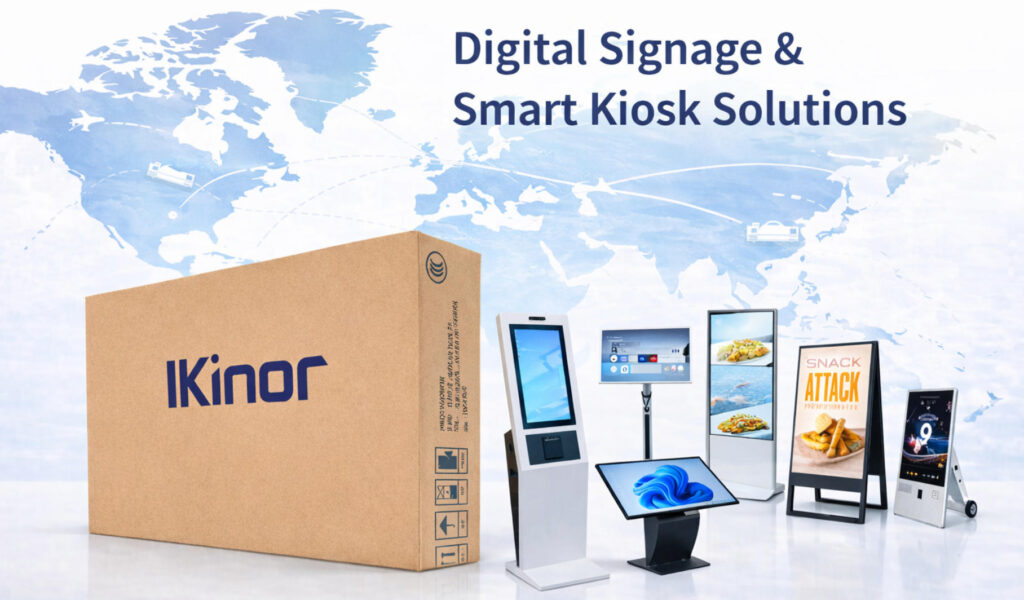

Australia, known globally as both a major tourism destination and a resource-driven economy, has seen a rapid surge in demand for digital signage in recent years. From airports, shopping malls, and hotels to mining sites, corporate offices, and public infrastructure, digital signage is becoming a core tool for communication, navigation, branding, and real-time information delivery. The growth of smart cities, large-scale commercial developments, and international tourism recovery has further accelerated investment in modern display solutions across the country. As a result, buyers are no longer focused on screens alone—they are evaluating pricing structures, hardware configurations, software compatibility, and long-term scalability. In this guide, we explore the top digital signage suppliers in Australia, with a practical focus on price ranges, configuration options, and sourcing considerations for different application scenarios.
Australia Digital Signage Market Overview
Australia’s digital signage market is widely regarded as mature, service-driven, and compliance-focused, reflecting the country’s advanced commercial infrastructure and strict regulatory environment. In 2024, market size estimates range from USD 330 million to over USD 770 million, depending on scope and methodology, with most analysts agreeing on a steady CAGR of roughly 5–9% over the coming years. Australia accounts for about 2.7% of global digital signage revenue, positioning it as a medium-scale but stable and high-value market.
Demand is primarily driven by retail chains, transportation hubs, education institutions, government facilities, mining operations, and healthcare systems. Retail and shopping centers remain the largest adopters, using digital signage for promotions, wayfinding, and interactive customer engagement. Airports, train stations, and public infrastructure rely heavily on signage for real-time information and advertising, while mining and healthcare sectors prioritize durability, uptime, and compliance.
From a product perspective, digital signage represents the largest segment of Australia’s commercial display market, contributing roughly 58% of total revenues in 2024. Video walls dominate in revenue terms, while transparent LED and high-brightness outdoor displays are among the fastest-growing categories. AI integration and cloud-based CMS platforms are accelerating the shift toward smarter, data-driven signage networks.
Strategically, Australia serves as a regional hub for Oceania, with projects and system designs often extending to New Zealand and Pacific Island markets, making it a key gateway for suppliers targeting the broader region.
Top 9 Digital Signage Suppliers in Australia
Ikinor Australia
| Item | Details |
|---|---|
| Company Name | Ikinor Australia |
| Company Bio | Ikinor Australia is the regional extension of Ikinor’s global interactive display and digital signage manufacturing network. Leveraging strong OEM/ODM manufacturing capabilities and international project experience, Ikinor Australia focuses on supplying cost-effective, configurable digital signage and interactive display solutions for education, retail, corporate, and public-sector projects across Australia and Oceania. |
| Digital Signage Product Line | Indoor & outdoor digital signage displays; High-brightness sunlight-readable signage; Interactive flat panels & smart boards; Floor-standing kiosks; Wall-mounted commercial displays; Custom digital signage solutions |
| Location in Australia | Australia (serving nationwide projects, with regional support for Oceania) |
| Contact | https://ikinor-interactive.com |
Digital Signs Australia
| Item | Details |
|---|---|
| Company Name | Digital Signs Australia |
| Company Bio | A leading Australian provider specializing in large-format LED display solutions, focusing on high-performance products, specialized technical expertise, and end-to-end service delivery for commercial and infrastructure projects. |
| Digital Signage Product Line | Large-format LED displays; Outdoor LED signage; Commercial LED video walls; Custom LED display solutions |
| Location in Australia | Nationwide operations (Australia) |
| Contact | https://www.digitalsignsaustralia.com.au |
onQ Digital
| Item | Details |
|---|---|
| Company Name | onQ Digital |
| Company Bio | An established Australian provider of LED digital signage solutions and commercial display screens, serving retail, corporate, and public-sector environments with integrated signage systems. |
| Digital Signage Product Line | LED digital signage systems; Commercial display screens; Integrated signage solutions |
| Location in Australia | Australia (multi-region presence) |
| Contact | https://www.onqdigitalgroup.com.au |
Just Digital Signage
| Item | Details |
|---|---|
| Company Name | Just Digital Signage |
| Company Bio | An innovator in electronic signage solutions, delivering customized and scalable digital signage systems across Australia for a wide range of industries. |
| Digital Signage Product Line | Electronic signage systems; LED signage boards; Industry-specific digital signage solutions |
| Location in Australia | Australia (nationwide service) |
| Contact | https://justdigitalsignage.com.au |
Fusion Signage
| Item | Details |
|---|---|
| Company Name | Fusion Signage |
| Company Bio | A software-focused digital signage provider offering a cloud-based CMS designed for easy content creation, scheduling, and remote screen management. |
| Digital Signage Product Line | Cloud-based digital signage CMS; Content creation and scheduling tools; Remote screen management platform |
| Location in Australia | Australia |
| Contact | https://fusionsignage.com.au |
Mandoe Media
| Item | Details |
|---|---|
| Company Name | Mandoe Media |
| Company Bio | A digital signage platform provider focused on simplifying business communication through software-driven signage solutions for productivity and engagement. |
| Digital Signage Product Line | Digital signage CMS platform; Business communication displays; Content scheduling tools |
| Location in Australia | Australia |
| Contact | https://mandoemedia.com |
Engagis
| Item | Details |
|---|---|
| Company Name | Engagis |
| Company Bio | A long-established Australian digital signage solutions provider with strong experience in large-scale retail rollouts and enterprise-grade deployments. |
| Digital Signage Product Line | Digital display systems; Retail digital signage rollouts; Integrated signage solutions |
| Location in Australia | Australia |
| Contact | https://engagis.com |
Amped Digital
| Item | Details |
|---|---|
| Company Name | Amped Digital |
| Company Bio | A full-service digital signage specialist providing consulting, system design, installation, and long-term maintenance for commercial and public-sector projects. |
| Digital Signage Product Line | End-to-end digital signage solutions; Consulting and system design; Installation and maintenance services |
| Location in Australia | Australia |
| Contact | https://www.ampeddigital.com.au |
Brisbane Digital Signage
| Item | Details |
|---|---|
| Company Name | Brisbane Digital Signage |
| Company Bio | Founded in 2019, the company delivers high-quality, regionally focused digital signage solutions across Queensland while supporting projects nationwide. |
| Digital Signage Product Line | Commercial digital signage; LED display solutions; Customized signage systems |
| Location in Australia | Brisbane, Queensland, Australia |
| Contact | https://www.brisbanedigitalsignage.com.au |
Key Application Scenarios Of Digital Signage in Australia
Digital signage adoption in Australia spans a wide range of industries, driven by the need for real-time information, operational efficiency, and improved user experience. In retail and QSR environments, digital menu boards, in-store advertising screens, and self-service kiosks are now standard across major chains. These systems enable dynamic pricing, promotional updates, and localized content, helping retailers respond quickly to demand changes while improving customer engagement and order accuracy.
In corporate and education settings, digital signage is widely used in meeting rooms, university campuses, and training centers. Interactive displays support hybrid meetings, internal communications, wayfinding, and digital noticeboards. Universities and vocational institutions increasingly rely on centralized content management to update schedules, emergency messages, and event information across multiple buildings and campuses in real time.
The public sector and infrastructure represent another major application area. Transport hubs such as airports, train stations, and bus interchanges use digital signage for passenger information, advertising, and crowd guidance. Local councils, hospitals, and government facilities deploy displays for public announcements, queue management, and service transparency, forming a key layer of Australia’s smart city initiatives.
Beyond urban environments, Australia’s agriculture and livestock industry is also adopting digital signage. In large-scale cattle operations, digital displays are installed at individual cattle sheds or barns to show temperature, humidity, ventilation status, and feeding data. These real-time indicators help farm managers optimize animal welfare, improve productivity, and respond quickly to environmental risks, demonstrating how digital signage is expanding into non-traditional but high-value operational scenarios.
Types of Digital Signage Solutions Supplied in Australia
The Australian market supports a broad range of digital signage solutions, shaped by the country’s climate, geography, and diverse application environments. One of the most important distinctions is indoor versus outdoor digital signage. While indoor displays are widely used in retail stores, offices, and educational facilities, outdoor digital signage is especially popular in Australia. High levels of sunlight, large open spaces, and strong demand from transport hubs, mining sites, and roadside advertising have driven strong adoption of high-brightness, sunlight-readable digital signage. These outdoor systems are designed with enhanced luminance, anti-glare glass, weatherproof enclosures, and temperature control to ensure clear visibility even under direct sun exposure.
In terms of form factor, wall-mounted displays remain the most common choice for information boards, advertising screens, and corporate communications. Floor-standing digital signage is widely used in shopping malls, hotels, and public venues where flexibility and visibility are required. Kiosk displays, including interactive and self-service models, are increasingly deployed in QSR, retail, healthcare, and government service centers to reduce queues and improve service efficiency.
From a technology perspective, LCD, LED, and fine-pixel LED solutions all play important roles. LCD displays dominate indoor environments due to their cost efficiency and image quality. Conventional LED displays are preferred for large-format and outdoor applications, while fine-pixel LED is gaining traction in premium indoor spaces such as corporate lobbies, control rooms, and broadcast environments. Across all types, integration with cloud-based CMS platforms is now standard, enabling centralized content management, real-time updates, scheduling, and remote monitoring across multi-site Australian deployments.
Price Guide & Cost Expectations in Australia
Australia’s digital signage pricing spans a wide range, reflecting differences in hardware class, configuration, service scope, and compliance requirements. At the entry level, basic non-touch commercial displays or small programmable LED signs typically start from AUD 250–900, covering simple Android-based screens, FHD panels, and compact LED message boards. These solutions are commonly used for small retail stores, menus, or promotional messaging.
The mid-range segment, where most commercial projects sit, generally falls between AUD 1,500–3,500 per unit. This category includes 43–65 inch professional LCD displays, Android-based digital signage, entry-level interactive displays, and floor-standing signage with integrated media players. Products from brands such as Samsung, LG, ViewSonic, and Slimline Warehouse are typical in this range, balancing reliability, brightness, and CMS compatibility.
At the high-end, pricing can exceed AUD 5,000–12,000+, covering large-format displays (75–98 inch), interactive touch panels, premium A-frame units, fine-pixel LED signage, and purpose-built commercial kiosks. These systems are commonly deployed in airports, flagship retail locations, and public infrastructure projects.
Australian pricing is generally higher than many Asian or emerging markets due to local labor costs, logistics and import handling, extended warranties, on-site service expectations, and strict electrical and safety compliance standards. Buyers should also note Ex-GST versus GST-inclusive pricing: most listed prices exclude the 10% GST, which must be added for accurate budget planning. For large projects, clarifying total installed cost—hardware, software, and service—is essential.
Regulations & Compliance Requirements Of Digital Signage in Australia
Digital signage deployments in Australia are subject to strict regulatory and compliance standards, especially for commercial, government, and enterprise environments. One of the most critical requirements is electrical safety compliance, typically demonstrated through the RCM (Regulatory Compliance Mark). All digital signage hardware—displays, media players, power supplies, and kiosks—must meet Australian electrical safety regulations and EMC (Electromagnetic Compatibility) standards to ensure they do not interfere with other electronic systems. In addition, many projects require adherence to energy efficiency guidelines, particularly for large-scale or 24/7 display networks, to reduce operating costs and environmental impact.
With the growing use of cameras, audience analytics, and AI-driven content, data privacy has become another major compliance area. Any digital signage system that captures images, video, or behavioral data must align with the Australian Privacy Act. This includes clear disclosure, data minimization, secure storage, and restrictions on facial recognition or identifiable personal data unless explicit consent is obtained.
For government and enterprise projects, documentation requirements are often extensive. Typical deliverables include electrical safety certificates, RCM declarations, EMC test reports, energy efficiency statements, product datasheets, cybersecurity policies, and warranty documentation.
For example, a transport authority installing digital signage with cameras in a major Australian train station would require RCM-certified hardware, EMC test reports, a privacy impact assessment, signage notifying the public of data collection, and full technical documentation before approval. Compliance is therefore not optional—it is a core purchasing criterion in Australia.
How to Choose the Right Digital Signage Supplier in Australia
Choosing the right digital signage supplier in Australia goes beyond comparing screen specifications or upfront pricing. Local service capability and support coverage are critical factors, especially for multi-site retail chains, public facilities, and enterprise deployments. Buyers should evaluate whether a supplier can provide on-site installation, responsive technical support, clear SLA commitments, and long-term maintenance options across different states. In Australia’s service-driven market, reliable after-sales support often matters more than the initial hardware cost.
Another key consideration is total cost of ownership (TCO). This includes not only hardware pricing, but also software licensing, CMS subscriptions, content management, installation, compliance certification, and ongoing service fees. A lower-priced display can become costly over time if software, upgrades, or support are fragmented. Suppliers that offer integrated hardware, CMS compatibility, and centralized management typically deliver better long-term value.
Before procurement, buyers should ask several critical questions:
Can the displays meet Australian compliance requirements such as RCM and EMC?
Is the system scalable for future expansion or new locations?
What warranties, replacement policies, and response times are guaranteed?
How is data security handled, especially when analytics or cameras are involved?
For buyers considering Ikinor as a digital signage partner, the advantage lies in combining global manufacturing strength with Australia-focused project support. Ikinor provides configurable digital signage hardware, CMS-ready solutions, and flexible service models, helping Australian businesses balance performance, compliance, and long-term cost efficiency with confidence.
FAQs
The first step is not choosing a screen model, but clearly defining what content will be displayed and where it will be installed. Indoor vs outdoor placement, viewing distance, ambient light, and operating hours directly determine screen size, resolution, brightness, weather resistance, and system architecture. Clarifying use cases early avoids overpaying for unnecessary specifications or under-specifying critical requirements.
For most professional indoor digital signage projects, the total investment per screen typically ranges from AUD 1,500 to AUD 10,000. A 55-inch commercial display may cost from several hundred to nearly AUD 3,000, while basic wall-mount installation often starts around AUD 300. Video walls, outdoor signage, or complex installations can push costs into the tens of thousands.
Local Australian integrators usually offer end-to-end solutions—consulting, hardware, CMS, installation, and after-sales support—which is ideal for retailers, schools, and hospitals without dedicated AV teams. Buying hardware and CMS separately may reduce upfront costs but requires internal coordination for networking, security, installation, and maintenance.
The application determines the specs. Outdoor or sunlit environments require high-brightness displays (around 2,000 nits), weatherproof enclosures, and thermal control. Commercial-grade screens are recommended for 16/7 or 24/7 operation, offering better durability and warranties than consumer TVs.
Beyond hardware, buyers should budget for CMS subscriptions, content creation, maintenance, and support. In Australia, cloud CMS fees commonly range from USD 10–25 per screen per month for basic plans, with advanced analytics costing more. Clarifying warranty terms, response times, and post-warranty service fees upfront is essential