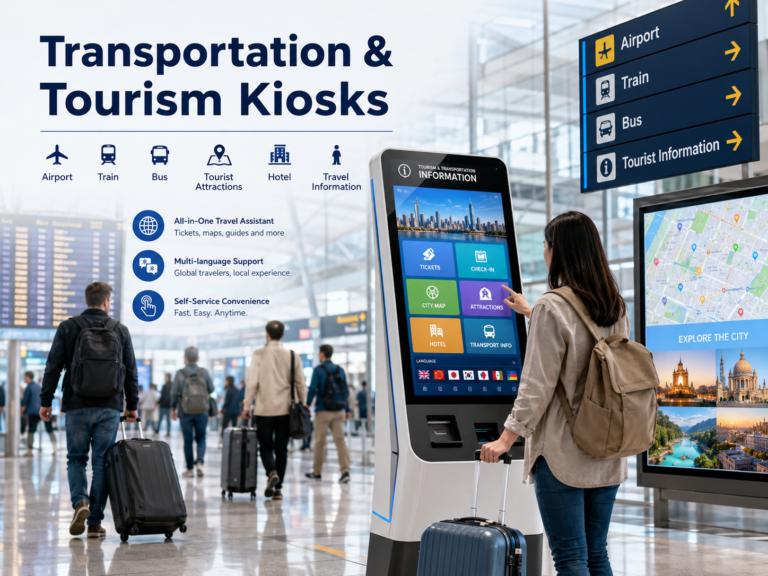
Los entornos de transporte y turismo son cada vez más dinámicos, rápidos y orientados al servicio. Aeropuertos, estaciones de tren, sistemas de metro, terminales de autobuses, zonas turísticas, hoteles y centros de visitantes deben atender a un gran número de viajeros con diferentes idiomas, horarios y necesidades de servicio. Los quioscos de transporte y turismo ayudan a satisfacer estas necesidades de los pasajeros mediante tecnología de autoservicio. Permiten a los usuarios realizar tareas como el check-in, la compra de billetes, la impresión de tarjetas de embarque y etiquetas de equipaje, la consulta de tarifas, la búsqueda de rutas, el pago, la navegación por mapas y el acceso a información local sin tener que esperar en un mostrador. Para los operadores, estos quioscos reducen la presión de las colas, mejoran la eficiencia del servicio y permiten un servicio público ininterrumpido. Este artículo explica sus aplicaciones, componentes, requisitos de implementación y proveedores recomendados para proyectos B2B.
¿Qué son los quioscos de información sobre transporte y turismo y por qué son necesarios?
Quioscos de transporte y turismo son terminales interactivas de autoservicio diseñadas para entornos de transporte público. Se utilizan comúnmente en aeropuertos, estaciones de tren, sistemas de metro, terminales de autobuses, atracciones turísticas, hoteles, centros de visitantes, museos y espacios públicos de ciudades inteligentes. Su propósito principal es ayudar a los viajeros y turistas a completar servicios básicos por sí mismos, como por ejemplo: Venta de billetes, facturación, búsqueda de rutas, orientación, pago, búsqueda de información local y guía digital..
A diferencia de una pantalla de señalización digital normal, un quiosco de transporte y turismo no solo se utiliza para mostrar información. Por lo general, es un sistema de autoservicio integrado que combina funciones de hardware, software y servicio en un único punto de acceso público.
| Componente principal | Rol típico |
|---|---|
| Pantalla táctil | Permite a los usuarios buscar, seleccionar, reservar, pagar y navegar. |
| Software de venta de billetes o reservas | Admite billetes de transporte, entradas para atracciones, reservas o registro de entrada. |
| Módulo de pago | Permite pagos con tarjeta, pagos NFC, pagos mediante código QR o pagos móviles. |
| Módulo de impresora | Imprime billetes, tarjetas de embarque, recibos, cupones, mapas o números de cola. |
| Escáner de código QR/código de barras | Lee billetes electrónicos, códigos de reserva, códigos de membresía o códigos de registro móvil. |
| Interfaz multilingüe | Ayuda a los viajeros internacionales a utilizar los servicios sin asistencia del personal. |
| Sistema de mapas y orientación | Guía a los usuarios hacia puertas, andenes, salidas, atracciones, hoteles o instalaciones. |
| Sistemas de gestión de contenidos y gestión remota | Permite a los operadores actualizar el contenido, supervisar los dispositivos y gestionar la publicidad de forma remota. |
La razón por la que estos quioscos se utilizan cada vez más en el transporte y el turismo es simple: estas industrias tratan con Alto flujo de pasajeros, frecuentes solicitudes de información, necesidades de servicio multilingüe, largas colas y muchos procesos estandarizados.. Los viajeros suelen necesitar un acceso rápido a los servicios, especialmente durante las horas punta, los días festivos, las exposiciones y las temporadas turísticas.
Por ejemplo, un viajero puede necesitar:
- Compra o imprime un boleto
- Regístrese o confirme una reserva
- Buscar una ruta u opción de transbordo
- Encuentra una puerta, plataforma, salida o atracción.
- Escanee un código QR o realice un pago.
- Acceda a información de viajes local en otro idioma.
Si cada tarea depende de un mostrador de servicio, los operadores pueden enfrentar una mayor presión laboral, una velocidad de servicio más lenta, colas más largas y una experiencia del visitante menos satisfactoria. Un quiosco bien diseñado ayuda a trasladar estas tareas repetitivas a un flujo de trabajo de autoservicio, lo que permite al personal centrarse en cuestiones más complejas y en la asistencia especial.
| Tenedor de apuestas | Valor principal |
|---|---|
| Viajeros y turistas | Venta de billetes, facturación, búsqueda de rutas, pago, orientación y acceso a información local más rápidos. |
| Operadores | Menor presión en el servicio, mejor control de las colas, menos tareas manuales repetitivas y capacidad de autoservicio las 24 horas del día, los 7 días de la semana. |
| Destinos y ciudades | Mejor experiencia para el visitante, imagen de servicio digital más sólida, oportunidades publicitarias y recopilación de datos básicos de uso. |
Por esta razón, los quioscos de transporte y turismo ahora se utilizan no solo como herramientas de servicio, sino también como puntos de contacto digitales Se utilizan en aeropuertos inteligentes, sistemas de transporte público, destinos turísticos, hoteles, museos y proyectos de ciudades inteligentes. Mejoran la eficiencia del servicio, facilitan el autoservicio y crean una experiencia de viaje más conectada tanto para usuarios locales como para visitantes internacionales.
Principales aplicaciones en el transporte y el turismo.
Después de entender qué Quioscos de transporte y turismo son, la siguiente pregunta es: ¿Dónde se utilizan con mayor frecuencia? En proyectos reales, estos quioscos no se limitan a una forma fija. Su diseño y funciones suelen variar según la ubicación, el flujo de usuarios, el proceso de servicio y las necesidades de gestión.
Por ejemplo, un quiosco de aeropuerto puede centrarse en Impresión de tarjetas de embarque y facturación, mientras que un quiosco de información turística puede centrarse más en Mapas de la ciudad, guías de atracciones e información de viaje multilingüe.. Un quiosco de transporte público puede necesitar una conexión sólida. Funciones de emisión de billetes y pago, mientras que un quiosco de ciudad inteligente puede combinar avisos públicos, publicidad, información de emergencia y orientación sobre servicios locales.
| Escenario de aplicación | Ubicaciones comunes | Funciones típicas |
|---|---|---|
| Quiosco de autoservicio del aeropuerto | Aeropuertos | Facturación, selección de asientos, impresión de tarjetas de embarque, impresión de etiquetas de equipaje, escaneo de pasaportes |
| Quiosco de venta de billetes de transporte público | Estaciones de metro, estaciones de tren, terminales de autobuses | Compra de billetes, recarga de tarjetas de transporte, consulta de tarifas, búsqueda de rutas, impresión de recibos |
| Quiosco de información turística | Centros de visitantes, lugares panorámicos, hoteles | Guía de atracciones, mapa de la ciudad, eventos locales, información sobre restaurantes, información sobre hoteles. |
| Quiosco de información | Aeropuertos, estaciones, museos, centros comerciales | Navegación en interiores, planificación de rutas, plano de planta, indicaciones de acceso, indicaciones de andén |
| Quiosco de venta de entradas para atracciones | Parques temáticos, museos, zonas panorámicas | Reserva de billetes, impresión de billetes con código QR, pago, confirmación de reserva |
| Quiosco de información de ciudad inteligente | Plazas públicas, nudos de transporte, zonas turísticas | Guía de la ciudad, avisos públicos, mapas, publicidad, información de emergencia |
Entre estas aplicaciones, quioscos de facturación del aeropuerto y quioscos de venta de billetes de transporte público Suelen ser los más adoptados porque manejan servicios de pasajeros estandarizados y de alta frecuencia. Los viajeros necesitan completar estas gestiones rápidamente, y los operadores también necesitan reducir la presión en los mostradores de atención al cliente durante las horas punta.
Desde la perspectiva de la planificación de proyectos, los diferentes escenarios de aplicación requieren diferentes configuraciones. Un ejemplo sencillo quiosco de información turística Puede que solo necesite una pantalla táctil, un CMS, una interfaz de mapa y contenido multilingüe. Sin embargo, un quiosco de venta de billetes de transporte Puede requerir terminales de pago, impresoras de recibos, escáneres de códigos QR, integración con sistemas de venta de entradas y un diseño de seguridad más robusto. Para zonas turísticas al aire libre o plazas públicas, el quiosco también necesita mayor luminosidad, protección contra la intemperie y una carcasa más resistente.
Por eso, los compradores no deben elegir un quiosco solo por el tamaño de la pantalla o la apariencia. La solución adecuada debe coincidir con escenario de servicio real, Esto incluye el comportamiento del usuario, el entorno de instalación, los módulos necesarios, la integración del software y las necesidades de mantenimiento a largo plazo. Un quiosco en el vestíbulo de un hotel y otro en una estación de metro pueden parecer similares, pero sus requisitos de sistema pueden ser muy diferentes.
Funciones principales y componentes del sistema
A Quiosco de Transporte y Turismo No es solo una pantalla táctil colocada en un área pública. Es un sistema completo. sistema de autoservicio que combina funciones de usuario, módulos de hardware, plataformas de software y herramientas de gestión remota. Para los compradores B2B, esta sección es importante porque diferentes proyectos pueden requerir configuraciones muy distintas.
Por ejemplo, un quiosco de aeropuerto puede necesitar Escaneo de pasaportes, impresión de tarjetas de embarque e impresión de etiquetas de equipaje., mientras que un quiosco de información turística puede que solo necesite Navegación por mapas, contenido multilingüe, CMS y guía mediante códigos QR..
| Capa del sistema | Qué incluye | Por qué es importante |
|---|---|---|
| Funciones orientadas al usuario | Venta de billetes, facturación, búsqueda de rutas, pago, impresión, navegación por mapas | Afecta directamente a la experiencia del viajero y a la eficiencia del servicio. |
| Componentes de hardware | Pantalla táctil, impresora, escáner, terminal de pago, cámara, carcasa | Determina si el quiosco puede soportar el proceso de servicio requerido. |
| Software y sistema de gestión | CMS, monitorización remota, integración de sistemas de gestión de incidencias, API, análisis de datos | Ayuda a los operadores a gestionar el contenido, los dispositivos, los pagos y las conexiones del sistema. |
Funciones orientadas al usuario
Desde la perspectiva del usuario, el quiosco debería hacer que las tareas de viaje habituales sean más rápidas y sencillas. Las funciones típicas incluyen:
- Venta de entradas: compra de billetes de transporte, entradas para atracciones o entradas para eventos
- Registrarse: registro en el aeropuerto, registro en el hotel o confirmación de reserva
- Búsqueda de rutas: encontrar líneas de tren, rutas de metro, rutas de autobús o indicaciones para ir a pie
- Navegación del mapa: guiar a los usuarios hacia puertas, andenes, salidas, atracciones o mostradores de servicio.
- Información sobre hoteles y atracciones: muestra hoteles, restaurantes, lugares de interés turístico y eventos locales cercanos.
- Soporte multilingüe: ayudar a los visitantes internacionales a usar el quiosco de forma independiente.
- Pago: admite pago con tarjeta, NFC, pago con código QR o pago móvil
- Impresión: impresión de recibos, billetes, tarjetas de embarque, cupones o mapas
- Escaneo de códigos QR: lectura de billetes electrónicos, códigos de reserva, códigos de membresía o códigos de registro.
Componentes de hardware
La configuración del hardware debe coincidir con el escenario de aplicación real. Los componentes comunes incluyen:
| Componente de hardware | Uso común |
|---|---|
| Pantalla táctil | Interacción del usuario, búsqueda de información, emisión de billetes, navegación |
| Placa base para PC industrial o Android | Gestiona el sistema de quiosco y las aplicaciones conectadas. |
| Impresora térmica / Impresora de tickets | Imprime recibos, billetes, tarjetas de embarque o cupones. |
| Escáner de código QR/código de barras | Lee billetes electrónicos, reservas móviles y códigos de reserva. |
| Terminal de pago | Admite tarjeta de crédito, NFC, código QR o pago móvil. |
| Cámara | Se utiliza para soporte de vídeo, captura de identidad o asistencia técnica. |
| Lector de pasaportes/documentos de identidad | Útil para aeropuertos, hoteles o situaciones que impliquen servicios de viaje seguros. |
| Altavoz y micrófono | Admite guía de audio, indicaciones de voz o asistencia remota. |
| Caja metálica | Protege los componentes internos en entornos públicos. |
| Sistema de refrigeración | Ayuda a que el quiosco funcione de forma estable durante largas horas. |
| Puerta de mantenimiento segura | Permite al personal acceder a los módulos internos de forma segura y rápida. |
Software y sistema de gestión
La capa de software es lo que convierte un quiosco de "hardware" en un dispositivo real. solución de servicio. Puede incluir:
- CMS para actualizar información de viajes, mapas, avisos y contenido promocional.
- Monitorización remota de dispositivos para comprobar el estado del dispositivo, los errores, la temperatura y la conectividad.
- Integración de la plataforma de venta de entradas para billetes de transporte, entradas para atracciones y reservas
- Integración de pasarela de pago para un procesamiento de pagos seguro en línea o fuera de línea
- Software de orientación para navegación en interiores, planificación de rutas y orientación de ubicación
- Integración del sistema de reservas para hoteles, museos, eventos y atracciones turísticas
- Gestión de contenido publicitario para promociones locales y exhibición comercial
- Conexión API para conectarse con plataformas de terceros
- Análisis de datos para comprender la frecuencia de uso, las rutas más populares y el comportamiento de los visitantes.
- Seguridad y control de acceso para proteger la configuración del sistema, los datos del usuario y los procesos de pago.
En resumen, una buena solución de quiosco no se trata solo de la pantalla. Debe combinar hardware, software, gestión de contenido, pagos, integración de sistemas y soporte operativo a largo plazo. Esto es especialmente importante para los proyectos de transporte y turismo, donde los dispositivos deben dar servicio a muchos usuarios cada día y mantenerse estables en entornos públicos.
Requisitos de despliegue: Interiores, exteriores y entornos públicos.
El entorno de despliegue tiene un impacto directo en el diseño, la configuración y la fiabilidad a largo plazo de un sistema. Quiosco de Transporte y Turismo. Un quiosco instalado en el vestíbulo de un hotel no presenta los mismos desafíos que uno ubicado en una parada de autobús, la entrada de un área turística o una plaza pública al aire libre. Para los compradores B2B, la clave reside en adaptar la estructura del quiosco al entorno operativo real.
| Tipo de despliegue | Ubicaciones comunes | Requisitos clave |
|---|---|---|
| Quiosco interior | Aeropuertos, estaciones, hoteles, centros de visitantes | Diseño delgado, tacto estable, integración de impresora/pago, fácil mantenimiento. |
| Quiosco semiabierto | Entradas de estación, zonas turísticas cubiertas, terminales semiabiertas | Mayor luminosidad, cristal antirreflejos, carcasa más resistente, ventilación. |
| Quiosco al aire libre | Paradas de autobús, plazas públicas, entradas panorámicas, calles turísticas | Carcasa resistente a la intemperie, clasificación IP, pantalla legible a la luz del sol, resistencia al vandalismo, sistema de refrigeración/calefacción. |
Para quioscos de interior, La apariencia y la experiencia del usuario suelen ser más importantes. Estos quioscos se suelen ubicar en aeropuertos, estaciones de tren, hoteles, museos y centros de visitantes, donde deben integrarse con el entorno. Los compradores deben centrarse en rendimiento táctil estable, Funcionamiento fluido del software, integración de impresora o módulo de pago y fácil acceso para mantenimiento. Dado que los entornos interiores están más controlados, el quiosco puede no necesitar una protección impermeable muy alta, pero aun así requiere componentes fiables para largas horas de funcionamiento.
Para quioscos semiabiertos, los requisitos de diseño se vuelven más exigentes. Pueden instalarse cerca de las entradas de las estaciones, terminales de autobuses cubiertas, áreas panorámicas de venta de boletos o zonas turísticas protegidas. Estos lugares pueden estar expuestos a la luz solar, polvo, humedad, cambios de temperatura y un tráfico público más intenso. Los compradores deben prestar atención a mayor brillo de la pantalla, cristal antirreflejos, Diseño de carcasa más robusto, mejor ventilación y mayor protección para los cables.
Para quioscos al aire libre, La durabilidad se convierte en la prioridad. Un quiosco utilizado en una parada de autobús, entrada panorámica, plaza pública o punto de servicio de ciudad inteligente debe soportar las inclemencias del tiempo, la luz solar, el polvo, la lluvia y el posible vandalismo. Los requisitos importantes incluyen: Revestimiento resistente a la intemperie, Clasificación de impermeabilidad y resistencia al polvo, pantalla legible a la luz del sol, estructura antivandálica, cerraduras seguras, módulos de pago protegidos y un sistema de refrigeración o calefacción estable.
Los compradores B2B también deben verificar los siguientes detalles antes de confirmar un proyecto:
- brillo de la pantallaLas pantallas de interior y las de exterior requieren diferentes niveles de brillo.
- Precisión táctilLa pantalla táctil debe permanecer estable durante su uso frecuente en lugares públicos.
- Resistencia del recintoLa estructura debe proteger los componentes internos de impactos y daños.
- Clasificación de impermeabilidad y resistencia al polvo: especialmente importante para proyectos al aire libre y semiabiertos.
- Protección del módulo de pagoLos lectores de tarjetas, los escáneres QR y los módulos NFC deben estar instalados de forma segura.
- Gestión de cablesLos cables de alimentación y los cables de red deben estar ocultos, protegidos y ser fáciles de mantener.
- Diseño de accesibilidadLa altura de la pantalla, el ángulo de visión y el área de operación deben ser adecuados para diferentes usuarios.
- Acceso para mantenimientoEl personal debe ser capaz de reemplazar impresoras, escáneres y piezas internas de manera eficiente.
- Reemplazo de piezas de repuestoLos proyectos a largo plazo necesitan un suministro estable de pantallas, impresoras, placas y módulos.
- Horario de funcionamiento prolongadoLos quioscos públicos a menudo necesitan funcionar durante muchas horas al día, a veces las 24 horas del día, los 7 días de la semana.
En resumen, la planificación del despliegue debe preceder a la selección del producto. Un quiosco de transporte y turismo no debe elegirse únicamente por tamaño de pantalla, apariencia o precio. Debe seleccionarse en función de la ubicación real, el flujo de usuarios, la exposición ambiental, el proceso de servicio, el plan de mantenimiento y el horario de funcionamiento previsto. Esto es especialmente importante para proyectos en aeropuertos, centros de transporte público, atracciones turísticas y espacios urbanos inteligentes, donde el quiosco debe permanecer estable, accesible y seguro para el uso público diario.
Cómo elegir el proveedor de quioscos de transporte y turismo adecuado
Elegir el adecuado Proveedor de quioscos de transporte y turismo No se trata solo del precio o del tamaño de la pantalla. Dado que estos quioscos se utilizan a menudo en aeropuertos, estaciones, hoteles, atracciones turísticas y espacios de ciudad inteligente, Los compradores deben evaluar la experiencia del proveedor en proyectos, su capacidad de personalización, el soporte para la integración, la fiabilidad del hardware y el servicio posventa.
| Qué comprobar | Por qué es importante |
|---|---|
| Experiencia en el sector | Los proyectos de aeropuertos, estaciones, turismo, hoteles y ciudades inteligentes tienen flujos de usuarios y necesidades técnicas diferentes. |
| Capacidad de personalización | El tamaño de la pantalla, el diseño de la carcasa, el logotipo, el color, los módulos, el idioma y el software pueden requerir una personalización específica para cada proyecto. |
| Capacidad de integración | Es posible que el quiosco necesite conectarse con Sistemas de venta de entradas, pagos, mapas, reservas, CMS o API. |
| Fiabilidad del hardware | Los quioscos públicos deben apoyar uso de alta frecuencia, rendimiento táctil estable y largas horas de funcionamiento.. |
| Capacidad de ingeniería al aire libre | Los proyectos al aire libre requieren Diseño resistente a la intemperie, cristales antirreflejos, cerraduras de seguridad, refrigeración y ventilación.. |
| Sensibilización sobre el cumplimiento normativo | En diferentes mercados pueden ser necesarios aspectos como la accesibilidad, la seguridad eléctrica, la seguridad de los pagos y la protección de datos. |
| Soporte de gestión remota | Los operadores necesitan actualizar el contenido, supervisar el estado de los dispositivos, gestionar los anuncios y reducir los costes de mantenimiento. |
| Consistencia entre muestra y producto a granel | El pedido final a granel deberá coincidir con la muestra aprobada en diseño, módulos y rendimiento. |
| Servicio posventa y repuestos | El funcionamiento a largo plazo depende del soporte de mantenimiento y del suministro estable de piezas de repuesto. |
Los compradores también deberían hacer preguntas prácticas antes de confirmar un proveedor:
- ¿Ha trabajado el proveedor en? Proyectos de transporte, turismo, hoteles o quioscos para ciudades inteligentes?
- ¿Puede el quiosco admitir Android, Windows o Linux?
- ¿Puede el proveedor personalizar el? tamaño de pantalla, carcasa, marca, diseño de módulos e interfaz de idioma?
- ¿Se puede integrar con? Plataformas de venta de entradas, pagos, reservas, mapas o CMS?
- ¿Son repuestos como pantallas, impresoras, escáneres, placas base y soportes para módulos de pago ¿Disponible para mantenimiento a largo plazo?
Para proyectos B2B personalizados, trabajar con un Fabricante de quioscos OEM/ODM como Ikinor Puede resultar útil cuando los compradores necesitan tamaños de pantalla flexibles, diseño de carcasa de marca, configuración para Android o Windows, integración de módulos de pago/escáner/impresora y soporte estable para la producción en masa.
En resumen, el mejor proveedor no siempre es el más barato. Un proveedor fiable debe comprender el escenario real de la aplicación, ofrecer soporte para la personalización e integración, y ayudar a los compradores a reducir los riesgos durante la instalación, el funcionamiento y el mantenimiento.
Proveedores recomendados de quioscos de transporte y turismo
La siguiente lista se basa en información disponible públicamente en línea y se presenta como referencia para el comprador, no como una clasificación oficial.
1. Sistemas de información KIOSK
| Categoría | Información |
|---|---|
| nombre de empresa | Sistemas de información KIOSK |
| Historia y biografía de la empresa | Fabricante y proveedor de soluciones de quioscos de autoservicio personalizados con experiencia en transporte, turismo, comercio minorista, sanidad, hostelería, gobierno, juegos de azar y almacenamiento. Las soluciones para transporte y turismo abarcan el despacho de aduanas, la venta de billetes de transporte público (tanto en interiores como en exteriores), el etiquetado de equipaje en aeropuertos, los servicios de cruceros y otros casos de uso relacionados con el autoservicio para pasajeros. La página de contacto oficial indica que la dirección es Louisville, Colorado. |
| Gama de productos | Máquinas expendedoras personalizadas, quioscos de información, quioscos transaccionales, quioscos de transporte y turismo, quioscos de etiquetado de equipaje en aeropuertos, quioscos de venta de billetes de transporte público, quioscos para líneas de cruceros, desarrollo de software, monitorización remota, instalación, servicio técnico, repuestos y servicios gestionados. |
| Ubicación | Louisville, Colorado, EE. UU. |
| Contacto | https://kiosk.com |
2. PopShap
| Categoría | Información |
|---|---|
| nombre de empresa | PopShap |
| Historia y biografía de la empresa | Fundada en 2017 para satisfacer la creciente demanda de soluciones táctiles digitales y quioscos interactivos con pantalla táctil. El directorio se centra en soluciones de señalización digital todo en uno que combinan hardware y software para la interacción digital. |
| Gama de productos | Quioscos interactivos, mapas táctiles, quioscos de información sobre viajes y transporte, señalización digital, videowalls LED, sistemas interactivos de orientación, pantallas para eventos y soluciones integrales de interacción digital. Las aplicaciones de viajes y transporte incluyen mapas, navegación, guía para aeropuertos, autobuses y estaciones de tren, y asistencia para el registro de pasajeros. |
| Ubicación | South Hackensack, Nueva Jersey, EE. UU., según el perfil de la empresa en LinkedIn. |
| Contacto | https://popshap.com |
3. Olea Kiosks Inc.
| Categoría | Información |
|---|---|
| nombre de empresa | Quioscos Olea Inc. |
| Historia y biografía de la empresa | Olea es una empresa dedicada al diseño y fabricación de quioscos de autoservicio, con una trayectoria que se remonta a 1975. Su primer quiosco se construyó en 1983 para la Feria del Condado de Los Ángeles. Posteriormente, la división de quioscos se convirtió en su principal actividad, con diseño y fabricación propios en Los Ángeles. |
| Gama de productos | Quioscos prefabricados, soluciones de quioscos totalmente personalizadas, quioscos de autoservicio para atracciones, entretenimiento, atención médica, hostelería, viajes, gobierno y entornos empresariales. |
| Ubicación | Los Ángeles, California, EE. UU. |
| Contacto | https://www.olea.com |
4. XIPHIAS Software Technologies Private Limited
| Categoría | Información |
|---|---|
| nombre de empresa | XIPHIAS Software Technologies Private Limited |
| Historia y biografía de la empresa | Constituida en Karnataka en 2005. Sus áreas de especialización incluyen la fabricación de quioscos de autoservicio, soluciones de software empresarial, ERP/CRM/CMS, soluciones inteligentes, IoT, automatización, ciberseguridad y transformación digital. |
| Gama de productos | Quioscos de información turística con pantalla táctil, impulsados por IA, quioscos de gestión de visitantes/proveedores, quioscos de autoservicio para pedidos de comida, quioscos para exposiciones, quioscos educativos, quioscos de salud, quioscos minoristas, quioscos de pago de facturas, quioscos de gobierno electrónico, quioscos de auto check-in/out, quioscos de telecomunicaciones y soluciones de software empresarial. |
| Ubicación | Bangalore, Karnataka, India. |
| Contacto | https://www.xiphiastec.com |
5. Quioscos avanzados
| Categoría | Información |
|---|---|
| nombre de empresa | Quioscos avanzados |
| Historia y biografía de la empresa | Proveedor de quioscos de autoservicio con casi 20 años de experiencia en la instalación de miles de quioscos en diversos sectores. Opera bajo el nombre comercial de H32 Design and Development LLC. Entre sus aplicaciones en el sector del transporte se incluyen el registro de vuelos, la emisión de billetes de equipaje, la lectura de pasaportes, el alquiler de coches, la venta de billetes de tren y los servicios de transporte compartido. |
| Gama de productos | Quioscos independientes, quioscos tipo torre, quioscos de venta de billetes, quioscos de transporte público, quioscos de autoservicio en aeropuertos, quioscos gubernamentales, quioscos de pago de facturas, estaciones de pago, quioscos de autoalmacenamiento y soluciones personalizadas de quioscos de autoservicio. |
| Ubicación | Estados Unidos. |
| Contacto | https://advancedkiosks.com |
6. Quiosco E-Star
| Categoría | Información |
|---|---|
| nombre de empresa | Quiosco E-Star / Shenzhen E-Star Information Technology Co., Ltd. |
| Historia y biografía de la empresa | Fundada en 2009. Fabricante de quioscos de autoservicio totalmente integrados y empresa nacional de alta tecnología centrada en soluciones de autoservicio personalizables. Su sitio web indica que cuenta con las certificaciones ISO9001:2015 e ISO14001:2015, derechos de importación/exportación independientes, más de 15 años de experiencia en el sector, más de 180 000 dispositivos instalados, una superficie de fábrica de más de 3000 m² y más de 200 empleados. |
| Gama de productos | Quioscos personalizados, quioscos interiores, quioscos exteriores, quioscos de autoservicio, quioscos de información, quioscos financieros, quioscos de atención médica, quioscos de registro de hoteles, quioscos de gestión de estacionamientos, quioscos minoristas, quioscos de almacenamiento/postales, quioscos de transporte y turismo, quioscos de pago de boletos, sistemas de dispensación de boletos y terminales de pago sin efectivo. |
| Ubicación | Shenzhen, China. |
| Contacto | https://www.estarkiosk.com |
7. Qtenboard Global
| Categoría | Información |
|---|---|
| nombre de empresa | Qtenboard Global |
| Historia y biografía de la empresa | Fabricante y proveedor de soluciones profesionales para señalización digital, pantallas interactivas y quioscos interactivos. Su sitio web indica que fue fundada en 2005, cuenta con una planta de fabricación de 33 000 m², más de 1000 empleados, ventas en más de 100 países, servicios OEM/ODM flexibles y soporte integral durante todo el ciclo de vida del producto. |
| Gama de productos | Señalización digital, quioscos, quioscos de pedidos de pago, quioscos de colas, quioscos de información, quioscos de autoservicio de venta de entradas, videowalls LCD, videowalls LCD para CCTV, videowalls LCD publicitarios, pizarras interactivas, pizarras inteligentes, Stand By Me TV, soluciones de visualización relacionadas con CMS/software. |
| Ubicación | Hong Kong figura en la página de contacto; la base de fabricación se indica en el sitio web. |
| Contacto | https://www.qtenboardglobal.com |
8. Quioscos Meridian
| Categoría | Información |
|---|---|
| nombre de empresa | Quioscos Meridian |
| Historia y biografía de la empresa | Fundada en 1999. Fabricante estadounidense de quioscos con sede en Aberdeen, Carolina del Norte. La sede, de 5 hectáreas, incluye edificios administrativos, estudios de diseño e ingeniería, instalaciones de fabricación, ensamblaje, integración, envío e I+D. |
| Gama de productos | Quioscos de viajes y turismo, quioscos interiores y exteriores, taquillas inteligentes, señalización digital interactiva, software de autoservicio, quioscos de orientación, quioscos para la promoción de eventos y negocios, soluciones de quioscos para publicidad y generación de ingresos. |
| Ubicación | Aberdeen, Carolina del Norte, EE. UU. |
| Contacto | https://www.meridiankiosks.com |
9. TDDTEC / TDD GROUP LIMITED
| Categoría | Información |
|---|---|
| nombre de empresa | TDDTEC / TDD GROUP LIMITED |
| Historia y biografía de la empresa | Proveedor con sede en Shenzhen de quioscos para iPad, quioscos, pantallas de señalización digital, pantallas personalizadas, cajas de luz, cerramientos para exteriores y equipos de estacionamiento. El alcance del servicio abarca el diseño de soluciones, la fabricación, el servicio técnico, el diseño, la fabricación, el ensamblaje, el desarrollo y la integración de terminales de autoservicio. |
| Gama de productos | Quioscos para iPad, quioscos, pantallas de señalización digital, pantallas personalizadas, cajas de luz, cerramientos exteriores, equipos de estacionamiento, gabinetes de desinfección, soluciones de venta de boletos, soluciones de pago de facturas, autoservicio, pago en exteriores, carga de vehículos eléctricos, pantallas personalizadas y cerramientos exteriores. |
| Ubicación | Shenzhen, China. |
| Contacto | https://tddtec.com |
10. TrueOmni
| Categoría | Información |
|---|---|
| nombre de empresa | VerdaderoOmni |
| Historia y biografía de la empresa | Proveedor de soluciones omnicanal de autoservicio especializado en quioscos interactivos, señalización digital, marketing móvil, experiencia del cliente, análisis de datos, productividad e ingresos. Las soluciones para viajes y turismo conectan quioscos interactivos, señalización digital y dispositivos móviles para la interacción con los visitantes. |
| Gama de productos | Quioscos interactivos, señalización digital, herramientas de interacción móvil, plataforma basada en la nube, mapas, reservas, publicidad, venta de entradas, quioscos interiores, quioscos exteriores, registro de entrada de autoservicio, quioscos de experiencia del visitante y soluciones de interacción con el destino. |
| Ubicación | Las oficinas globales se encuentran en Estados Unidos, México, Londres y Singapur. |
| Contacto | https://trueomni.com |
Preguntas frecuentes
Un quiosco de transporte y turismo es un terminal de autoservicio que se utiliza en aeropuertos, estaciones de tren, sistemas de metro, terminales de autobuses, hoteles, centros de visitantes, zonas turísticas y espacios urbanos inteligentes. Ayuda a los viajeros a realizar trámites como la compra de billetes, el registro, el pago, la búsqueda de rutas, la navegación por mapas, el escaneo de códigos QR y la búsqueda de información local.
Se utilizan habitualmente en aeropuertos, estaciones de tren, estaciones de metro, terminales de autobuses, atracciones turísticas, museos, hoteles, centros de visitantes, plazas públicas y nudos de transporte. Cada lugar requiere funciones diferentes. Por ejemplo, los aeropuertos pueden necesitar impresión de etiquetas de equipaje y facturación, mientras que las zonas turísticas pueden requerir mapas, guías de atracciones y contenido multilingüe.
Los compradores deben verificar la experiencia del proveedor en el sector, su capacidad de personalización, su capacidad de integración, la fiabilidad del hardware, su experiencia en ingeniería para exteriores, su conocimiento de la normativa, el soporte de gestión remota, la consistencia entre muestras y producción a granel, y el servicio posventa. El proveedor adecuado debe adaptarse al escenario de aplicación real, no solo ofrecer un producto de pantalla estándar.