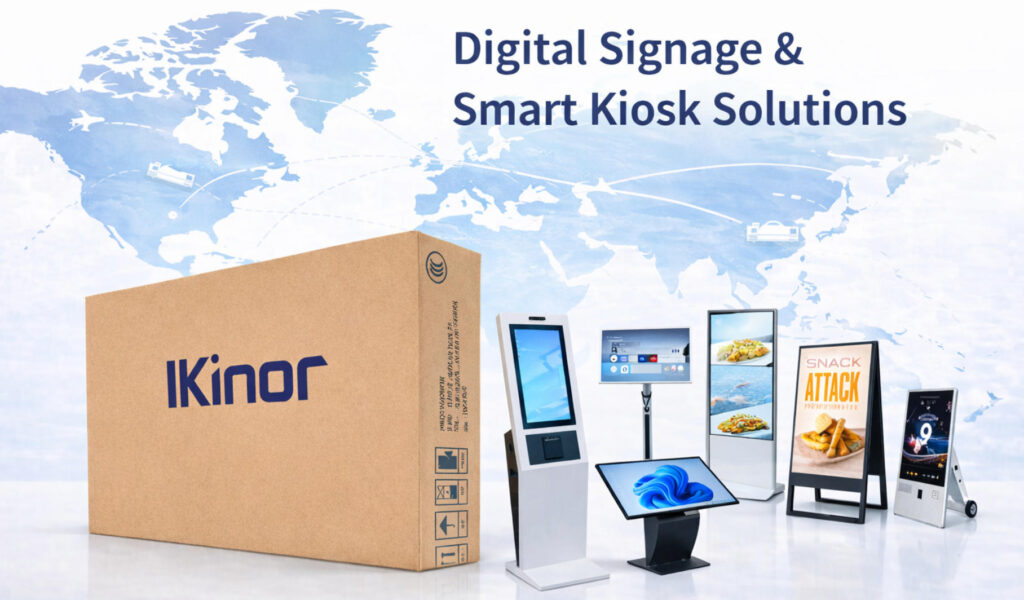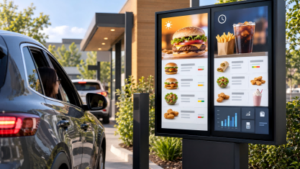
The global digital signage market is entering a transformative era, with valuations projected to soar toward $93 billion by 2036. For procurement professionals and distributors, this growth signals more than just a trend—it represents a fundamental shift in how businesses communicate, sell, and operate. However, the path to building a profitable digital signage business requires more than just sourcing screens; it demands a strategic alignment of robust hardware, agile software ecosystems, and comprehensive, value-added services. Whether you are navigating the complexities of CMS integration or looking to secure your first high-impact client, this guide provides the roadmap to move beyond simple hardware reselling and establish your firm as a mission-critical partner in the modern digital display landscape.
Is the Digital Signage Business Profitable in 2026?
According to the latest industry research, the global digital signage system market is valued at $28.7 billion in 2026 and is projected to reach $93.2 billion by 2036, maintaining a robust CAGR of 12.5% (Source: Future Market Insights, 2026). This growth is not merely a passing trend; it is driven by retail digitization, smart city development, and an unrelenting demand for dynamic, real-time customer engagement.
For B2B procurement professionals and distributors, the digital signage industry is a “perennial” business sector. It has evolved from simple static advertising into the critical infrastructure of modern enterprise operations. In the restaurant and café sectors, digital menu boards do more than just list pricing; they serve as a powerful conversion tool. Industry data indicates that strategic, data-driven product promotion via digital menu boards can increase average transaction value by 3% to 10% (Source: Nento, 2026).
With the deep integration of interactive technology, AI, and the Internet of Things (IoT), the barrier to entry for commercial display solutions is becoming more nuanced. As of 2026, the retail sector accounts for 32% of digital signage deployments, with restaurants and Quick Service Restaurants (QSRs) following closely at 22% of the market share (Source: CrownTV, 2026). From lightweight interactive solutions for local coffee shops to synchronized, multi-screen cloud networks for large-scale restaurant chains, the diversity of business applications ensures the sector remains highly resilient to economic cycles.
For new entrants, 2026 represents a critical window for upgrading commercial display ecosystems. Market demand has shifted from basic “display” to “stable, manageable, and high-performance” customized solutions. Entering the market now means you are not just selling hardware, but providing the digital foundation for your café and restaurant clients. In the retail and food service sectors, the typical payback period for a digital signage investment is just 6 to 18 months, offering long-term profitability that significantly outperforms traditional static display methods.
Choosing Your Business Model: Hardware Sales, Managed Services, or Ad Networks?
Before you formally enter the digital signage industry, defining your core profit driver is essential for success. Depending on your market positioning and resource strengths, the current mainstream business models can be categorized into the following three types. Each model has different requirements for cash flow, technical support, and client relationships. If you plan to enter the market through resale, channel cooperation, or local service delivery, this guide to digital signage resellers explains how reseller programs, white-label models, and partner revenue structures usually work.
1. Hardware Sales
This is the most fundamental way to enter the market. As a supplier, your primary revenue comes from the sales of commercial display solutions—this includes not just the hardware, but also the seamless integration of software and customization services provided by experts like Ikinor.
- Business Characteristics: Short cycles with rapid cash flow turnover.
- Core Threshold: You need to master a strong supply chain, provide highly competitive pricing, and handle basic post-sales support.
- Application Scenarios: Suitable for restaurant chains or retail groups that already have their own technical teams; they tend to manage content and software themselves and only require stable, reliable hardware solutions.
2. Managed Services (SaaS)
This model has become the most profitable path in the industry. Beyond just providing hardware, you take charge of Content Management System (CMS) configuration, remote monitoring, device health alerts, and content formatting.
- Business Characteristics: The revenue model shifts from “one-time buyout” to “subscription-based” or “annual service fees,” fostering extremely high customer stickiness.
- Core Threshold: You need to possess cloud-based CMS system integration capabilities. For example, using a cloud platform to remotely schedule menus for a café at different times of the day (such as switching from breakfast to lunch), without requiring manual on-site intervention.
- Advantage: As a “digital steward” providing 24/7 remote maintenance, you ensure the client’s tolerance for hardware failure is low, which increases their willingness to pay for high-quality display equipment (anti-burn-in, industrial-grade stability).
3. Digital Advertising Network
This model carries higher risk but holds explosive growth potential. You deploy screens in high-traffic locations (such as large shopping malls or dining complexes) for free or at very low cost, generating long-term revenue by selling advertising space.
- Business Characteristics: It is essentially a “media business.” Success depends entirely on your coverage density (Eyeballs) and your ability to secure advertising clients.
- Core Threshold: Requires exceptional resource acquisition and advertising sales capabilities.
- Risk Warning: For small cafés or retail shops, this model is often difficult to monetize due to “narrow audience reach.” It is generally recommended as an added-value feature rather than a core business.
Building Your Supply Chain: The Importance of Reliable Hardware Partnerships
In the digital signage business, hardware is the foundational bedrock of your brand’s reputation. Many startups often focus excessively on front-end software features while neglecting the durability of the underlying display terminals, ultimately leading to exorbitant maintenance costs and client attrition. Building a robust supply chain is not merely about “finding a vendor”—it is about securing a strategic partner capable of evolving alongside your technical requirements.
Why Hardware Quality Defines Your Business Ceiling
For high-frequency environments like restaurants, retail spaces, or transportation hubs, commercial displays must meet the demands of 24/7 continuous operation. Standard consumer TVs or office monitors are prone to failure in these settings, easily succumbing to screen burn-in, black spots, or power supply overheating. A reliable manufacturer—such as Ikinor—provides industrial-grade display solutions designed for these exact challenges, with key advantages including:
- Industrial-Grade Stability (24/7): Engineered with professional-grade LCD modules and high-performance power management systems, ensuring seamless operation without degradation.
- Environmental Resilience: Tailored display solutions for specific needs, such as high-brightness panels for retail storefronts, ensuring content remains legible under complex lighting conditions.
- Advanced Protection Technology: Integrated thermal management and circuit protection to prevent permanent image retention and screen burn-in during prolonged static content display.
Customization Capability: From “Selling Products” to “Selling Solutions”
The true competitive edge in the supply chain lies in “customization.” As a national high-tech enterprise rooted in Dongguan with profound manufacturing expertise, Ikinor offers comprehensive OEM/ODM services—from industrial design to deep software and hardware integration. When your clients demand specialized aesthetics, touch module integration, or unique mounting configurations, having a partner with in-house R&D support allows you to bridge the gap from prototype to mass production without being limited by off-the-shelf offerings.
Partnering with Ikinor, a manufacturer with formidable research and manufacturing power, provides you with:
- End-to-End Delivery: Seamless coordination across hardware design, structural engineering, and system integration.
- Strict Quality Control: Adherence to ISO-certified production standards, ensuring industry-leading stability for every terminal delivered.
- Technical Expert Support: Direct access to R&D engineers to resolve complex compatibility issues or deployment challenges.
In the digital signage sector, your growth is limited only by the strength of your supply chain. Aligning with a professional manufacturer allows you to stand out in a competitive market, transitioning from a simple trader into a solutions provider capable of high-level project delivery.
If you are seeking a customized display solution to support your long-term business growth, feel free to inquire about Ikinor’s OEM/ODM partnership opportunities, and let us embark on a new chapter of intelligent display business together.
In the world of commercial display, hardware is the body, but the Content Management System (CMS) is the brain. A common misconception among new buyers is that the value of a digital display is determined solely by its resolution or brightness. However, the true ROI of a digital signage network lies in how efficiently and flexibly you can push content to those screens.
Why Cloud-Based Management is the Industry Standard
Cloud-based CMS is no longer a luxury—it is a baseline requirement for any scalable business. Unlike legacy systems that require manual file updates via USB drives, a cloud-integrated system allows you to manage hundreds of screens across different geographical locations from a single interface.
For a café owner or a retail manager, this means the ability to:
- Schedule Content Automatically: Push breakfast menus at 7:00 AM and switch to lunch promotions at 11:00 AM without human intervention.
- Real-Time Updates: Correct a pricing error or update a daily special instantly across all connected screens.
- Centralized Monitoring: Detect hardware status, connectivity issues, or playback errors remotely, significantly reducing the downtime that impacts revenue.
The Power of Software Compatibility
The hardware you choose—such as an industrial-grade display from Ikinor—must be more than just a passive output device. It must act as a reliable host for intelligent software. Modern commercial displays, especially those running on Android-based architectures, provide an open environment for seamless integration with third-party software providers.
This “hardware-agnostic” approach gives you the flexibility to choose the CMS that best fits your specific operational needs, whether you are utilizing proprietary management software or established third-party SaaS platforms. When your hardware is built with robust API support and OS compatibility, you avoid the “vendor lock-in” trap, ensuring that your investment remains relevant as software technology evolves.
To understand why selecting the right platform is just as critical as choosing the display itself, you can explore our detailed guide on why CMS integration is the backbone of your digital signage network.
By pairing high-performance, durable display hardware with an agile, cloud-ready software ecosystem, you transform your screens from simple visual displays into an active, responsive component of your business strategy.
Essential Value-Added Services: Moving Beyond Hardware to Full-Cycle Delivery
In the digital signage market, if your business model is limited to hardware reselling, you will inevitably face intense price competition that squeezes your profit margins. Truly mature operators shift their focus from merely “selling products” to “delivering comprehensive solutions.” By providing essential value-added services, you not only significantly increase your average transaction value but also build long-term, strategic partnerships with your clients.
Here are three key areas where value-added services create profitable growth:
1. Professional Deployment & Installation
The deployment of digital signage is far more complex than simple wall mounting. Professional services involve meticulous site assessment: from cabling route planning and power infrastructure layout to network stability testing and structural safety evaluations.
- Profit Logic: End clients often lack the expertise to handle complex low-voltage electrical engineering. By offering a “turn-key solution,” you can command premium service fees. This not only showcases professionalism but also ensures the longevity of the display hardware through standardized installation, significantly reducing post-deployment maintenance costs.
2. Multimedia Content Design & Creation
Many clients in the restaurant or retail sectors invest in high-end hardware, only to find that their content—lacking aesthetic design—fails to drive engagement or sales.
- Profit Logic: You can establish a dedicated content creation service, offering dynamic menu board design, brand promotional videos, and promotional animation updates. For these clients, they are not just buying “screens”—they are purchasing a marketing tool to boost their sales. This service typically adopts a recurring model—combining initial design fees with monthly maintenance—which yields significantly higher margins than hardware sales alone.
3. Long-Term Maintenance & Managed Services
Digital signage consists of critical digital assets that require continuous monitoring. Any unexpected system crash, failure to push content, or display anomaly directly impacts the client’s daily operations.
- Profit Logic: You can offer a “Digital Signage Concierge” package, which includes remote health monitoring, automated software updates, and periodic security patching. This recurring revenue (ARR) provides a stable cash flow and is a vital metric for measuring the sustainability of your business growth.
The Core Conclusion: In the digital signage sector, hardware is the entry point for building client trust, but the real “blue ocean” lies in removing all the technical hurdles for your customers during their digital transformation. When you move beyond providing display terminals to empowering clients through professional engineering, creative design, and reliable maintenance, you deliver a level of value that far exceeds the hardware, effectively building an unassailable competitive moat.
Finding Your First Digital Signage Clients: Practical Strategies for Market Entry
Securing your first client is often the most challenging hurdle in the digital signage business, but it is also the most rewarding. In the initial stage, you do not need a massive sales force; you need a tangible proof of concept. The goal is to transform “passive screens” into “active profit drivers” for local businesses, using a strategy rooted in local presence and demonstration.
1. Identify “High-Impact” Local Targets
Start by mapping out your immediate vicinity. Focus on local businesses where communication with customers is frequent and visual-heavy.
- Cafés and Quick Service Restaurants (QSRs): These are the low-hanging fruit. A digital menu board is often an immediate upgrade over a static chalkboard or paper menu, providing the restaurant with the agility to update prices and promotions in real time.
- Boutique Retailers and Salons: These businesses rely heavily on visual aesthetics. Digital displays can showcase high-definition product imagery or service portfolios, significantly enhancing the professional image of the store.
2. The Power of the “Demonstration Prototype”
One of the most effective ways to close a first sale is to move away from theory and into practice. Carry a portable, professional-grade digital signage unit—such as a compact floor-standing or countertop display—directly to the business owner.
- The “Show, Don’t Tell” Strategy: Do not just present a brochure. Show them their own logo, a sample menu, or their Instagram feed running on your screen. When a business owner sees their own branding displayed with 4K clarity and dynamic motion, the perceived value of the solution increases exponentially.
- The “Trial Period” Tactic: If the prospect is hesitant, offer a short-term, low-risk trial. If they see a measurable increase in engagement or sales during a two-week period, the conversion rate to a permanent installation is usually very high.
3. Leverage Existing Local Networks
If you are already involved in other trades—such as traditional signage, printing, or interior decoration—you have a distinct advantage: a pre-existing client database.
- Consultative Selling: Instead of pitching new products immediately, ask your existing clients about their current “communication pain points.” Ask questions like, “How much time and money do you spend every month printing and replacing your promotional posters?”
- The Upgrade Pathway: Position digital signage as an upgrade path for your existing clients. Because they already trust your service and professionalism, transitioning them from static to dynamic signage is a natural and high-confidence sales process.
4. Build a Local “Success Story” Portfolio
Your first client is your most valuable marketing asset. Even if the project is small, document it thoroughly: take professional photos of the installation, record a brief testimonial from the owner, and collect data on the content’s impact. Having one localized, verified success story is often more powerful than a hundred generic brochures.
For example, one of our clients prominently featured completed projects and customer success stories on its official website. These real-world examples helped build trust with prospective customers while also strengthening the site’s credibility and search visibility. Combined with support from an experienced SEO agency and targeted CPC advertising campaigns, the company has been able to attract more qualified traffic and achieve a strong conversion rate.
Use this type of portfolio to build credibility. As your local footprint expands and more successful projects are documented, client acquisition can become faster, more efficient, and increasingly referral-driven.
FAQs
It offers robust long-term potential for partners who focus on high-quality delivery. As retail and food service sectors accelerate their digital transformation, digital signage has evolved into a critical operational asset. While profitability depends heavily on factors such as business model (e.g., hardware resale vs. managed services), location strategy, and operational efficiency, successful deployments frequently achieve investment recovery within 6 to 18 months. For businesses seeking sustainable growth, it represents a more resilient alternative to traditional, static print media.
We recommend a hybrid “Hardware Sales + Managed Services” model. By entering the market with professional-grade hardware—such as Ikinor’s commercial displays—and supplementing it with CMS remote maintenance subscriptions, you can establish immediate client trust while generating stable, recurring cash flow.
Prioritize industrial-grade 24/7 stability, anti-burn-in technology, and OEM/ODM customization capabilities. Partnering with a manufacturer like Ikinor, which operates its own manufacturing base in Dongguan and offers full-spectrum customization, helps mitigate risks associated with post-deployment hardware failures.
This depends on your specific use case. For simple content, leveraging smart screens with built-in browsers or lightweight Android-integrated solutions is often sufficient. For complex interactive applications, dedicated high-performance players are recommended. You should always match your hardware to the compatibility requirements of your chosen CMS software.
The CMS acts as the “brain” of your digital signage network. Cloud-based management enables cross-region remote scheduling, real-time content switching, and device health monitoring—all of which are essential for minimizing labor costs and maximizing operational efficiency.
Start by targeting local restaurants or small retailers. Bring a portable demo unit to showcase the client’s own brand content on-site. By directly solving the pain points of “expensive, stagnant print materials” with a dynamic upgrade, you can significantly increase your conversion rate.