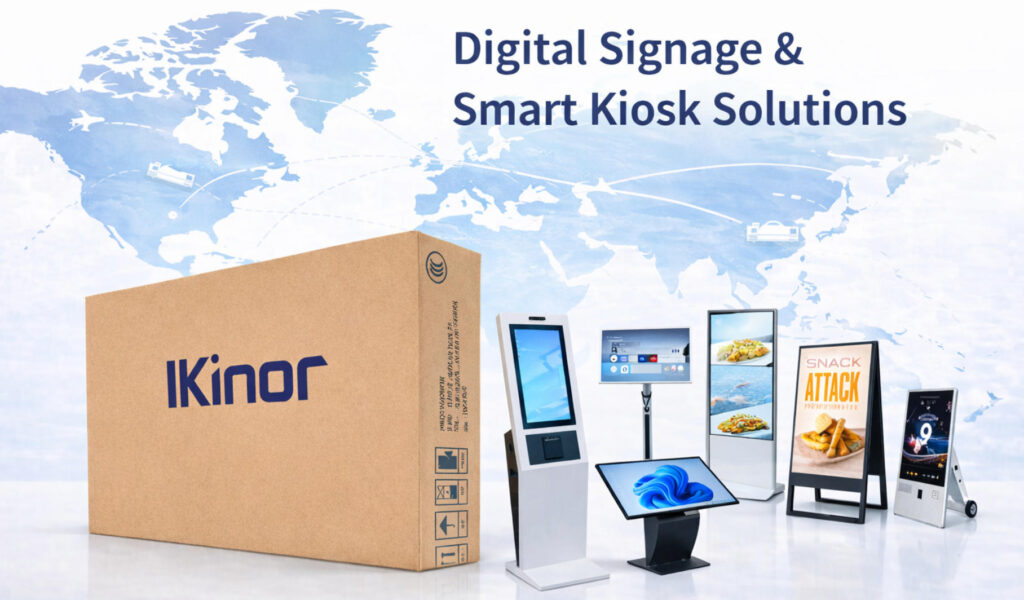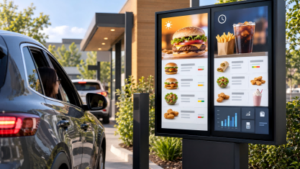
In the past, restaurants primarily relied on traditional marketing methods such as printed menus, posters, flyers, table tents, and in-person recommendations to attract and inform customers. These conventional approaches were often inflexible, expensive to update, and limited in their ability to respond quickly to seasonal menu changes, special promotions, or evolving customer preferences. With the rapid development of digital media, software, and display technology, many restaurants have begun adopting digital signage as a modern solution to enhance customer engagement and operational efficiency. Digital signage allows real-time menu updates, dynamic promotional content, interactive experiences, and targeted messaging. Today, more restaurants are leveraging digital signage to implement flexible marketing strategies, improve order speed, reduce costs, and increase overall sales while enhancing customer satisfaction.
What Is the Current Application Context of Digital Signage Solutions in Restaurants?
Many people have yet to realize that today, in the restaurant industry, digital signage is developing at an astonishing speed, evolving from a “nice-to-have” display tool into a core technology for improving efficiency and marketing performance. In the United States, over 65% of restaurants have already adopted digital menu boards or related display screens, with adoption rates in quick-service restaurants (QSRs) reaching as high as 80%. Many operators have reported noticeable improvements in both sales and operational efficiency.
The reason for this rapid adoption is clear: compared to traditional printed menus and static posters, digital signage allows real-time content updates, eliminating the need for manual replacements and significantly reducing printing costs and order errors. By integrating with a restaurant’s content management system (CMS), operators can remotely adjust menu items, pricing, seasonal promotions, and limited-time offers instantly.
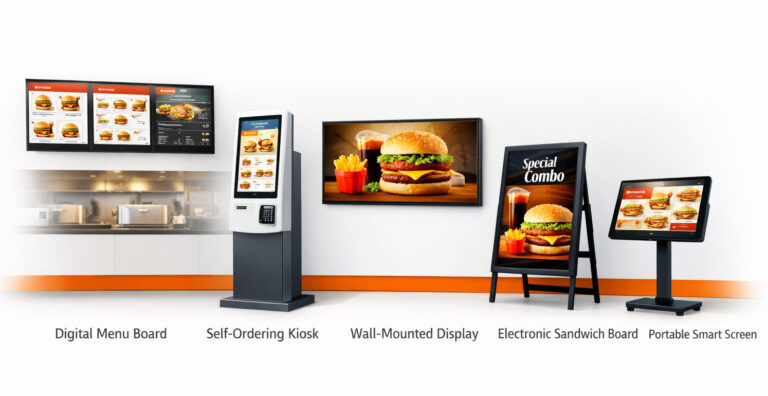
Beyond menu displays, digital signage is widely used for interactive ordering screens, self-service kiosks, order-status displays, and promotional advertising throughout the restaurant. These screens can show high-quality images, videos, and dynamic content, enhancing customer engagement and the waiting experience. For example, during peak hours, displays can show wait times, promote combo deals, or advertise cross-store campaigns, increasing customer attention and purchase intent.
As the market matures, digital signage technology continues to evolve, incorporating touch interaction, AI-driven content recommendations, and deep integration with POS systems, making restaurant operations smarter and more flexible. In short, digital signage in the restaurant industry is no longer just a tech trend—it has become a critical infrastructure for boosting operational efficiency, enhancing marketing, and improving the overall customer experience.
How Do Most Restaurants Use Digital Signage to Reduce Costs and Improve Marketing Effectiveness?
Although we know digital signage is widely used in restaurants, many people are still confused about how digital signage actually helps reduce costs and improve marketing effectiveness. In practice, restaurants leverage digital signage in multiple ways to streamline operations and enhance customer engagement. The primary functions include dynamic menu displays, promotional content, interactive ordering, and real-time messaging. By replacing printed menus, posters, and table tents with digital displays, restaurants can significantly reduce printing and labor costs, while also minimizing errors when updating prices or seasonal offers.
Digital signage also boosts marketing performance by displaying high-quality images and videos that promote combo deals, limited-time offers, and loyalty programs. Interactive screens encourage customer engagement, enabling diners to browse menu items, customize orders, or participate in promotions directly. These features not only increase average order value but also keep customers occupied while waiting, improving their overall experience and perception of the brand.
For example, a fast-food chain can use digital menu boards to highlight upsell items during peak hours, adjusting content remotely across multiple locations with minimal effort. Similarly, a casual dining restaurant might deploy order-status screens to reduce perceived wait times, while simultaneously showing targeted promotions or seasonal dishes. Across these scenarios, digital signage allows restaurant operators to deliver timely, relevant, and visually appealing content, strengthening brand identity and driving sales.
In summary, digital signage in restaurants is more than just a display tool—it is an integrated solution for cost control, operational efficiency, and marketing optimization. By automating content updates, enhancing customer interaction, and improving promotional effectiveness, digital signage has become an essential part of modern restaurant operations.
How Did a Filipino Restaurant Case Improve Marketing Performance Through Digital Signage Solutions?
Many restaurant operators are curious about digital signage, but they often wonder exactly how it can improve marketing performance. Let’s examine concrete examples from the Philippines.
At Café Tropico, located in Greenbelt 3, Makati City, the restaurant installed Digital Menu Boards above the counter and a Self-Ordering Kiosk at the entrance. By dynamically showcasing combo meals, limited-time offers, and high-margin items during peak hours, Café Tropico achieved a 25% increase in average order value and a 15% improvement in table turnover during lunch and dinner peaks within just three months. The digital menu boards allowed customers to browse menu items more intuitively, overcoming the limitations of static printed menus. Content could be updated in real-time to highlight promotions or adjust recommendations based on inventory and peak traffic, effectively boosting conversion rates.
The self-ordering kiosk further enhanced the experience by enabling customers to customize their orders and complete payments independently while promoting add-ons and combos. This not only reduced queueing pressure but also lowered staff workload, improving overall operational efficiency.
Another example is Bites & Beans, a coffee and light-meal shop at SM City Cebu, Cebu City. After implementing wall-mounted digital signage in 2025, the store saw a 20% increase in promotional engagement and a noticeable reduction in order errors.
A similar outcome was seen in a Quezon City fried chicken and burger restaurant, where digital menu boards and kiosks increased average order value by around 10% while reducing peak-hour waiting time, demonstrating consistent operational and marketing improvements across fast-food formats.
These cases illustrate that even small and medium-sized Filipino restaurants can leverage digital signage to enhance marketing performance. By combining dynamic content, interactive ordering, and real-time updates, restaurants can increase upsell rates, reduce waiting-related losses, and deliver a smoother customer experience, making digital signage a practical, measurable investment for both sales growth and operational efficiency.
Which Are the Best 5 Digital Signage Solutions for Restaurants
luminati
| Company Profile | Luminati provides digital display and digital signage solutions designed to enhance in‑venue visual communication for hospitality and retail environments. Its networked digital signage menu boards deliver flexible, dynamic menu presentation with cloud‑based content management and commercial‑grade hardware. |
| Core Products | • Networked Digital Menu Boards for restaurants, cafés, takeaways and bars• Cloud‑Managed Content Screens• Exclusive Professional Menu Templates• Multi‑Display Synchronized Menu Walls• High‑Brightness Commercial‑Grade Panels |
| Hardware | • Commercial‑Grade IPS Digital Screens (32″, 43″, 50″, 55″) with high brightness and anti‑glare performance • Built‑In Wi‑Fi Connectivity • Support for Portrait or Landscape Orientation • Optional Integrated Speakers |
| Software | • Cloud‑Based CMS (Content Management System) – remote menu updates from any internet‑connected device • Exclusive Menu Template Library for easy editing and branding • Multi‑Screen Synchronisation for consistent display across locations • USB Plug‑and‑Play Backup Option for offline content playback |
| Services | • Free 1‑Year Cloud CMS Licence (included)• Optional 4‑Year or Lifetime CMS Licences• Lifetime Technical Support• 3‑Year Hardware Warranty (extendable on request)• Full Installation Service Available on Request |
| Location | The Display Works, East Way, Lee Mill Industrial Estate, Ivybridge, Devon, UK |
| Contact | https://www.luminati.co.uk/networked-digital-signage-menu-board/ |
Brightsign
| Company Profile | BrightSign is a global leader in digital signage media players and solutions designed for commercial use across industries including restaurants, retail, hospitality and more. Its hardware and software ecosystem is built to power reliable, high‑performance digital menu boards, drive‑through displays and interactive signage installations worldwide. |
| Core Products | • BrightSign Series Media Players (HD6, XD6, XT5, XD5, HD5, LS5, AU5) for digital signage playback and interaction • BrightSignOS™ — a secure, dedicated digital signage operating system • BSN.Cloud — Cloud‑connected content and device management platform (bsn.Control, bsn.Content) |
| Hardware | • Commercial‑grade BrightSign media players (e.g., HD6, XD6, XT5) optimized for 24/7 operation and multi‑screen configurations • Expandable hardware accessories for interactive signage and video walls |
| Software | • BrightSignOS™ — purpose‑built, secure signage operating system • bsn.Control remote device management — free with every player • bsn.Content CMS — cloud‑based content creation, scheduling, and distribution • brightAuthor connected — authoring tool for presentations and playlists |
| Services | • Expert consultation for restaurant digital signage deployment • Integration support for drive‑through and interactive menu boards • Remote provisioning and diagnostics via cloud services • Technical support and professional services for large‑scale networks |
| Location | 550 S. Winchester Blvd, Suite 100, San Jose, CA 95128, USA |
| Contact | https://www.brightsign.biz/industry/restaurants/ |
Gardiffepos
| Company Profile | Gardiff EPOS is a UK-based provider of EPOS and digital signage solutions for the hospitality industry. Founded in 1988, the company focuses on integrated POS and digital menu systems designed to improve operational efficiency and customer experience in restaurants, takeaways, and bars. |
| Core Products | • Digital Menu Boards• Customer Display Screens• Order Collection Screens• Integrated EPOS Terminals• Kitchen Display Systems |
| Hardware | • Large-format digital menu screens• Customer-facing display screens (mounted behind tills)• Kitchen display screens for order management• EPOS terminals and peripherals (cash drawers, printers) |
| Software | • Integrated with Gardiff EPOS system• Real-time menu synchronization (auto updates for prices and availability)• Multi-screen management from a single terminal• Content customization for branding and promotions |
| Services | • End-to-end EPOS + digital signage integration• Installation and system setup• Custom screen design and branding• Ongoing technical support |
| Location | Hitchin, Hertfordshire, United Kingdom |
| Contact | https://gardiffepos.com/hardware/digital-menus/ |
knightsoftmedia
| Company Profile | Knightsoft Media is a UK-based provider specializing in customized digital signage solutions for restaurants, takeaways, and hospitality environments. The company focuses on enhancing customer engagement, in-store experience, and revenue performance through flexible and scalable display technologies. |
| Core Products | • Digital Menu Boards• Digital Signage Screens• Video Wall Displays• Interactive Totems & Touchscreens• Freestanding Digital Displays |
| Hardware | • Commercial-grade display screens• Video wall systems for immersive environments• Freestanding indoor/outdoor digital displays• Interactive touchscreen systems• High-brightness displays for various lighting conditions |
| Software | • Centralized content management system (CMS)• Remote content updates and monitoring• Content scheduling (e.g., breakfast/lunch menu switching)• Multi-location content synchronization |
| Services | • End-to-end digital signage deployment• In-house installation and system integration• Content creation and design services• Ongoing maintenance and technical support• Staff training for system usage |
| Location | Cotton Court, Church Street, Preston, Lancashire, UK |
| Contact | info@knightsoftmedia.co.uk |
Moodmedia
| Company Profile | Mood Media is a global provider of in-store media and digital signage solutions, offering specialized services for the restaurant industry. Its restaurant-focused solutions are designed to increase sales, improve customer experience, and streamline operations through dynamic digital content and centralized management. |
| Core Products | • Digital Menu Boards• Digital Promo Boards• Mood TV (branded entertainment + content)• Video Walls• Back-of-house digital signage |
| Hardware | • Commercial-grade digital displays (designed for 12+ hours daily use)• Media players for stable content delivery• Video wall systems and AV equipment |
| Software | • Cloud-based CMS for centralized control• Real-time content scheduling and updates• Multi-location management platform• Integrated control for signage, music, and messaging |
| Services | • End-to-end solution: hardware + software + content + installation• Content creation and template design• Screen placement and strategy consulting• 24/7 technical support and nationwide installation network |
| Location | Headquarters: Austin, Texas, USA |
| Contact | https://moodmedia.com/gb/restaurants/ |
What Is the Budget and Cost Structure for Restaurants Digital Signage Solutions?
After understanding the general situation of digital signage in the Philippines, the next inevitable consideration in the procurement process is cost. Restaurants looking to implement digital signage must carefully analyze the overall budget and cost structure to ensure a good return on investment.
The total cost typically consists of several components. Hardware costs include commercial displays, media players or set-top boxes, mounting brackets, and networking equipment. For example, commonly used screen options include 32-inch displays at $999, 43-inch displays at $1,099, and 49-inch displays at $1,299, with prices varying based on resolution, brand quality, and features. Software costs generally cover CMS subscriptions, access to template libraries, remote content management platforms, and any integrations with POS systems.
Deployment and maintenance costs are another important factor. These include installation fees, wiring, initial setup, and periodic technical support. Content creation and updates also contribute to ongoing operational expenses, whether handled in-house or outsourced.
When evaluating suppliers, restaurants often compare local providers with Chinese digital signage vendors. Local providers usually offer faster on-site support, easier communication, and better knowledge of regional compliance standards, but at a higher price. In contrast, Chinese suppliers stand out for their cost competitiveness, high hardware customization options, and flexible software solutions, allowing restaurants to tailor displays and CMS functionality to their exact needs. While delivery times may be slightly longer, careful planning can minimize disruptions, making Chinese vendors a highly attractive option for budget-conscious buyers seeking both quality and adaptability.
Understanding this cost breakdown helps restaurants make informed decisions about which digital signage solutions best align with their budget, operational requirements, and long-term marketing goals. Considering hardware, software, deployment, and maintenance in detail ensures digital signage contributes effectively to both operational efficiency and sales growth.
How Should Restaurants Choose a Reliable Digital Signage Solution?
In the actual procurement process, besides budget, there are many other factors to consider, and restaurants must approach the decision systematically, taking multiple aspects into account. Choosing a reliable digital signage solution involves evaluating key criteria, including system stability, scalability, content templates, ease of use, and hardware compatibility. A solution that performs reliably and can grow with the business is essential to avoid downtime and hidden costs.
Restaurants should align their choice with scale, budget, and operational scenarios. For example, a single-location café with a simple menu may prioritize a basic CMS platform paired with low-cost media players, offering real-time updates and simple promotional displays without excessive investment. Conversely, a multi-location chain or franchise benefits from a centralized, cloud-based solution capable of managing content across all outlets, integrating with POS systems, and supporting interactive experiences. For smaller cafés, bakeries, or single-location restaurants that are not ready for a full restaurant signage platform, this How to Display a Menu on a TV guide explains simpler setup options such as USB playback, smart TV apps, casting, and cloud-based digital signage.
When comparing solutions, restaurants should analyze how each option fits their specific needs. Key questions include: Can the platform handle multiple screens efficiently? Are the available templates suitable for your menu style? How steep is the learning curve for staff? For instance, if a small bistro has limited IT support, choosing a vendor with intuitive CMS and strong remote support may outweigh slightly higher costs. A large chain, by contrast, may invest in a more expensive solution with advanced analytics and multi-store management, because it scales better and ensures consistent brand messaging.
For large-scale projects, it is also worth considering a digital signage OEM/ODM solution. Compared with standard off-the-shelf systems, OEM/ODM solutions offer greater flexibility in hardware customization, software integration, and branding alignment. This is particularly valuable for chains or enterprise-level deployments that require unified design, scalable architecture, and long-term cost efficiency across multiple locations.
Ultimately, the best digital signage solution balances cost-effectiveness, operational efficiency, and marketing potential. By considering stability, usability, scalability, and scenario-specific requirements, and by mapping vendor capabilities against actual operational needs, restaurants can make informed decisions that maximize both customer engagement and sales growth.
FAQs
What are the main benefits of digital signage for restaurants?
It reduces operational costs, boosts marketing effectiveness, improves customer engagement, and allows real-time menu and promotion updates.
How much does a restaurant typically spend on digital signage?
Single-store setups usually cost $500–$2,000 per screen for hardware, plus $20–$100/month for CMS. Multi-location systems cost more but allow centralized management.
Which hardware and software suit small vs. large restaurants?
Small restaurants can use basic media players and CMS; large chains benefit from networked players, cloud CMS, and interactive displays.
Can digital signage increase restaurant sales?
Yes. For example, Café Tropico in the Philippines reported 25% higher average order value using digital menu boards and self-order kiosks.
How should restaurants choose a reliable vendor?
Look for stability, scalability, content management, hardware compatibility, support, and total cost, matched to your size and budget.
Are local suppliers better than international ones?
Local suppliers offer faster support and delivery, while Chinese suppliers provide cost-effective hardware. Choice depends on service and budget priorities.