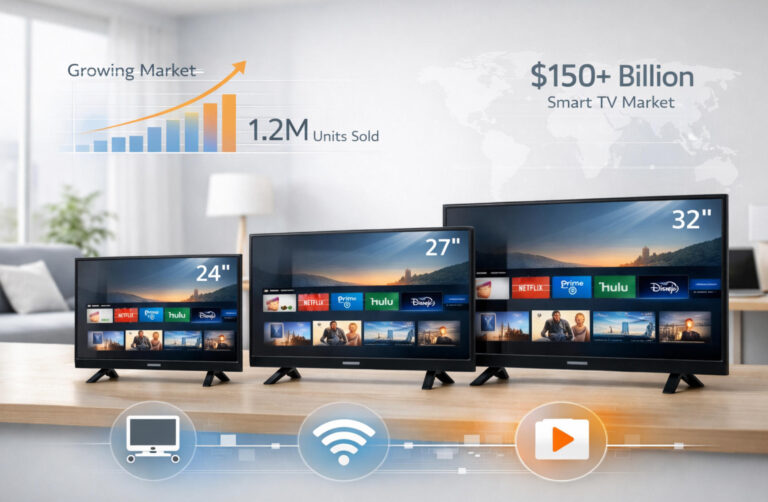
Today, portable smart TV sizes like 24″, 27″, and 32″ are gaining traction across commercial and consumer markets as mobility and flexible viewing become priorities for modern environments. In 2024, global sales of portable and handheld televisions reached approximately 1.2 million units, reflecting growing demand for compact displays that support streaming, connectivity, and on‑the‑go entertainment. Meanwhile, the global smart TV market — which includes connected televisions across all screen sizes — was valued at over USD 150 billion in 2025 and is forecast to expand further in the coming decade. For procurement teams, understanding how portable smart TV screen sizes influence usability, cost, and deployment is crucial when engaging with a portable smart TV manufacturer.
What Are the Key Differences Between 24″, 27″, and 32″ Portable Smart TVs?
Different portable smart TV sizes present the most immediate differences in terms of visual impact, viewing experience, and space utilization. When making procurement decisions, it is important to consider the advantages and disadvantages of each of these three sizes and select the most suitable option based on the specific application scenario to ensure the desired visual performance.
The 24-inch portable smart TV is ideal for compact spaces such as small offices, personal desks, or temporary setups. Its shorter viewing distance and concentrated screen area provide focused visibility, making it easy to move between rooms or storage locations. This size is cost-effective and highly flexible for environments where space is limited, yet clear content visibility remains essential. The 27-inch option strikes a balance between portability and viewing experience. With a moderately larger display, it improves readability and engagement in small to medium meeting rooms, collaborative workspaces, or client demonstration areas. While slightly heavier than the 24-inch model, it remains convenient for temporary relocation and flexible installations, making it suitable for diverse commercial applications.
For businesses seeking a more immersive viewing experience, the 32-inch portable smart TV delivers high-impact visuals for training sessions, product demonstrations, or public-facing displays. Its larger screen ensures content is clearly visible to multiple viewers at once. However, the increased size and weight reduce portability, often requiring dedicated space or mounting solutions.
Understanding these differences is the first step for businesses to select the most appropriate model from a reliable portable smart TV manufacturer, balancing visual performance with practical deployment requirements. For RV, camper van, boat, or off-grid mobile entertainment projects, buyers should also review this 12 Volt RV TV guide to understand how 12V DC power, battery runtime, inverter loss, screen size, and portable smart TV features affect real mobile-use setups.
How Does Screen Size Affect Portability and Installation Options?
Visual impact is just the most basic consideration; many people often overlook how the size of a portable smart TV also affects portability and installation flexibility, resulting in differences in logistics costs, storage requirements, and installation complexity. For procurement teams, understanding these factors is essential to ensure smooth deployment and operational efficiency.
The 24-inch portable smart TV is lightweight and highly portable, making it easy to move between rooms or storage locations. Its compact size allows for temporary installations on desks, shelves, or wall mounts without requiring extensive setup. This makes it ideal for small offices, temporary displays, or environments where flexibility is critical.
The 27-inch model provides a balance between mobility and stability. It is slightly heavier than the 24-inch version but remains convenient for relocation. Its size accommodates both temporary setups and more permanent installations, making it suitable for flexible demonstrations, training sessions, or medium-sized meeting rooms. Businesses benefit from its versatility without significantly increasing storage or installation complexity.
The 32-inch portable smart TV, while offering an enhanced viewing experience, is larger and heavier, which reduces portability. It often requires fixed installation or specialized mounting solutions, particularly for environments that need continuous display, such as showrooms, conference halls, or public-facing training areas.
Procurement teams should carefully evaluate the frequency of relocation, available space, and logistics capacity when selecting the appropriate screen size. Partnering with a reputable portable smart TV manufacturer ensures that the chosen models are designed for practical mobility and installation, minimizing operational challenges and maximizing efficiency.
Which Screen Size Offers the Best Compatibility With Content and Connectivity Needs?
Different scenarios and user groups often require different types of content to be displayed. As a result, portable smart TVs need to support multiple connectivity ports and smart features to handle everyday tasks such as video meetings, multimedia playback, and device sharing.
For basic communication tasks such as online meetings or simple presentations, a 24-inch screen is usually sufficient. This size works well when viewers sit close to the display, such as in small offices or desk-side setups. Devices in this category typically provide essential connections like HDMI and USB, which are enough for linking laptops or playing standard presentation materials.
A 27-inch model offers greater flexibility for multimedia usage. The slightly larger display improves readability when sharing spreadsheets, slides, or video content with several participants. Many units in this range also include additional features such as wireless screen mirroring or expanded connectivity, allowing teams to connect different devices during collaborative sessions.
Situations involving training, demonstrations, or customer presentations often benefit from a 32-inch display. The larger viewing area helps ensure that content remains visible to a wider audience, while stronger hardware support and extra ports make it easier to manage high-resolution video or multiple device inputs.
Many companies therefore deploy 24-inch units for individual workspaces, 27-inch screens for meeting rooms, and 32-inch displays for presentations or training areas. Most portable smart TV manufacturers structure their product lines around these usage tiers, making it easier for procurement teams to select a model that aligns with both connectivity needs and viewing requirements.
Why Should Businesses Consider 24″, 27″, or 32″ Portable Smart TVs for ROI?
Cost is a key factor that differentiates portable smart TVs, with prices generally increasing as screen size grows. When evaluating ROI, businesses should consider both the purchase cost and how each display will be used in real operational settings.
For personal workstations, small offices, or temporary setups, displays priced around $599.89—typically near 24 inches—offer a cost‑efficient choice. Hospitality brands such as Marriott and Hilton deploy similar screens in guest rooms for entertainment and information services, demonstrating that compact displays can enhance customer experience without a large upfront investment. Their easy portability and minimal footprint make them practical for flexible workspaces or distributed office environments.
Displays costing approximately $799, usually close to 27 inches, are frequently selected for meeting rooms or collaborative workspaces. These units support multiple HDMI and USB connections along with wireless casting, enabling seamless integration with conferencing systems like Zoom Rooms and Microsoft Teams Rooms. Businesses using them for internal meetings, client demos, or cross‑functional workshops benefit from easier device connectivity and improved engagement.
When it comes to larger spaces or public‑facing presentations, displays around $999—often near 32 inches—provide the strongest visual impact. Integrators such as SONIFI Solutions embed these screens in hotels, healthcare facilities, and corporate showrooms to deliver high‑resolution training content, demonstrations, or digital signage with broad visibility.
Many portable smart TV manufacturers offer these screen sizes with configurable features, helping procurement teams match display selection to budget, content needs, and audience size to maximize ROI
How Should Businesses Evaluate Portable Smart TV Manufacturers Before Making Size Decisions?
Portable smart TV, as a long-term investment, requires careful attention to quality. Different portable smart TV manufacturers vary widely in qualifications, product certifications, after-sales service, and customization capabilities. Only after fully evaluating these factors can businesses ensure they procure reliable portable smart TVs that meet both performance and operational requirements.
When assessing potential suppliers, procurement teams should first examine the manufacturer’s credentials and certifications, including ISO standards, CE, or FCC compliance. These indicators demonstrate consistent production quality and adherence to international safety and performance standards. Equally important is after-sales support: responsive technical assistance, warranty coverage, and replacement policies safeguard long-term investment and minimize operational disruptions.
Another critical consideration is the range of sizes and product flexibility offered by the manufacturer. Businesses should verify that the supplier provides options from smaller units suitable for personal workstations to larger displays designed for meeting rooms or training spaces. Features like modular installation, easy mobility, and compatibility with existing AV systems improve operational efficiency. Bulk purchase programs or volume-based discounts can further enhance cost-effectiveness for large-scale deployments.
Finally, evaluating a manufacturer’s customization capabilities ensures that unique business requirements—such as branding, specialized connectivity, or specific mounting solutions—can be accommodated. Partnering with a reputable portable smart TV manufacturer allows procurement teams to select screen sizes that align with both current operational needs and future scalability. This ensures that investments remain practical, durable, and cost-effective throughout the display’s lifecycle.
FAQs
24″ units suit personal desks or small offices, 27″ are ideal for meeting rooms, and 32″ support presentations, training, or public displays. Differences include viewing experience, visual impact, and space requirements.
Smaller units are lightweight and easy to move, mid-sized screens balance mobility and stability, and larger displays often need fixed mounting or specialized installation.
24″ handles basic meetings, 27″ supports multimedia and wireless casting, and 32″ accommodates high-resolution content and multiple device inputs for larger audiences.
Smaller screens are cost-efficient and flexible, mid-sized improve engagement, and larger units offer high visual impact, enhancing communication and long-term value despite higher costs.
Check certifications (ISO, CE, FCC), production quality, after-sales support, product range, bulk discounts, modularity, and customization options to ensure size and quality match needs.
24″, 27″, and 32″ are common, but variations exist. Confirm availability, connectivity, and deployment features with suppliers for specific use cases.